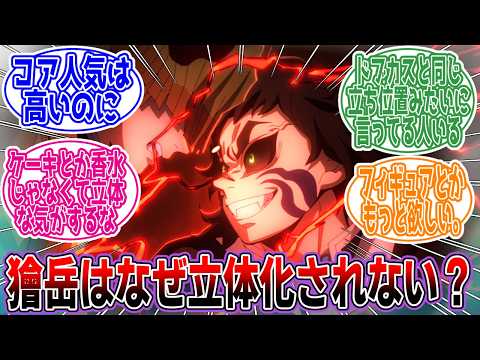
▶ Watch the original YouTube video
Why Kaigaku Is a Wasted Character in Demon Slayer: Anime Analysis and Fan Reactions
Kaigaku, a character from Demon Slayer’s Entertainment District arc, has drawn widespread criticism from fans who believe his compelling backstory and potential were underutilized. An in-depth analysis of his character development reveals significant gaps compared to other antagonists in the series, sparking debate about creative choices in the anime’s adaptation.
What Happened
Kaigaku, the Upper Moon Six demon and younger brother of Sound Pillar Tengen Uzui, has become the subject of widespread online discussion regarding underutilized character potential. Fans and analysts have noted that despite possessing an intriguing premise—a former human retaining memories while serving under Muzan—his psychological depth and backstory received minimal exploration compared to other antagonists in Demon Slayer. This observation has generated numerous comments across social media platforms expressing that the character was “wasted” or “disappointing” in terms of narrative development.
Why It Matters
Character development is fundamental to anime storytelling, particularly for antagonists who drive conflict and emotional investment. When a character’s potential exceeds its execution, it raises important questions about creative prioritization, resource allocation in animation production, and how adaptation choices affect source material. Kaigaku’s case illustrates broader patterns in how anime studios balance multiple character arcs within limited runtime, and whether intentional narrative choices differ from simple oversight. Understanding these dynamics helps viewers and creators recognize what makes character writing effective and what audiences expect from complex antagonists.
Background
Kaigaku appears in Demon Slayer’s Entertainment District arc (Season 2), where he confronts his brother Tengen Uzui. His character setup includes several compelling elements: he is the Sound Pillar’s younger brother, a user of Thunder Breathing techniques, a member of the Twelve Kizuki under Muzan’s command, and notably, he retains human memories despite his demonic transformation. These elements suggest potential for exploring themes of sibling rivalry, the conflict between humanity and demonic nature, and the psychological toll of betrayal. However, the anime’s narrative focus remained primarily on Tengen’s character development and his relationships with his wives, leaving Kaigaku’s internal conflict largely unexplored.
The original manga, which concluded its serialization before the anime adaptation, similarly provided limited psychological depth for Kaigaku. This constraint shaped the anime’s approach, as production teams typically maintain fidelity to source material structure while working within animation budget and episode constraints.
Key Points
- Character Setup Contradiction: Kaigaku possesses powerful demonic abilities and an intriguing backstory, yet his motivations and emotional complexity receive insufficient narrative attention compared to other Upper Moons like Akaza and Doma.
- Psychological Depth Deficit: His character lacks the internal monologue and flashback sequences that other antagonists receive, limiting viewer understanding of his choices and emotional state.
- Comparative Analysis: When measured against characters like Enmu (Lower Moon One) and other Twelve Kizuki members, Kaigaku’s development appears notably shallow despite his narrative importance.
- Production Constraints: Limited episode runtime and prioritization of other character arcs (particularly Tengen and his wives) necessitated reduced focus on Kaigaku’s backstory.
- Fan Perception Gap: Viewers recognize Kaigaku’s potential and express frustration that his compelling premise was not fully realized, generating widespread “wasted potential” commentary.
- Intentional Design Question: Debate exists whether Kaigaku’s incompleteness represents deliberate narrative choice or structural limitation.
Character Comparison Analysis
| Character | Backstory Depth | Psychological Development | Viewer Impact |
|---|---|---|---|
| Kaigaku | Minimal | Limited | “Wasted Potential” |
| Enmu (Lower Moon One) | Moderate | Detailed | Strong Impression |
| Akaza (Upper Moon Three) | Extensive | Highly Detailed | Complex and Compelling |
| Doma (Upper Moon Two) | Extensive | Highly Detailed | Complex and Memorable |
Perspectives
The “Wasted Potential” Argument: Critics argue that Kaigaku’s setting—a former human retaining memories while serving a demon lord—presents rich thematic material comparable to complex characters in other major anime. His sibling rivalry with Tengen, his jealousy, and his internal conflict between humanity and demonic nature could have provided significant emotional depth. Fans point to similar characters in series like Attack on Titan (Reiner Braun) and Jujutsu Kaisen (Toji Fushiguro) as examples of how conflicted antagonists can drive narrative impact when properly developed.
The “Intentional Design” Argument: Some viewers and analysts suggest that Kaigaku’s incompleteness may be deliberate. His lack of full characterization could intentionally position him as a “flawed human” rather than a fully realized antagonist, emphasizing his moral corruption and incomplete transformation. This interpretation views his underdevelopment as thematic rather than problematic.
The “Production Reality” Perspective: Animation production involves finite resources and runtime constraints. With multiple character arcs requiring development—Tengen’s growth, his wives’ characterization, Tanjiro’s advancement, and numerous demon encounters—prioritizing certain characters becomes inevitable. From this view, Kaigaku’s reduced focus represents practical creative triage rather than failure.
Untapped Narrative Potential
Kaigaku’s character framework contains several underexplored dimensions. His identity as the Sound Pillar’s brother creates natural conflict potential. His mastery of Thunder Breathing—a technique inherited from his human past—represents a tangible connection to his former identity that could symbolize his internal struggle. His position as an Upper Moon demon while retaining human consciousness offers philosophical territory: How does he rationalize his choices? What does he feel about his transformation? Does he experience regret, or has he fully embraced his demonic nature?
These questions remain largely unanswered in both the manga and anime, leaving viewers with a character whose potential exceeds his narrative execution. The contrast between his compelling premise and minimal psychological exploration generates the “wasted potential” sentiment that dominates fan discussion.
Voice Acting and Adaptation Opportunities
Anime adaptation offers tools unavailable to manga: voice acting, musical scoring, and visual direction can convey psychological subtext beyond dialogue. A skilled voice actor can layer emotional complexity through tone, pacing, and inflection—potentially compensating for limited explicit character development. Similarly, visual direction and soundtrack choices can communicate internal conflict without additional exposition.
Whether future anime seasons will utilize these tools to deepen Kaigaku’s characterization remains uncertain. The source material’s completion means no new canonical material will emerge, but anime production could theoretically expand his scenes or add interpretive depth through performance and direction.
Insights
Kaigaku’s reception illustrates a fundamental principle in character-driven storytelling: audience satisfaction depends not only on a character’s premise but on the narrative investment dedicated to exploring that premise. When potential exceeds execution, viewers experience cognitive dissonance—they recognize what the character could have been and feel disappointed by what he became.
This pattern reflects broader anime production realities. Studios must allocate limited resources across multiple narrative threads, and not every character receives equal development. Kaigaku’s case demonstrates that even well-conceived character concepts can underperform if insufficient narrative space is devoted to their exploration.
The widespread “wasted potential” commentary also suggests that audiences increasingly expect psychological complexity from antagonists. Simple villainy no longer satisfies viewers who have been exposed to morally ambiguous characters in prestige anime. Kaigaku’s failure to meet this expectation—despite his premise suggesting he should—generates frustration.
Ultimately, whether Kaigaku represents a creative misstep or a deliberate choice remains interpretive. What is clear is that his character sparked meaningful discussion about character development, adaptation priorities, and audience expectations—a testament to the compelling potential that remains, even if underutilized.