▶ Watch the original YouTube video
How Maruzensky’s “I’m Glad” Line Sparked a Community Phenomenon at Uma Musume’s 7th Anniversary Event
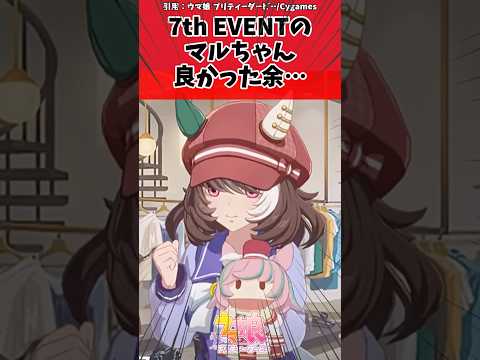
During Uma Musume Pretty Derby’s 7th anniversary event, a single line of dialogue from the character Maruzensky—”I’m glad”—became a viral moment within the player community. The phrase resonated deeply with long-term players, sparking widespread discussion about character development, narrative craftsmanship, and the emotional maturity of the game’s fanbase.
What Happened
At Uma Musume Pretty Derby’s 7th anniversary celebration event, the character Maruzensky delivered a line in her story segment that quickly became a trending topic across social media platforms. The phrase, expressed in her characteristic archaic speech pattern, struck an emotional chord with players and generated thousands of shares and comments within hours. The moment was widely celebrated as a culmination of seven years of character development and narrative investment.
Why It Matters
This moment exemplifies how modern games can achieve emotional depth through careful character consistency and long-term narrative planning. The reaction demonstrates that mature gaming communities value sophisticated storytelling and character arcs over surface-level appeal. For the broader gaming industry, Uma Musume’s approach—grounding fictional characters in real historical figures and developing them across extended timelines—represents an emerging standard for character-driven game design.
Background
Uma Musume Pretty Derby is a mobile game developed by Cygames that reimagines famous racehorses as anthropomorphic characters. Each character is based on an actual historical racehorse, and the game emphasizes narrative depth alongside gameplay mechanics. Maruzensky, based on a racehorse born in 1978 who competed in short to middle-distance races, is characterized by a distinctive archaic and noble speech pattern that sets her apart from other characters in the game.
The 7th anniversary event represents a significant milestone in the game’s lifecycle. Such milestone events typically feature substantial story content and character development moments. The game’s player base, known as “Trainers,” has grown increasingly sophisticated in analyzing narrative nuance and character development over the years.
Key Points
- Maruzensky’s archaic speech pattern, including her use of “I” as “余” (yo), is consistent throughout her character arc and serves as a linguistic marker of her personality
- The phrase in question functions not merely as cute dialogue but as an expression of emotional satisfaction and character growth accumulated over seven years of gameplay
- The player community’s response was notably analytical, with many discussing the phrase as a deliberate message from developers to long-term players
- The moment generated significant social media engagement, with players sharing emotional reactions and interpretive analysis
- New players reportedly struggled to appreciate the phrase’s significance without extensive knowledge of Maruzensky’s character history
- The event has been widely categorized as a “legendary event” within the Uma Musume community
Timeline
- 2017: Uma Musume Pretty Derby launches
- 2024 (7th Anniversary): 7th anniversary event begins, featuring Maruzensky’s character story
- During Event: Maruzensky’s dialogue line becomes trending topic on Twitter and other platforms
- Post-Event: Community discussion continues regarding narrative significance and character development
Perspectives
The Emotional Interpretation: Many players viewed the line as a direct expression of gratitude from Maruzensky to the Trainer (player character), interpreting it as a culmination of their shared journey. This perspective emphasizes the game’s success in creating meaningful player-character relationships.
The Narrative Analysis: More analytically-minded players recognized the phrase as evidence of careful character consistency and intentional long-term narrative planning by the development team. This group appreciated how the archaic speech pattern remained unbroken while conveying emotional depth.
The Design Perspective: Some observers noted that the phrase’s impact depends heavily on prior knowledge of Maruzensky’s character arc, suggesting a potential accessibility gap between veteran and new players. This raises questions about how games can balance rewarding long-term investment with welcoming new audiences.
The Industry Context: Within the broader gaming landscape, this moment reflects a shift toward character-driven narratives and away from surface-level character appeal, aligning with observable trends in mobile game design over the past five years.
Insights
Maruzensky’s “I’m glad” moment demonstrates several important principles in modern game narrative design. First, character consistency—maintaining a distinctive voice and speech pattern across years of content—creates authenticity that players recognize and value. Second, grounding fictional characters in historical reality (actual racehorses) provides an additional layer of emotional resonance that purely fictional characters may lack.
The community’s mature response indicates that gaming audiences have evolved beyond seeking only aesthetic appeal. Players now actively analyze narrative structure, character development arcs, and authorial intent. This maturation creates opportunities for games to achieve emotional impact comparable to traditional narrative media.
However, the moment also highlights a potential challenge: the deepest rewards of character-driven games require significant time investment to appreciate fully. As games become more narratively sophisticated, developers face the ongoing challenge of making these narratives accessible to newcomers while maintaining the depth that rewards long-term players.
The success of this single line of dialogue suggests that the gaming industry’s future lies in sustained character development, historical grounding, and trust in player intelligence. Uma Musume’s approach—treating character arcs with the care typically reserved for animated series—may represent a template for how mobile games can achieve both commercial success and artistic credibility.