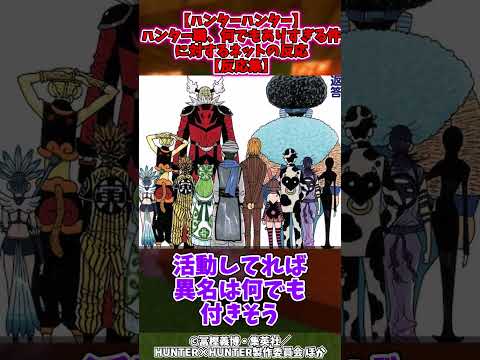
▶ Watch the original YouTube video
Why Hunter Profession in Hunter x Hunter Is Deliberately Vague: A 15-Year Analysis of Anime’s Most Flexible Job System
The Hunter profession in Hunter x Hunter remains one of anime’s most ambiguously defined occupations, allowing characters to pursue vastly different goals under the same credential. This deliberate vagueness, far from being a flaw, represents a calculated creative choice that grants unprecedented narrative flexibility and character freedom—a design philosophy increasingly influencing modern anime.
What Happened
Online discussions about the Hunter profession’s undefined nature have intensified, with viewers and analysts examining why the series allows characters like Gon, Killua, Leorio, and Kurapika to pursue completely different objectives while holding identical Hunter licenses. The profession lacks a clear job description, specific duties, or defined social role within the series’ world, creating what fans describe as a “anything goes” occupational framework.
Why It Matters
The Hunter profession’s ambiguity reveals a fundamental design philosophy that prioritizes character autonomy over world-building consistency. This approach has become increasingly relevant as modern anime shifts away from rigid institutional structures toward narratives exploring individual freedom within social frameworks. Understanding this design choice illuminates how Hunter x Hunter influenced contemporary anime storytelling and why viewers respond so differently to the same narrative element—some viewing it as a creative strength, others as a structural weakness.
Background
The Hunter profession is defined only formally as “one who has passed the Hunter Examination.” Beyond this credential, the series provides no concrete job description, mandatory duties, or organizational oversight. Characters obtain Hunter licenses for entirely personal reasons: Gon seeks his father, Killua pursues personal freedom, Leorio funds his medical education, and Kurapika pursues clan vengeance. Each character’s activities—from treasure hunting to revenge missions—fall under the umbrella of “Hunter work” without explicit justification.
This contrasts sharply with comparable professions in other anime. The Survey Corps in Attack on Titan has explicit military structure and duties. Heroes in My Hero Academia operate within a regulated licensing system with clear social expectations. State Alchemists in Fullmetal Alchemist serve government mandates. The Jujutsu Society in Jujutsu Kaisen defines sorcerers by their role combating curses. The Hunter profession, by comparison, establishes no such baseline.
Key Points
- Formal Definition Only: Hunters are defined solely by examination passage, with no specified professional duties or social obligations.
- Character Autonomy: The vague definition allows each character to justify their personal goals as legitimate Hunter activities without contradiction.
- Narrative Flexibility: The absence of rigid professional constraints enables plot developments that would violate stricter occupational definitions.
- Comparative Weakness: The Hunter Association’s role remains poorly defined, potentially undermining world-building coherence and institutional credibility.
- Deliberate Design Choice: Evidence suggests creator Yoshihiro Togashi prioritized character freedom and story flexibility over world-building precision.
- Emerging Trend: Modern anime increasingly adopts this model, valuing character autonomy over institutional definition.
Comparative Analysis: Hunter Profession vs. Similar Occupations
| Series | Profession | Definition Clarity | Character Autonomy | Narrative Flexibility |
|---|---|---|---|---|
| Hunter x Hunter | Hunter | Low (Ambiguous) | Very High | Very High |
| Attack on Titan | Survey Corps Soldier | High (Explicit) | Moderate | Moderate |
| My Hero Academia | Hero | High (Explicit) | Moderate | Low |
| Fullmetal Alchemist | State Alchemist | High (Explicit) | Low | Moderate |
| Jujutsu Kaisen | Jujutsu Sorcerer | Moderate | Moderate | Moderate |
This comparison reveals a consistent pattern: occupational definition clarity inversely correlates with character autonomy and narrative flexibility. The Hunter profession, occupying the lowest definition clarity, achieves the highest autonomy and flexibility.
Perspectives
Supportive Interpretation: Defenders of the Hunter profession’s vagueness argue it enables the series’ core thematic strength—exploring how individuals pursue personal goals within loose social structures. The ambiguity allows each character’s journey to feel authentic and self-directed rather than constrained by institutional expectations. This design choice mirrors real-world professional diversity, where credentials like “consultant” or “entrepreneur” encompass vastly different activities.
Critical Interpretation: Critics contend the vagueness undermines world-building credibility. A functional society would establish clearer professional standards, licensing requirements, and institutional oversight. The Hunter Association’s passive role as an information provider rather than regulatory body strains believability. Without defined social status, compensation structures, or professional obligations, the Hunter credential’s practical value remains unclear.
Structural Interpretation: A middle position acknowledges the vagueness as a deliberate trade-off. Togashi sacrificed world-building consistency for narrative freedom—a choice increasingly common in long-running serialized manga where sustained flexibility outweighs initial world-building precision. The Chimera Ant arc, for instance, would require extensive justification if Hunter duties were strictly defined, but the vague framework allows natural escalation of stakes.
Online Community Response: Twitter discussions predominantly celebrate the vagueness as a source of character diversity and narrative possibility. YouTube comments show more mixed reactions, with some viewers requesting clearer definitions while others defend the ambiguity. 4chan and Reddit threads present deeper structural analysis, with consensus that the vagueness is intentional rather than accidental, serving the narrative’s thematic priorities.
Industry Context and Creative Intent
Long-running serialized manga face inherent structural pressures. As narratives extend beyond initial planning, rigid world-building constraints become liabilities rather than assets. The Hunter profession’s vagueness likely reflects Togashi’s recognition that sustained narrative flexibility outweighs initial world-building precision over 20+ years of serialization.
The anime adaptation (particularly the 2011 series) benefited substantially from this ambiguity. Vague professional definitions allowed animators to insert original episodes and adjust pacing without contradicting established canon. Stricter occupational definitions would have imposed production constraints comparable to those faced during Attack on Titan‘s adaptation.
Contemporary anime increasingly adopts this model. Recent series like Chainsaw Man and Jujutsu Kaisen employ moderately vague professional definitions, suggesting industry-wide recognition that character autonomy and narrative flexibility increasingly matter more to audiences than world-building precision.
Deeper Implications
The Hunter profession’s vagueness reflects a thematic priority: Hunter x Hunter fundamentally explores individual purpose-seeking within loose social frameworks. Each character’s motivation—Gon’s search, Killua’s liberation, Leorio’s ambition, Kurapika’s vengeance—gains legitimacy through the Hunter credential without requiring institutional justification. This structure embodies a distinctly modern narrative concern: how individuals maintain autonomy within social systems.
The Chimera Ant arc exemplifies this thematic depth. The arc’s escalating stakes and moral complexity would require extensive justification if Hunters operated under strict professional obligations. The vague framework allows characters to encounter world-threatening situations organically, without contradicting their professional role.
Future narrative developments may clarify the Hunter profession’s nature. The series’ current trajectory suggests potential exploration of the Hunter Association’s internal structure and the profession’s societal role. Such developments would add layers to the existing ambiguity rather than eliminate it, transforming vagueness from a limitation into a foundation for deeper thematic exploration.
How to Engage More Deeply with Hunter x Hunter
Starting Point: Begin with the Hunter Examination arc (episodes 1-62), which most clearly demonstrates the profession’s diversity. Observe how each character’s distinct motivations establish the pattern of individual autonomy within the Hunter framework.
Analytical Approach: While watching, consistently ask: “Is this character currently engaged in Hunter work?” This question reveals how the series justifies character actions through the vague professional framework.
Comparative Study: Watch Attack on Titan and Jujutsu Kaisen alongside Hunter x Hunter. The contrasts illuminate how occupational definition clarity shapes narrative structure and character autonomy.
Critical Focus: The Chimera Ant arc (episodes 75-148) most dramatically demonstrates how the Hunter profession’s ambiguity enables narrative escalation. Observe how character actions that would violate stricter professional definitions feel natural within this framework.
Insights
The Hunter profession’s deliberate vagueness represents a sophisticated creative choice prioritizing character autonomy and narrative flexibility over world-building consistency. Rather than a structural flaw, this ambiguity functions as the series’ thematic foundation, enabling exploration of how individuals pursue personal goals within loose social frameworks.
The ongoing online discussion reflects broader shifts in anime audience expectations. Viewers increasingly value character freedom and narrative possibility over rigid institutional consistency. The Hunter profession, once potentially criticized as poorly designed, now appears prescient—a design philosophy that anticipated and enabled contemporary storytelling priorities.
The profession’s influence extends beyond Hunter x Hunter. Modern anime increasingly adopts moderately vague occupational definitions, suggesting industry-wide recognition that character autonomy matters more than world-building precision in sustaining long-running narratives. The Hunter profession thus represents not merely a single series’ design choice, but a model increasingly shaping contemporary anime structure.
Ultimately, Hunter x Hunter demonstrates that occupational vagueness, when deliberately employed, becomes a narrative strength rather than weakness—enabling thematic depth, character diversity, and sustained flexibility that stricter definitions would preclude.