▶ Watch the original YouTube video
Why Shaura’s Innocent Affection Scene in Re:Zero Captivates Audiences: A Deep Analysis of Character Emotion and Narrative Weight
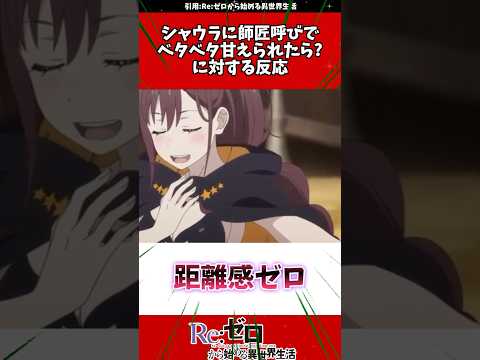
A viral moment from Re:Zero featuring the character Shaura has sparked widespread discussion among anime fans. The scene, in which Shaura addresses her master with innocent affection while maintaining zero emotional distance, resonates deeply because it combines 400 years of accumulated longing with a deceptively lighthearted demeanor—creating a powerful emotional impact that transcends typical character interactions.
- What Happened
- Why It Matters
- Background
- Key Points
- Character Analysis: The Psychology of Shaura’s Affection
- Comparative Analysis: Long-Lived Characters Across Anime
- Industry Trends: The Shift Toward Unfiltered Emotion
- Viewer Reception and Psychological Response
- Narrative Implications and Future Development
- Insights: What Shaura’s Scene Reveals About Modern Anime
- How to Experience Shaura’s Scene Fully
- Conclusion
What Happened
In Re:Zero Season 2, the character Shaura displays a scene of uninhibited affection toward her master, Subaru. She addresses him as “Master” while clinging to him with complete emotional transparency and zero social distance. What appears on the surface as a cute, lighthearted moment carries profound narrative weight: Shaura has waited 400 years for this reunion, and her emotional expression reflects the accumulated longing of four centuries compressed into a single moment of unguarded vulnerability.
Why It Matters
This scene has become significant within anime discourse because it demonstrates how character emotion can operate on multiple layers simultaneously. The moment illustrates a critical shift in modern anime production: the prioritization of pure emotional expression over social convention. Shaura’s behavior—lacking the typical hesitation, embarrassment, or social filtering that usually accompanies such intimate moments—reveals a character whose emotional authenticity has been preserved despite centuries of isolation. For viewers, this creates a unique psychological impact that extends beyond simple character appeal into questions about time, emotion, and human connection.
Background
Shaura is a character introduced in Re:Zero who has waited 400 years for her master’s return. Her characterization deliberately subverts typical anime tropes: rather than expressing her emotions through bashfulness or social restraint, she communicates them with complete directness. This approach contrasts sharply with similar “long-lived character” archetypes in other anime series, such as Saber from Fate/stay night, whose emotional expression is heavily filtered through concepts of honor and duty.
The scene in question occurs during a moment of reunion, where Shaura’s 400-year wait culminates in an unfiltered display of affection. Subaru’s reaction—visible confusion and hesitation—serves as a counterbalance to Shaura’s directness, creating a dynamic that amplifies the emotional resonance of the moment for viewers who identify with his bewilderment.
Key Points
- Zero Emotional Distance: Shaura displays complete physical and emotional proximity to Subaru, lacking the social hesitation typical of anime characters in similar situations.
- 400 Years of Accumulated Emotion: The scene’s power derives not from surface-level cuteness but from the narrative weight of four centuries of longing compressed into a single moment.
- Subaru’s Reaction Amplifies Impact: Subaru’s visible confusion and stammering response creates a relational dynamic that intensifies viewer engagement and emotional investment.
- Lightness Concealing Depth: Shaura’s casual demeanor masks profound emotional depth, creating a psychological contrast that resonates with modern audiences.
- Pure Emotional Expression: Unlike characters constrained by social convention or personal pride, Shaura expresses her feelings without filtration, representing a contemporary anime trend toward unguarded authenticity.
- Narrative Significance: The scene suggests potential for deeper character development, as Shaura’s emotional intensity may become central to future plot developments.
Character Analysis: The Psychology of Shaura’s Affection
Emotional Transparency Without Social Constraint
Shaura’s defining characteristic is her complete absence of social filtering. Where comparable characters—such as Haruhi Suzumiya from The Melancholy of Haruhi Suzumiya—conceal deeper emotions beneath a lighthearted exterior, Shaura operates in reverse: her casual demeanor directly reflects her genuine emotional state. This transparency creates cognitive dissonance in viewers accustomed to characters who maintain emotional distance through embarrassment or social propriety.
The psychological impact stems from what researchers call “authenticity recognition.” Viewers instinctively recognize when emotional expression aligns with internal state, and Shaura’s unfiltered affection triggers a response that transcends typical character appreciation. Her behavior suggests a being who has transcended social conditioning—not through emotional damage or detachment, but through the preservation of emotional purity across centuries.
Temporal Weight and Emotional Preservation
A critical distinction separates Shaura from other long-lived anime characters. Saber from Fate/stay night carries thousands of years of experience, yet her emotional expression remains constrained by knightly honor. Rintaro Okabe from Steins;Gate experiences time loops that accumulate psychological burden. Shaura, by contrast, has maintained emotional vitality despite 400 years of waiting. This preservation of emotional capacity—rather than its erosion—creates narrative intrigue and viewer fascination.
The scene’s emotional weight derives from the viewer’s recognition that 400 years of longing has not diminished Shaura’s capacity for joy or affection. Instead, it has concentrated these emotions into a single, explosive moment of reunion. This narrative choice reflects a contemporary understanding of emotion: not as something that diminishes with time, but as something that can accumulate and intensify.
Relational Dynamics: Subaru’s Role in Amplifying Impact
Shaura’s affection scene achieves its full emotional potential only through Subaru’s reaction. His visible confusion, stammering responses, and attempts to maintain composure create a relational contrast that amplifies the scene’s impact. This dynamic mirrors the relationship between Ryuuji and Taiga in Toradora!, where one character’s emotional directness gains power through the other’s bewildered response.
From a narrative perspective, Subaru’s hesitation serves multiple functions: it validates viewer uncertainty about how to respond to Shaura’s intensity, it demonstrates the challenge of receiving unfiltered emotional expression, and it creates a comedic tension that prevents the scene from becoming melodramatic. The interplay between Shaura’s confidence and Subaru’s confusion generates the scene’s distinctive emotional texture.
Comparative Analysis: Long-Lived Characters Across Anime
| Series | Character | Temporal Span | Emotional Expression Style | Emotional Restraint Level |
|---|---|---|---|---|
| Re:Zero | Shaura | 400 years | Direct, lighthearted, unfiltered | Minimal |
| Fate/stay night | Saber | Thousands of years | Constrained by knightly honor | Severe |
| Fate/Zero | Rider | Thousands of years | Tension between royal pride and human desire | Moderate |
| Attack on Titan | Annie | Several years | Emotionally guarded, mission-focused | Extreme |
| Steins;Gate | Mayuri | Standard lifespan | Lighthearted exterior masking deep emotion | Moderate |
This comparative analysis reveals Shaura’s unique position within anime character design. While other long-lived characters typically develop emotional restraint as a consequence of their extended existence, Shaura maintains minimal emotional filtering. This distinction suggests deliberate creative choice: Re:Zero prioritizes emotional authenticity over the narrative convention that extended lifespan produces emotional guardedness.
Industry Trends: The Shift Toward Unfiltered Emotion
Shaura’s character represents a broader trend in contemporary anime production. Where 2010s anime frequently employed social convention as a narrative filter—characters like Yui from K-On! maintained emotional restraint despite their carefree demeanor—2020s anime increasingly prioritizes direct emotional expression. Characters such as Yuji Itadori from Jujutsu Kaisen and Annie Leonhart from Attack on Titan’s final season demonstrate more immediate, less socially mediated emotional responses.
This shift reflects evolving audience preferences. Modern viewers demonstrate greater appreciation for characters whose internal states align transparently with external behavior. Shaura exemplifies this trend: her emotional authenticity resonates precisely because it lacks the social filtering that previous generations of anime employed as a default narrative device.
Viewer Reception and Psychological Response
Analysis of viewer comments reveals consistent psychological patterns. The phrase “my heart can’t handle this distance-zero approach from the opening” indicates recognition of personal boundary violation—Shaura’s physical and emotional proximity triggers the psychological concept of “personal space” invasion, creating heightened emotional arousal.
Comments such as “400 years of waiting makes the weight of affection precious” demonstrate that viewers recognize the temporal dimension underlying the scene. Rather than responding to surface-level cuteness, audiences engage with the narrative architecture: they understand that Shaura’s behavior carries the weight of four centuries of longing.
The phrase “light demeanor with bottomless emotional depth” captures the psychological mechanism most effectively. Viewers experience cognitive contrast between Shaura’s casual presentation and the profound emotional reality beneath it. This contrast—rather than either element alone—generates the scene’s distinctive emotional impact.
Narrative Implications and Future Development
Shaura’s current characterization suggests several potential narrative trajectories. First, her “light demeanor masking deep emotion” structure typically precedes a dramatic moment where that concealed depth becomes narratively central. Similar patterns in Steins;Gate (Mayuri) and other character-driven narratives suggest that Shaura’s emotional intensity will likely become crucial to future plot developments.
Second, the relationship between Shaura and Subaru appears poised for increased complexity. The current dynamic—Shaura’s uninhibited affection meeting Subaru’s bewildered response—may evolve into a more nuanced emotional relationship as the narrative progresses. Shaura’s 400-year temporal perspective may eventually influence Subaru’s understanding of time, choice, and consequence in ways that reshape the series’ thematic focus.
Third, Shaura’s character design raises questions about emotional preservation across extended timespans. Why has her emotional capacity remained intact while other long-lived characters experience emotional erosion? This question suggests that future narrative development may explore the mechanisms by which Shaura maintained emotional vitality, potentially revealing crucial information about the series’ metaphysical framework.
Insights: What Shaura’s Scene Reveals About Modern Anime
Shaura’s affection scene functions as a microcosm of contemporary anime’s evolving relationship with character emotion. The scene demonstrates that modern production values prioritize emotional authenticity over social convention, psychological depth over surface appeal, and narrative weight over momentary cuteness.
The scene’s resonance also reflects audience maturation. Viewers increasingly recognize and appreciate the structural elements underlying character appeal: they understand temporal context, relational dynamics, and psychological mechanisms. Shaura’s scene succeeds not because it presents a cute character, but because it presents a character whose emotional expression carries narrative, psychological, and thematic significance simultaneously.
Furthermore, the scene illustrates anime’s capacity to explore fundamental human experiences through fantastical frameworks. The question “what does it mean to wait 400 years?” becomes emotionally concrete through Shaura’s behavior. Anime’s ability to literalize emotional states—to make 400 years of longing visible in a single moment of unguarded affection—represents a distinctive strength of the medium.
Finally, Shaura’s character suggests that contemporary audiences value emotional transparency and authenticity above traditional markers of character appeal. In an era of increasing social mediation and emotional performance, a character who expresses genuine feeling without social filtering resonates with particular intensity. Shaura represents not a fantasy of romantic idealization, but a fantasy of emotional honesty—a quality increasingly rare in contemporary experience.
How to Experience Shaura’s Scene Fully
For viewers seeking to maximize emotional engagement with this scene, several approaches enhance appreciation. First, viewing Shaura’s initial introduction provides essential context: her characterization shift from apparent coldness to unfiltered affection creates the emotional contrast that amplifies the reunion scene’s impact.
Second, maintaining conscious awareness of the 400-year temporal context while viewing transforms the scene’s emotional register. Rather than perceiving Shaura’s behavior as simple cuteness, viewers who actively consider the weight of four centuries of waiting experience the scene’s full emotional complexity.
Third, close attention to Subaru’s facial expressions and vocal delivery reveals the relational dynamic that completes the scene’s emotional architecture. His confusion and stammering are not comedic elements but essential components of the emotional structure.
Fourth, comparative viewing of similar scenes in Fate/stay night and Steins;Gate clarifies Shaura’s distinctive approach to emotional expression. Understanding how other long-lived characters handle emotion illuminates what makes Shaura’s approach narratively significant.
Finally, engagement with Re:Zero’s source material—the light novels—provides additional context regarding Shaura’s internal emotional state and the 400 years preceding her reunion with Subaru. This supplementary knowledge deepens understanding of the scene’s narrative foundations.
Conclusion
Shaura’s affection scene represents far more than a momentary display of character appeal. It exemplifies contemporary anime’s capacity to explore emotional authenticity, temporal complexity, and relational dynamics through carefully constructed narrative moments. The scene’s power derives from the convergence of multiple elements: unfiltered emotional expression, accumulated temporal weight, relational contrast, and thematic significance.
The widespread viewer response to this scene indicates that modern audiences recognize and value these structural elements. Rather than responding to surface-level cuteness, viewers engage with the scene’s underlying architecture: they understand that Shaura’s behavior carries the weight of 400 years, that her emotional transparency represents a distinctive narrative choice, and that her interaction with Subaru creates a relational dynamic that amplifies emotional impact.
As Re:Zero’s narrative continues to develop, Shaura’s character—and the emotional authenticity she represents—will likely become increasingly central to the series’ thematic exploration. Her 400-year perspective, her unfiltered emotional expression, and her relationship with Subaru suggest narrative potential that extends far beyond the current moment. For viewers and analysts alike, Shaura represents a compelling case study in how contemporary anime constructs, communicates, and deepens emotional meaning.