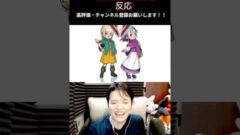
▶ Watch the original YouTube video
The sister character in the anime Yomi no Tsugai underwent a dramatic shift in viewer perception, transforming from initially unappealing to genuinely beloved. This transformation reveals how voice acting, psychological depth, and careful character design can completely reshape audience reception of a character.
What Happened
The sister character in Yomi no Tsugai initially received negative reception from viewers, with early comments describing her as unattractive and poorly designed. However, as the anime progressed and her character depth was revealed, viewer sentiment reversed dramatically. The character went from being criticized to becoming one of the most beloved elements of the series, with audiences praising her charm, her voice acting, and her psychological complexity.
Why It Matters
This character arc demonstrates a critical principle in anime production: character perception is not fixed but can be fundamentally transformed through deliberate creative choices. Understanding how this transformation occurred provides valuable insight into modern anime storytelling techniques and the psychology of viewer engagement. The sister character’s journey from rejection to affection illustrates how voice performance, narrative depth, and visual design work together to create compelling characters that resonate emotionally with audiences.
Background
Character evaluation reversals are not uncommon in anime, but they typically follow predictable patterns. Similar phenomena occurred in Demon Slayer with Nezuko, whose initial appearance as a demon created viewer anxiety that transformed into deep affection as her humanity was revealed. The sister character in Yomi no Tsugai follows a comparable trajectory, though through distinctly different mechanisms. The character was designed with specific traits—her height, her voice, her psychological dependence on her brother—that initially seemed unappealing but gradually revealed themselves as intentional character elements that deepened viewer connection.
Key Points
- The sister character received negative initial reactions but experienced a complete reversal in viewer sentiment as the story progressed
- The voice actress’s performance, particularly her use of a somewhat naive vocal delivery, significantly enhanced the character’s appeal
- The height difference between siblings and its environmental explanation added credibility to the character design
- The sister’s devotion to her brother is portrayed as pure familial love rather than romantic obsession, which resonated positively with viewers
- The character’s unconditional trust and joy at simple moments with her brother created powerful emotional connections with audiences
- Subtle hints of psychological vulnerability beneath her cheerfulness added depth and prevented the character from becoming one-dimensional
Character Development Analysis
The sister character’s appeal emerges from multiple layered elements working in concert. Visually, initial viewer reactions focused on her large stature compared to typical anime aesthetics, leading to dismissive comments. However, this physical characteristic serves a narrative purpose—it reflects environmental factors and creates visual contrast that emphasizes the sibling dynamic.
The voice acting proved crucial to the character’s transformation. Viewer comments specifically noted that the character became significantly more appealing once voice acting was added. The voice actress employs a slightly vacant, innocent vocal quality that perfectly captures the character’s psychological state. This performance choice aligns with broader trends in recent anime, where similar vocal techniques have been employed in works like Oshi no Ko and Dungeon Meshi.
Psychologically, the sister character’s behavior reveals careful narrative design. Her extreme joy at simple moments with her brother—eating meals together, confirming his survival—indicates deep trauma from separation. This is not presented as romantic obsession but as genuine psychological dependence rooted in fear of loss. Viewers recognized this distinction, praising the show for portraying her feelings as pure familial love rather than inappropriate attachment.
Viewer Reception Patterns
Online reactions reveal a clear progression. Initial comments were dismissive: “the sister isn’t cute,” “she looks oversized.” These quickly shifted to reconsideration: “wait, is she actually cute?” and “she’s big and cute.” The turning point consistently coincided with voice acting being introduced and character motivation being revealed.
A particularly telling comment noted: “her brother’s reaction is at the limit, but it’s good that she doesn’t have romantic love for him—just sibling love.” This indicates viewers actively recognized and appreciated the distinction between unhealthy obsession and genuine familial devotion. Another observation—”she’s just happy eating together because he’s her emotional support”—demonstrates how viewers understood the psychological depth beneath surface-level cuteness.
Some viewers also noted potential concerns: “if the brother gets a girlfriend, she might take it badly” and “she might lecture him about being worthy of a partner.” These comments show audiences recognized the character’s psychological fragility while still maintaining affection for her.
Comparative Analysis
Demon Slayer’s Nezuko: Initially created anxiety through her demon appearance; transformed through revelation of her retained humanity and protective instincts toward her brother.
Nisekoi’s Onodera: Began as a tsundere archetype; evolved through psychological growth into a character whose feelings toward her brother matured into healthy familial love.
Yomi no Tsugai’s Sister: Started as visually unappealing; transformed through voice performance, psychological depth, and careful narrative revelation of her emotional dependence and pure devotion.
All three cases demonstrate that character evaluation depends less on initial design and more on how creators develop psychological authenticity and emotional resonance.
Production Techniques at Work
The sister character’s successful transformation reveals several deliberate production choices. The voice actress’s performance is not accidental—it represents a specific artistic decision to portray the character’s psychological state through vocal delivery. The height difference is narratively justified through environmental factors, preventing it from feeling arbitrary. The visual framing emphasizes the sibling dynamic through compositional choices and camera work.
These elements work together to create what might be called “intentional character complexity.” Rather than designing a character meant to be immediately likable, the creators designed a character whose appeal would deepen as viewers understood her psychology. This approach reflects broader trends in 2020s anime, where trauma recovery, psychological vulnerability, and emotional authenticity have become central themes.
Insights
The sister character’s journey from rejection to affection demonstrates that character appeal is not predetermined but constructed through multiple creative layers. Voice acting, narrative depth, visual design, and psychological authenticity combine to create emotional resonance that transcends initial impressions.
This case study reveals how modern anime production has evolved beyond simple character archetypes toward more nuanced psychological portrayal. The sister character succeeds not because she fits conventional beauty standards or personality types, but because her behavior reflects authentic human psychology—the desperate joy of reunion after trauma, the fear of abandonment, the pure devotion that comes from emotional dependence.
The audience’s acceptance of her character—including their recognition of her psychological fragility while maintaining affection—suggests viewers increasingly value emotional authenticity over surface-level appeal. This shift has significant implications for how anime characters are designed and developed, pointing toward a future where psychological depth and realistic emotional portrayal take precedence over traditional aesthetic or personality conventions.