▶ Watch the original YouTube video
A seemingly simple line of dialogue from the mobile game Uma Musume Pretty Derby has sparked widespread discussion across social media and fan communities. This article examines why the phrase “That’s so big♡” resonated so deeply with audiences, exploring the evolution of character expression in anime and gaming over the past 15 years.
What Happened
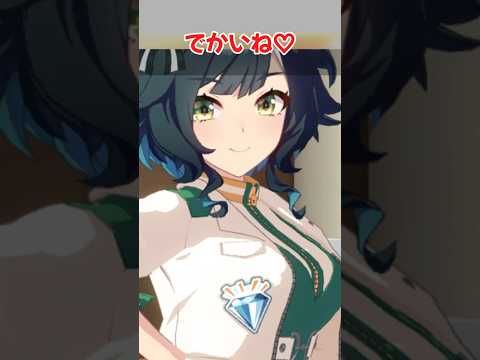
A voice line featuring the phrase “That’s so big♡” (でかいね♡) delivered by a character in Uma Musume Pretty Derby generated significant online buzz, spawning reaction compilation videos and widespread discussion across Twitter, YouTube, and fan forums. The brief, casual expression—complete with a heart symbol—became a trending topic within the game’s community, with fans creating dedicated content analyzing and celebrating the moment.
Why It Matters
This phenomenon reflects a fundamental shift in how modern anime and gaming industries construct relationships between characters and audiences. The viral response to a single line of dialogue demonstrates how contemporary entertainment strategically uses intimate character expressions to deepen fan engagement. Understanding this trend reveals broader changes in character design philosophy, social media marketing, and the psychology of fan communities in the digital age.
Background
Uma Musume Pretty Derby is a mobile game that personifies real racehorses as anime characters, combining competitive gaming mechanics with narrative storytelling. Since its launch, the franchise has expanded to include multiple anime adaptations and has cultivated a dedicated fanbase. The game’s success relies heavily on character development and voice acting, with dialogue choices playing a crucial role in building player attachment to characters.
The phrase in question represents a departure from formal character speech patterns. Rather than using polite or dramatic language, the character employs casual, affectionate phrasing—the kind of intimate expression typically reserved for close friends. This informality, paired with the heart symbol, signals emotional openness and vulnerability.
Key Points
- Strategic Dialogue Design: The phrase exemplifies how modern game developers intentionally craft dialogue to create emotional intimacy between players and characters, moving beyond traditional character archetypes.
- Social Media Amplification: The line’s brevity and catchiness made it ideal for sharing on social platforms, enabling rapid viral spread through reaction compilations and memes.
- Evolution of Character Expression: The casual tone reflects a 15-year industry trend moving from rigid character types to more naturalistic, emotionally complex personalities.
- Fan Psychology Shift: Modern audiences increasingly prefer relatable, imperfect characters over idealized ones, seeking genuine emotional connection rather than distant admiration.
- Multi-Layered Appeal: The phrase simultaneously serves character development, player engagement, and marketing purposes, demonstrating sophisticated production strategy.
- Comparative Analysis: Similar expressions in works like K-On!, Love Live!, and The Idolmaster show an industry-wide pattern of using casual dialogue to signal character intimacy.
Timeline
- 2000s: Anime characters defined primarily by established archetypes (tsundere, kuudere, etc.) with formal dialogue patterns.
- 2009: K-On! introduces naturalistic, casual dialogue among characters, establishing new standards for character interaction.
- 2013 onwards: Love Live! series emphasizes direct emotional expression in character dialogue, increasing fan engagement through vulnerability.
- 2015: The Idolmaster Cinderella Girls demonstrates how game mechanics can personalize character responses, deepening player-character relationships.
- 2018: Uma Musume Pretty Derby launches, combining real-world horse racing knowledge with intimate character storytelling.
- 2020s: Character expression evolves to treat audiences as friends rather than distant admirers, with dialogue designed to create perceived personal connection.
Perspectives
Supportive Fan Interpretation: Many players view the phrase as an authentic expression of character personality, celebrating the moment as proof that the character has emotionally opened up to them. Comments like “This is so cute” and “I want to hear this forever” reflect appreciation for the character’s vulnerability and the perceived deepening of the player-character relationship.
Critical Analysis: Some fans questioned whether the casual expression felt consistent with the character’s established personality, raising concerns about character coherence. These viewers prioritize narrative consistency over emotional intimacy, viewing such expressions as potentially inconsistent with prior characterization.
Industry Perspective: Production analysts recognized the phrase as a calculated strategic choice, noting how the line’s catchiness and shareability align with social media marketing objectives. The deliberate selection of casual, memorable dialogue reflects understanding of viral content mechanics and fan engagement psychology.
Broader Cultural Observation: The phenomenon illustrates how digital-age entertainment blurs boundaries between character and audience, creating parasocial relationships that feel increasingly reciprocal. The phrase functions as a symbolic gesture of the character “choosing” to be vulnerable with the player.
Insights
The viral response to “That’s so big♡” represents more than a fleeting trend—it signals a structural evolution in how anime and gaming industries construct character-audience relationships. Over the past 15 years, the industry has systematically moved from treating characters as distant ideals to positioning them as intimate friends who share genuine emotions with players.
This shift reflects changing audience preferences. Modern fans increasingly seek characters who feel relatable and imperfect rather than aspirational and flawless. A casual, affectionate phrase communicates authenticity in ways that formal dialogue cannot, creating the illusion of genuine friendship rather than parasocial admiration.
The phrase’s success also demonstrates how social media has fundamentally altered what makes content “shareable.” Short, memorable, emotionally resonant dialogue spreads more effectively than complex narrative moments, incentivizing writers to craft lines optimized for viral potential. Uma Musume’s production team clearly understands this dynamic, strategically embedding quotable moments designed for platform amplification.
Looking forward, this trend suggests character dialogue will become increasingly casual and intimate, with developers pushing boundaries in how directly characters can address and emotionally engage with players. However, this evolution carries risks: excessive informality could dilute character distinctiveness, and the strategic manufacture of intimacy may eventually feel manipulative if audiences become aware of the calculation behind it.
Ultimately, the “That’s so big♡” phenomenon exemplifies how contemporary entertainment leverages psychological insights about human connection, social media mechanics, and fan psychology to create moments that feel spontaneous but are actually carefully engineered. Understanding this dynamic reveals the sophisticated infrastructure underlying modern fan engagement strategies.