▶ Watch the original YouTube video
Uma Musume’s Annual Vaccination Event Returns: Why Players Love Protesting Their Trainer
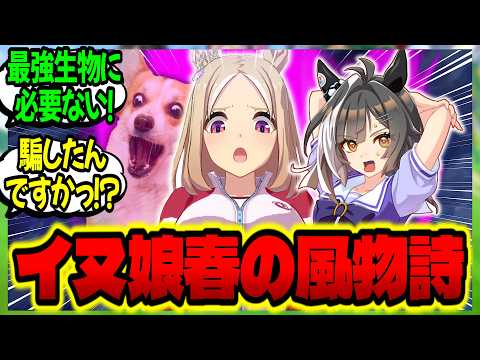
Uma Musume Pretty Derby’s recurring vaccination event has sparked widespread player engagement this year, with fans expressing playful “protests” against their trainer characters. The event reveals how the game uniquely portrays parent-child relationships through everyday scenarios, setting it apart from other breeding simulation games.
What Happened
Uma Musume Pretty Derby has reintroduced its annual “Vaccination Derby” event, in which players witness their horse-girl characters resisting vaccination administered by their trainer. The event has generated significant discussion across social media platforms, with players sharing screenshots and reactions to how their favorite characters respond to the medical procedure. Hashtags like #UmaMuscleVaccination trended multiple times, and community forums filled with detailed analysis of character-specific responses.
Why It Matters
The vaccination event exemplifies how modern game design can explore universal human experiences through interactive storytelling. Rather than serving as a simple comedic interlude, the event functions as a sophisticated exploration of parent-child dynamics, responsibility, and mutual trust. This approach demonstrates the evolving maturity of breeding simulation games and their capacity to address emotional complexity alongside gameplay mechanics. For players, the event creates a meaningful moment of reflection on their role as a caretaker figure within the game world.
Background
Uma Musume Pretty Derby, developed by Cygames, launched in 2021 and has become one of the most successful breeding simulation games in recent years. The game combines competitive horse racing mechanics with character development, requiring players to train and nurture horse-girl characters. Unlike traditional breeding sims that emphasize mechanical progression, Uma Musume prioritizes character individuality and relationship depth. The vaccination event has become a recurring annual feature that showcases each character’s unique personality through their reaction to a universally relatable scenario. The game’s development team has stated in past interviews that maximizing character individuality is a core design goal, and the vaccination event serves as an ideal vehicle for this philosophy.
Key Points
- The vaccination event features diverse character reactions ranging from willing compliance to full resistance, reflecting each character’s established personality traits
- Players experience the event as a meaningful expression of parent-child relationships, with trainers balancing responsibility and empathy
- The annual recurrence of the event allows players to observe character growth and development over time
- Social media engagement demonstrates that players view the event as a sophisticated character study rather than mere comedy
- The event represents a shift in breeding simulation design toward emphasizing emotional authenticity and character agency
- Community analysis reveals that players appreciate how the event integrates character backstories and personality traits into gameplay moments
Timeline
- 1997: Tokimeki Memorial establishes early breeding simulation conventions focused on stat-based progression
- 2011: The Idolmaster Cinderella Girls introduces more sophisticated character expression through narrative
- 2021: Uma Musume Pretty Derby launches, combining racing mechanics with character-centric design
- Annual: Vaccination event becomes recurring feature, allowing year-over-year character development observation
- 2024: Current vaccination event generates widespread player engagement and community discussion
Perspectives
From a game design perspective, the vaccination event succeeds because it places characters in a universally recognizable scenario where their individual traits become most apparent. The event avoids the hierarchical dynamic common in other breeding sims, instead portraying a relationship based on mutual dependence and trust. Players report experiencing genuine emotional responses—some noting they felt parental responsibility and empathy simultaneously, mirroring real-world parenting experiences.
The event also reflects broader industry trends toward emphasizing character daily life alongside main narrative content. Games like Fate Grand Order and Genshin Impact have similarly expanded character development through supplementary story content. Uma Musume’s vaccination event operates within this context, using a mundane scenario to deepen player investment in character relationships.
However, some consideration exists regarding the appropriateness of comedic treatment of medical procedures. While the game maintains a lighthearted tone, vaccination remains a serious health matter. The game’s approach balances this by ultimately framing the event as an expression of care and trust rather than trivializing medical necessity.
Insights
The vaccination event’s success reveals that modern players seek emotional authenticity in character-driven games. The event works not because of mechanical complexity, but because it respects character agency while maintaining the trainer’s responsibility. This dynamic—where both player and character perspectives receive equal weight—distinguishes Uma Musume from earlier breeding simulations that treated characters primarily as progression systems.
The recurring nature of the event serves an additional function: it provides a consistent framework for observing character growth. Players notice subtle changes in how characters respond year to year, creating a sense of genuine development that extends beyond stat increases. This approach transforms a simple annual event into a meaningful ritual that deepens player-character bonds.
The widespread community engagement demonstrates that players value games that explore relationship complexity through everyday scenarios. Rather than relying solely on dramatic story moments, Uma Musume uses mundane situations—vaccination, health checkups, daily training—to express character depth and emotional truth. This design philosophy suggests a maturing game industry increasingly interested in portraying human relationships with nuance and respect for all parties involved.