▶ Watch the original YouTube video
What If the SRX Appeared in Mobile Suit Gundam SEED FREEDOM? How Fans Imagine the Perfect Crossover
A hypothetical scenario in which the SRX mecha from Super Robot Wars OG appears in the Gundam SEED FREEDOM universe has captivated online communities, sparking intense discussion about character compatibility, narrative coherence, and the possibilities of crossover storytelling between two beloved franchises.
What Happened
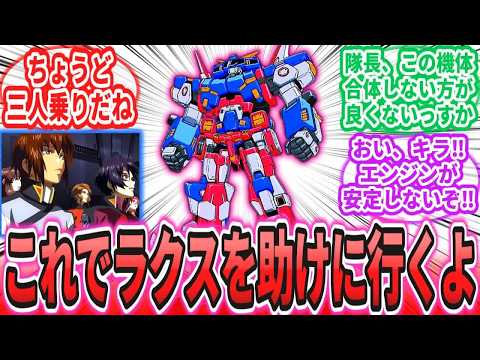
Following the release of Mobile Suit Gundam SEED FREEDOM, a thought experiment emerged across social media platforms: what if the underground facility in Orb had contained the SRX—the legendary super-robot from Super Robot Wars OG—instead of conventional mobile suits? This hypothetical scenario sparked widespread fan engagement, with users across Twitter, YouTube, and forums generating detailed analyses of how protagonist Kira Yamato, Shin Asuka, and Asuran Zala might interact with the SRX’s complex systems and what narrative implications such a crossover would carry.
Why It Matters
This phenomenon reveals the depth of fan engagement with mecha anime and gaming franchises, demonstrating how audiences actively participate in expanding fictional universes through creative speculation. The intensity of discussion around this hypothetical crossover illustrates the enduring appeal of Super Robot Wars as a franchise that bridges disparate anime properties, while simultaneously highlighting the constraints imposed by licensing agreements that make such official collaborations extraordinarily difficult. For industry observers, this represents a valuable case study in how fan creativity responds to the intersection of beloved intellectual properties.
Background
Mobile Suit Gundam SEED FREEDOM, released in 2024, represents the latest installment in the Gundam SEED continuity, centering on protagonist Kira Yamato’s character arc and the consequences of his choices. The film serves as a culmination of the SEED saga, exploring themes of individual agency and responsibility within warfare.
Super Robot Wars OG (Original Generation) operates as a standalone universe within the broader Super Robot Wars franchise, created to circumvent licensing complications inherent in crossover projects. The SRX is one of OG’s signature units—a super-sized mecha formed through the combination of multiple robots, renowned for its mechanical complexity and formidable combat capabilities. The franchise has historically served as a meeting ground for diverse mecha anime properties, from Gundam to Macross to Mazinger Z.
Both properties are owned by Bandai Namco, yet Gundam’s intellectual property management remains exceptionally strict, making official crossovers with OG’s continuity highly improbable despite shared corporate ownership.
Key Points
- The hypothetical scenario proposes that the SRX, rather than conventional Gundam units, was the mobile suit prepared in Orb’s underground facility in SEED FREEDOM
- Fan discussions center on mechanical compatibility between the SRX’s complex control systems and Kira Yamato’s piloting style, as well as potential interactions with other SEED protagonists
- The thought experiment demonstrates how fans engage in sophisticated analysis of character psychology, mechanical design, and narrative coherence
- Online reactions span from enthusiastic support to critical skepticism, with some fans questioning whether such a crossover would align with Gundam’s established aesthetic
- The phenomenon reflects broader trends in anime and gaming communities toward speculative worldbuilding and fan-driven creative expansion
- Licensing and intellectual property restrictions make official realization of this scenario virtually impossible, despite both franchises operating under Bandai Namco
Mechanical and Narrative Compatibility
Mechanical Synergy
The SRX represents a fundamentally different design philosophy than Gundam mobile suits. While Gundam units emphasize realistic military aesthetics and operational constraints, the SRX embraces super-robot conventions with its combination mechanics and overwhelming firepower. Kira Yamato, established throughout the SEED continuity as a prodigy pilot with exceptional adaptability, emerges as one of the few characters theoretically capable of mastering the SRX’s intricate control systems. Fan analysis suggests that Kira’s intuitive combat style, developed through piloting the Freedom Gundam’s sophisticated autonomous systems, could translate effectively to the SRX’s demands.
Narrative Coherence
Within the context of SEED FREEDOM’s narrative, Kira confronts fundamental questions about personal choice and consequence. The SRX’s design philosophy—multiple pilots achieving unified consciousness through mechanical fusion—parallels Kira’s thematic journey toward understanding collective responsibility and individual agency. This alignment between character arc and mechanical metaphor represents what fans identify as the scenario’s narrative elegance. The hypothetical creates a scenario where Kira’s psychological development and mechanical capability evolve in synchronization, a rare occurrence in mecha storytelling.
Fan Perspectives and Analysis
Twitter responses predominantly express enthusiasm, with users declaring “Kira piloting the SRX would be unstoppable.” However, more sophisticated analyses examine deeper compatibility questions: whether the SRX’s complex operational requirements would complement or conflict with Kira’s intuitive combat methodology, and how secondary characters like Shin Asuka might function within the SRX’s multi-pilot framework.
YouTube comments reveal a dichotomy between aspirational desire and pragmatic acceptance. The majority express wishes for official realization while simultaneously acknowledging licensing impossibilities. Forum discussions on 5channel present counterarguments, with some users contending that Gundam’s grounded aesthetic fundamentally clashes with OG’s super-robot conventions, and others noting that Kira’s existing Freedom Gundam already provides sufficient mechanical expression.
Fan creative communities on Twitter, Pixiv, and Archive of Our Own have generated numerous original works exploring this scenario, demonstrating how the hypothetical functions as generative creative stimulus rather than merely speculative discussion.
Industry Context and Licensing Constraints
The practical impossibility of this crossover stems from Gundam’s exceptionally restrictive intellectual property management. While both franchises operate under Bandai Namco’s corporate umbrella, Gundam’s licensing agreements with Sunrise impose stringent controls over how the property can be utilized. Integrating Gundam units into OG’s continuity would fundamentally alter Gundam’s established canon and aesthetic, creating complications across the entire franchise’s licensing ecosystem.
Super Robot Wars OG was specifically developed to address these licensing complications, creating an original universe that permits crossover storytelling without requiring coordination across multiple rights holders. This design solution, while enabling the franchise’s core appeal, simultaneously prevents the very crossovers that fan communities most desire.
Historical Precedent
Similar fan speculation has accompanied previous Super Robot Wars releases. The announcement of Gundam SEED DESTINY’s participation in Super Robot Wars V generated comparable waves of hypothetical scenarios. The 2016 announcement that Shin Asuka would pilot a new unit sparked hundreds of “what if” posts exploring alternative narrative directions. The current phenomenon follows established patterns within mecha fan communities, suggesting that such speculative engagement represents a consistent feature of how audiences interact with crossover-capable franchises.
Insights
This phenomenon illuminates fundamental aspects of contemporary fan culture and mecha anime appreciation. Audiences are not passively consuming narrative content but actively participating in worldbuilding through speculative analysis. The intensity of engagement around this hypothetical scenario demonstrates that fans seek more than surface-level entertainment—they desire scenarios in which beloved characters achieve optimal expression of their capabilities within perfectly calibrated narrative and mechanical contexts.
The SRX/SEED FREEDOM crossover represents what fans identify as a “perfect scenario”—one where mechanical design, character psychology, and thematic resonance align with unusual coherence. This alignment, precisely because it remains officially unrealizable, becomes generative of creative energy rather than disappointing. The constraint itself becomes productive, stimulating fan creativity rather than suppressing it.
The broader implication extends to how intellectual property management shapes fan communities. Licensing restrictions, while commercially necessary, create spaces of imaginative possibility where fans collectively construct narratives that official channels cannot provide. These fan-generated scenarios possess their own cultural value, documenting community investment and creative capacity while simultaneously highlighting the gap between what audiences desire and what corporate licensing structures permit.
For industry observers, this case demonstrates that fan speculation around impossible crossovers may generate more sustained engagement and community participation than many officially realized projects. The hypothetical scenario becomes a shared cultural artifact around which communities organize discussion, creative production, and collective meaning-making—functions that extend far beyond the original intellectual properties themselves.