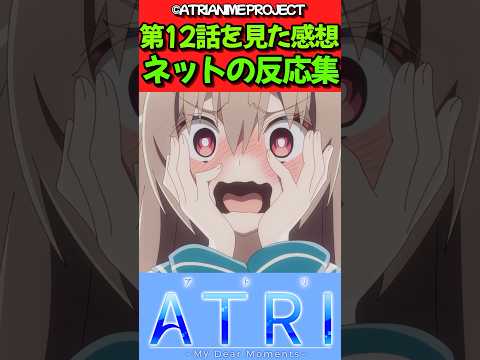
▶ Watch the original YouTube video
The final episode of ATRI -My Dear Moments- has resonated deeply with viewers worldwide, presenting a philosophically nuanced exploration of separation between robot and human. After 15 years of anime viewership, this adaptation of the visual novel demonstrates how carefully constructed emotional storytelling and visual metaphor can transform a farewell into a meditation on human connection and personal growth.
- What Happened
- Why It Matters
- Background
- Key Points
- Narrative Structure and Thematic Execution
- Visual Language and Emotional Resonance
- Comparative Analysis: Approaches to Farewell in Anime
- Industry Implications and Future Trends
- Viewer Reception and Social Media Response
- Viewing Recommendations and Thematic Depth
- Broader Implications and Future Possibilities
- Conclusion
What Happened
The twelfth and final episode of ATRI -My Dear Moments- depicts the separation between ATRI, an AI companion, and Ichiki, the protagonist. Rather than presenting this as a simple character departure, the episode frames the farewell as a transformative moment where Ichiki consciously chooses to move forward with his life, having grown through his relationship with ATRI. The narrative emphasizes that this separation represents not an ending, but a transition in their relationship—one that persists in memory and emotional impact even after physical separation.
Why It Matters
This episode represents a significant shift in how anime adaptations of visual novels handle source material. Visual novels traditionally offer multiple branching storylines based on player choices. ATRI successfully translates this interactive element into linear animation by embedding the concept of “choice” into the narrative itself. Viewers find themselves contemplating alternative outcomes, mirroring the decision-making inherent to the original medium. Additionally, the episode’s approach to depicting farewell—grounded in emotional realism rather than supernatural transcendence—reflects how contemporary audiences experience loss in their own lives, making the story universally resonant.
Background
ATRI -My Dear Moments- is an anime adaptation of a visual novel that explores the relationship between a human protagonist and an advanced AI companion. The series has been praised for its thoughtful character development and thematic depth. Over the course of 12 episodes, the narrative builds a foundation of shared experiences and emotional connection between Ichiki and ATRI, establishing the weight and significance of their eventual separation. The production team deliberately chose to adapt the story into a single unified narrative rather than presenting multiple branching routes, requiring careful craftsmanship to preserve the emotional complexity of the source material.
Key Points
- The final episode depicts ATRI and Ichiki’s separation as a conscious choice rather than an inevitable tragedy, emphasizing agency and personal growth
- The narrative frames the farewell as a transformation in their relationship rather than its termination—ATRI persists in Ichiki’s memory and emotional landscape
- Visual storytelling, particularly seascapes and natural imagery, serves as a metaphorical extension of the characters’ emotional states
- The episode successfully translates the interactive “choice” mechanics of visual novels into the linear medium of animation
- Social media responses indicate widespread emotional resonance, with viewers praising both the narrative execution and philosophical depth
- The adaptation demonstrates a new industry approach to visual novel anime: unifying multiple routes into a single narrative while preserving thematic complexity
Narrative Structure and Thematic Execution
The farewell depicted in ATRI‘s final episode differs fundamentally from similar scenes in other acclaimed anime. Comparing it to Angel Beats!, which frames separation as spiritual transcendence through light and sacred imagery, ATRI grounds its farewell in concrete reality. Where Angel Beats! presents characters ascending to a higher plane, ATRI shows Ichiki returning to ordinary life, transformed by his experiences but rooted in the tangible world.
This approach parallels the emotional architecture of Clannad, which uses everyday settings to amplify the weight of loss. However, ATRI diverges by avoiding the finality of death. Instead, it presents what might be termed “relational transformation”—the bond persists in altered form. This distinction proves crucial: it reflects how most people experience significant separations in reality, making the narrative more universally applicable than works depicting absolute loss.
The characterization of ATRI itself warrants attention. Rather than depicting an AI gradually learning to be human—a common trope in robot-focused narratives—ATRI arrives at the final episode already fully established as an emotionally complex being. This narrative choice intensifies the farewell’s impact: viewers are not mourning the loss of potential, but rather the separation from a fully realized companion.
Visual Language and Emotional Resonance
The production team employs sophisticated visual metaphor throughout the final episode. Seascapes, sunset imagery, and the sound of waves function as extensions of character psychology. The locations where Ichiki and ATRI spent time together become visual anchors for memory and emotion. This technique echoes the school setting in Clannad, where architecture and landscape symbolize character interiority. In ATRI, natural elements serve similar functions, creating a visual language that communicates emotional depth without relying on dialogue.
Comparative Analysis: Approaches to Farewell in Anime
| Title | Type of Separation | Visual Language | Emotional Outcome |
|---|---|---|---|
| Angel Beats! | Spiritual transcendence | Light, sacred imagery, music | Hope mixed with melancholy |
| Clannad | Death and finality | Everyday settings in contrast to loss | Deep sorrow and acceptance |
| ATRI -My Dear Moments- | Relational transformation | Natural imagery and psychological depth | Bittersweet forward momentum |
This comparison reveals ATRI‘s distinctive positioning. By depicting farewell as relational rather than absolute, the series captures an emotional register that resonates with contemporary audiences’ lived experiences of separation. Most people do not experience relationships ending in death or spiritual transcendence; they experience transformation, distance, and the persistence of connection despite physical separation.
Industry Implications and Future Trends
The success of ATRI signals a potential shift in how the anime industry approaches visual novel adaptations. Over the past five years, such adaptations have proliferated, yet many fail to leverage the medium’s defining characteristic: player choice. ATRI solves this problem by embedding choice into the narrative structure itself. Viewers naturally wonder, “What if Ichiki had chosen differently?” This contemplation mirrors the decision-making inherent to visual novels, translating interactive storytelling into passive viewing.
If this approach becomes industry standard, future visual novel adaptations may increasingly focus on a single unified narrative while preserving the thematic weight of branching possibilities. Rather than presenting multiple routes sequentially or in parallel, studios might integrate the concept of choice into character motivation and narrative structure.
Additionally, ATRI demonstrates deepening sophistication in how anime explores the “robot and human” thematic territory. Earlier works like Chobits and Aria the Animation approached the subject with lighter philosophical frameworks. ATRI engages more directly with fundamental questions: What constitutes emotion? How do relationships persist beyond physical presence? These inquiries elevate the narrative beyond entertainment into philosophical territory.
Viewer Reception and Social Media Response
The final episode generated substantial engagement across multiple platforms. On Twitter, thousands of posts documented emotional responses, with recurring themes of heartbreak over ATRI’s departure and appreciation for Ichiki’s character development. Discussion threads on 4chan’s anime boards predominantly featured positive assessments, praising the visual novel adaptation as successful and the final episode’s direction as exceptional. Some viewers expressed desire for extended content or alternative routes, a response that reflects the work’s emotional impact rather than criticism of its quality.
YouTube comments emphasized gratitude for encountering the work and noted the unforgettable nature of ATRI as a character. These responses suggest viewers recognized the series’ thematic core: the exploration of how relationships shape personal growth and the value of shared time, regardless of duration or ultimate outcome.
Critical voices, while minority, raised questions about narrative ambiguity—specifically whether ATRI truly ceased to exist or persisted in altered form. Rather than representing a flaw, this ambiguity may constitute intentional design, offering viewers imaginative space to contemplate the nature of digital consciousness and memory.
Viewing Recommendations and Thematic Depth
For viewers approaching ATRI -My Dear Moments- for the first time, sequential viewing from episode one proves essential. The final episode’s emotional weight depends entirely on the accumulated relationship between Ichiki and ATRI. Viewing only the conclusion diminishes the impact of their separation.
Attention to background art and visual composition enhances comprehension of character psychology. The series employs environmental storytelling extensively; wave movement, lighting, and spatial composition communicate emotional states that dialogue cannot fully express.
Episodes 6 and 9 merit particular attention, as they depict ATRI’s development of human-like emotional complexity. Understanding this progression proves essential for grasping the final episode’s thematic significance.
Comparative viewing of Clannad, Angel Beats!, and Chobits enriches interpretation by providing context for how different works approach similar themes. This comparative framework illuminates ATRI‘s distinctive narrative choices and philosophical positioning.
Broader Implications and Future Possibilities
The ambiguity surrounding ATRI’s ultimate fate—whether complete deletion or continued existence in transformed state—raises intriguing questions about digital consciousness and the nature of memory. If intentional, this narrative choice grants viewers imaginative agency, inviting personal interpretation rather than imposing definitive conclusions.
Potential future developments might explore the post-separation relationship between Ichiki and ATRI, depicting how their bond persists in altered form. Alternatively, spinoff narratives from other characters’ perspectives could deepen the world-building and thematic exploration.
ATRI -My Dear Moments- establishes new possibilities for visual novel anime adaptation and demonstrates how careful attention to visual language, character development, and thematic coherence can elevate adaptation into original artistic achievement. The series suggests that successful translation between media requires not literal reproduction but thoughtful transformation—preserving thematic essence while leveraging each medium’s distinctive capabilities.
Conclusion
The final episode of ATRI -My Dear Moments- represents a significant achievement in anime storytelling. By depicting farewell as relational transformation rather than absolute loss, the series captures an emotional register that resonates with contemporary audiences. The careful construction of visual metaphor, character development, and narrative structure demonstrates how adaptation can transcend source material to create something artistically distinctive. The widespread emotional response and critical appreciation suggest that ATRI has established a template for future visual novel adaptations—one that honors the interactive nature of the source while creating emotionally resonant linear narrative. Most importantly, the series affirms a fundamental truth: the value of shared moments and the enduring impact of meaningful connection, regardless of duration or ultimate outcome.