▶ Watch the original YouTube video
How Kugayama Shiori’s Death Diary Uses Urban Legend References to Deepen Character and Narrative
A recent episode of the anime Kugayama Shiori’s Death Diary features an unexpected appearance by Mary, a classic Japanese urban legend character. This seemingly casual cameo reveals deeper production intentions about nostalgia, character development, and the evolution of how modern anime incorporates internet culture into storytelling.
What Happened
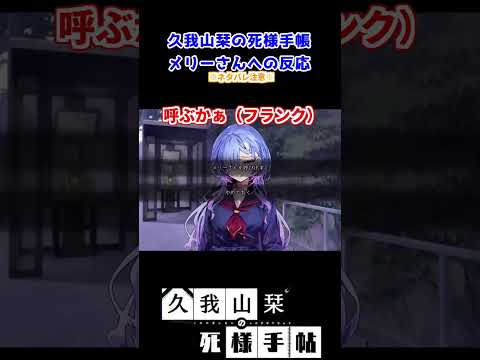
In a recent episode of Kugayama Shiori’s Death Diary, the protagonist encounters Mary (Merryssan), a famous character from Japanese urban legend folklore. Rather than treating this as a straightforward horror moment, the show presents Mary in a way that triggers an unexpected reaction from Shiori—one that differs markedly from how the protagonist typically responds to supernatural threats. This scene has generated significant discussion among viewers about what the appearance signifies for the narrative and character development.
Why It Matters
The inclusion of Mary represents a deliberate creative choice that extends beyond simple fan service or comedic relief. It signals how contemporary anime engages with internet culture and nostalgia as narrative tools. The scene demonstrates the shift in how urban legend characters—once treated as genuine sources of horror—are now repositioned within modern storytelling frameworks. For viewers who experienced the peak of urban legend popularity in the 2000s and early 2010s, this reference carries personal cultural weight that enhances emotional investment in the story.
Background
Urban legends experienced a significant cultural boom in Japan during the late 2000s and early 2010s, particularly through internet platforms like 2channel and Niconico. Mary, one of the most recognizable urban legend characters, emerged during this era as a symbol of internet-generated horror. The character represented a form of fear rooted in ambiguity and unverifiable information—the essence of urban legend appeal.
Over the past decade, the cultural status of urban legends has transformed. With the rise of smartphones and social media, the mystery surrounding these legends diminished as information became instantly verifiable. Urban legend characters transitioned from sources of genuine fear to nostalgic references—cultural artifacts of a specific era. This shift in perception directly influences how modern anime can deploy these characters within narratives.
Kugayama Shiori’s Death Diary operates within a supernatural framework where the protagonist possesses extraordinary power through a magical notebook. The introduction of Mary—a character rooted in human fear and internet culture rather than traditional supernatural threat—creates an interesting narrative tension that warrants deeper analysis.
Key Points
- Mary’s appearance in the episode represents a deliberate narrative choice rather than casual fan service, suggesting the production team is making intentional statements about character and story.
- Shiori’s reaction to Mary differs from her typical responses to supernatural threats, potentially indicating limitations to her power or revealing aspects of her character previously unexplored.
- The scene reflects broader industry trends toward metafictional storytelling, where anime acknowledges its own fictional nature and incorporates self-aware references.
- Urban legend characters have evolved from horror elements to nostalgic cultural references, mirroring the shift in how internet culture is perceived across different generations.
- The appearance carries specific resonance for viewers aged 25-35 who experienced the peak of urban legend popularity during their formative years online.
- Viewer reactions span from enthusiastic recognition and nostalgia to criticism about maintaining narrative consistency and avoiding cheap comedic shortcuts.
Timeline
- Late 2000s–Early 2010s: Urban legends reach peak popularity in Japan through internet platforms; Mary becomes a recognizable character in online culture.
- 2009: Anime like Kaidan Restaurant treat urban legend material with serious, horror-focused approaches.
- 2015 onward: Urban legend characters increasingly appear as comedic relief and parody elements in anime.
- 2018: Shows like Poptepipic fully embrace metafictional and parodic treatment of internet culture references.
- 2024 (estimated): Kugayama Shiori’s Death Diary incorporates Mary as a narrative element, representing the latest evolution in how anime engages with urban legend material.
Perspectives
The Nostalgic Interpretation: For viewers who grew up with urban legends as genuine internet phenomena, Mary’s appearance functions as cultural recognition. The production team acknowledges and validates the experiences of a specific generation by incorporating their formative internet culture into current storytelling. This approach creates deeper emotional resonance by connecting personal memories to the narrative.
The Narrative Function Interpretation: Mary’s appearance may signal important developments in Shiori’s character arc. If Shiori—who typically commands supernatural power—shows confusion or difficulty in response to Mary, this could indicate that her power has limitations when confronted with human-generated fear and belief systems. This interpretation positions Mary not as a throwaway reference but as a meaningful narrative element that complicates the protagonist’s established capabilities.
The Metafictional Interpretation: The inclusion of Mary can be understood as the production team engaging in metafictional commentary. By introducing a character that exists as internet folklore—itself a form of fictional narrative—the show acknowledges the constructed nature of its own storytelling. This self-aware approach has become increasingly common in contemporary anime.
The Critical Perspective: Some viewers argue that incorporating urban legend characters risks undermining narrative coherence and world-building. From this viewpoint, the appearance feels like an easy comedic shortcut that prioritizes audience recognition over maintaining the internal logic of the story’s supernatural framework.
Insights
Mary’s appearance in Kugayama Shiori’s Death Diary exemplifies how modern anime navigates the intersection of nostalgia and contemporary storytelling. The scene demonstrates that production teams increasingly view internet culture and generational references not merely as fan service, but as legitimate narrative tools capable of deepening character development and thematic exploration.
The shift in how urban legend characters are treated—from genuine horror elements to nostalgic cultural artifacts—mirrors broader changes in how internet culture is perceived and consumed. What once represented mysterious, unverifiable fear now carries the weight of shared cultural memory, making it a powerful tool for creating emotional resonance with specific audience segments.
The varying viewer reactions reveal important insights about anime audiences. Enthusiastic responses from older viewers indicate that productions successfully tap into generational identity when they acknowledge and incorporate formative cultural experiences. Conversely, critical responses highlight ongoing tensions between narrative consistency and audience engagement through reference-based content.
Looking forward, how the production team integrates Mary into the larger narrative will determine whether this moment functions as meaningful character development or remains a nostalgic aside. If Mary becomes instrumental to exploring the limitations of Shiori’s power or the nature of human fear within the story’s supernatural framework, the scene gains significant thematic weight. If Mary remains purely comedic, the moment risks being remembered as a clever reference rather than a pivotal narrative beat.
Ultimately, Mary’s appearance represents a calculated decision to blend generational nostalgia with contemporary storytelling—a strategy that, when executed thoughtfully, can create deeper connections between narrative and audience while simultaneously advancing character and plot development.