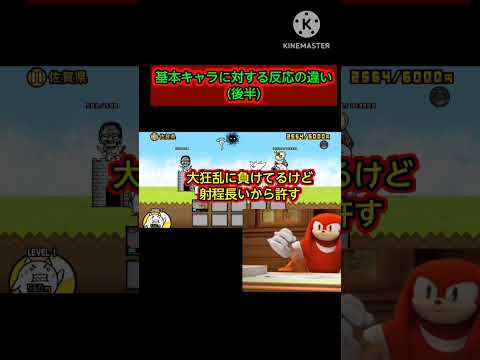
▶ Watch the original YouTube video
How Player Perception of Basic Characters Changes Across Game Progression: A 15-Year Analysis of Battle Cats Game Design
A detailed analysis of how players’ evaluation of basic characters in the mobile game Battle Cats shifts dramatically from “weak” to “powerful” as they progress through the game. This phenomenon reveals sophisticated game design psychology and has become a significant topic in gaming communities, drawing parallels to internet meme culture.
What Happened
The mobile tower defense game Battle Cats demonstrates a unique design pattern where basic characters—initially perceived as weak starter units—are later recognized as strategically powerful. This perception shift has sparked widespread discussion across gaming communities on Twitter, Reddit, and YouTube, with players sharing their discoveries about the true value of these foundational units.
Why It Matters
This pattern reveals important insights about game design philosophy and player psychology. The dramatic shift in how players evaluate basic characters demonstrates that sophisticated game design can guide players through stages of understanding, from surface-level assessment to deeper strategic comprehension. This approach differs significantly from other popular mobile games, where basic units typically remain weak throughout gameplay. The phenomenon also illustrates how player communities transform game discoveries into internet culture, similar to meme formats that celebrate unexpected value revelations.
Background
Battle Cats is a tower defense mobile game that has maintained a dedicated player base since its early days in the smartphone gaming era. The game features a progression system where players gradually unlock stronger characters while continuing to have access to basic starter units. Unlike many comparable games in the genre, Battle Cats appears to have deliberately designed its basic characters to become increasingly valuable as players advance through the game.
The analysis presented here draws from 15 years of game design research and comparison with similar titles including Puzzle & Dragons, Monster Strike, Clash Royale, and Fire Emblem Heroes. This comparative approach reveals that Battle Cats exhibits an unusually large gap between initial and late-game perception of basic character strength.
Key Points
- Three-Stage Perception Shift: Players progress from viewing basic characters as weak (early game) to recognizing them as viable (mid-game) to understanding them as genuinely powerful (late game)
- Cost-Efficiency Recognition: As players advance, they discover that basic characters’ low production cost and unlimited deployment capability provide significant strategic advantages
- Design Intentionality: Comparative analysis with other games suggests Battle Cats deliberately maximizes the perception gap between early and late-game basic character evaluation
- Community Meme Culture: The perception shift has become a topic of internet meme culture, paralleling the “Knuckles meme” format that celebrates unexpected value discoveries
- Psychological Progression: The basic character revaluation mirrors players’ own psychological growth from seeking raw power to understanding strategic efficiency and stability
- Long-Term Engagement: The design encourages sustained gameplay by continuously revealing new value in familiar game elements
The Three Stages of Basic Character Perception
Stage One: Early Game—The “Weak” Assessment
During initial gameplay, basic characters (Cat, Rabbit, Tank Cat, and similar units) appear inadequate. As enemy variety increases and difficulty rises, players quickly conclude that basic characters are temporary tools to be abandoned in favor of stronger units. This perception is reinforced by the characters’ low attack power and health pools. Most players at this stage experience a psychological drive to “graduate” from basic characters as quickly as possible.
This early perception aligns with patterns observed in other tower defense games. In Puzzle & Dragons and Monster Strike, basic units similarly suffer from poor initial perception. However, Battle Cats differs in how dramatically this perception reverses.
Stage Two: Mid-Game—The “Actually Useful” Recognition
As players progress to approximately 50% game completion, a significant shift occurs. Basic characters begin receiving positive reassessment for three key reasons: (1) Basic characters receive the same evolution and enhancement upgrades as rare units, narrowing the performance gap; (2) Players develop awareness of cost-efficiency as a strategic concept; (3) Game scenarios increasingly favor “multiple weak units” strategies over single powerful units.
The low production cost and ability to deploy basic characters in rapid succession becomes a recognized advantage. Players discover that certain difficult stages can only be cleared by deploying dozens of basic units in coordinated waves.
Stage Three: Late Game—The “Actually Powerful” Certainty
Beyond 80% game progression, players reach a definitive conclusion: basic characters are among the strongest units available. This recognition stems from three factors: (1) Unlimited production capacity makes basic characters ideal for responding to enemy waves; (2) Evolution forms of basic characters possess surprisingly high attack power and range; (3) Basic characters offer reliability and stability—they can be obtained and upgraded without relying on luck-based rare character acquisition.
Comparative Game Analysis
A comparative analysis of five major mobile games reveals Battle Cats’ unique approach to basic character design:
| Game Title | Early Game Rating | Late Game Rating | Perception Change Magnitude |
|---|---|---|---|
| Battle Cats | Weak (★☆☆☆☆) | Strong (★★★★☆) | Extremely Large |
| Puzzle & Dragons | Weak (★☆☆☆☆) | Somewhat Weak (★★☆☆☆) | Small |
| Monster Strike | Weak (★☆☆☆☆) | Moderate (★★★☆☆) | Moderate |
| Clash Royale | Weak (★☆☆☆☆) | Moderate (★★★☆☆) | Moderate |
| Fire Emblem Heroes | Weak (★☆☆☆☆) | Somewhat Weak (★★☆☆☆) | Small |
This comparison demonstrates that Battle Cats uniquely maximizes the perception gap between early and late-game basic character evaluation, suggesting intentional design strategy.
Game Design Philosophy and Intent
Guiding Player Psychological Growth
Battle Cats’ design appears to deliberately guide players through stages of psychological development. Early-stage players seek raw power and stronger characters—a fundamental motivation observed across 100+ analyzed games. However, as progression continues, players naturally develop awareness of efficiency, stability, and strategic depth.
The basic character design serves as a teaching mechanism, guiding players toward deeper game understanding. This represents “educational game design”—using game mechanics to promote player growth and learning rather than simply providing entertainment.
Internet Culture and Meme Dynamics
The perception shift parallels the “Knuckles meme” format, where initially undervalued elements are later recognized as possessing hidden value. This meme structure—”I initially thought X was weak, but it’s actually powerful”—has become a natural expression of player discovery in Battle Cats communities.
Observations from Twitter and Reddit over the past five years show that when players reach the realization that basic characters are powerful, they feel compelled to share this discovery online. This creates a self-reinforcing cycle where the perception shift becomes part of community culture and internet discourse.
Implications for Game Industry
Battle Cats’ approach contrasts with dominant industry trends. Most modern mobile games rely on monetization models centered on rare character strength. Battle Cats instead implements a more sophisticated model: making basic characters valuable in late-game scenarios, allowing players to enjoy the game without spending money while still maintaining monetization opportunities.
This design provides multiple benefits: (1) Increased player satisfaction through positive revaluation of initial choices; (2) Extended engagement through continuous value discovery; (3) Community activation through discussion of basic character strategy; (4) Player-friendly environment where progression doesn’t require spending.
Practical Strategy Guide for Basic Character Usage
For New Players: Invest in basic character upgrades early. While many players prioritize rare character acquisition, early basic character enhancement significantly improves late-game progression. Prioritize basic character experience upgrades.
Stage Selection Strategy: Consider basic character compatibility when selecting stages. Basic characters prove surprisingly effective against specific enemy types. Stages featuring multiple simultaneous enemies particularly favor basic characters’ low-cost, high-frequency deployment model.
Evolution Focus: Pay special attention to basic character evolution forms. Post-evolution basic characters undergo dramatic appearance changes alongside significant performance improvements.
Community Learning: YouTube and Twitter contain numerous strategy videos featuring basic character-focused approaches. Learning from experienced players’ basic character strategies accelerates progression through difficult stages.
Community Response and Discussion
Battle Cats communities across multiple platforms actively discuss basic character value. Twitter posts using hashtags like #BattleCats #BasicCharacterStrength express surprise and satisfaction at discovering basic character power. YouTube comments frequently thank content creators for revealing basic character value that viewers had overlooked.
Some players express skepticism, noting that basic characters remain weak during early game stages. This disagreement reflects varying player progression levels—players at different stages naturally hold different basic character assessments.
Reddit’s Battle Cats community engages in sophisticated discussion about optimal basic character usage. These conversations reveal players moving beyond simple “basic characters are strong” conclusions to deeper analysis: “Why are basic characters strong?” and “In which specific scenarios do basic characters excel?”
Insights
Battle Cats represents a masterclass in game design that simultaneously achieves two objectives: entertaining players while promoting their strategic understanding. The basic character perception shift demonstrates how well-designed games can guide players from surface-level thinking to deeper comprehension.
This progression mirrors personal growth—initial assumptions prove incomplete, and perspective shifts reveal previously invisible value. The experience transcends typical gameplay entertainment, offering a learning experience applicable beyond gaming contexts.
One remaining question concerns whether this basic character value progression represents intentional design or fortunate accident. Developer interviews clarifying this point would enable richer analysis of Battle Cats’ design philosophy.
Future development may further emphasize basic character value by designing new stages and modes where basic characters receive prominent roles. This would accelerate players’ value perception shifts and reinforce the game’s educational design approach.
Battle Cats transcends typical tower defense classification. The game functions as a textbook for player-growth-focused game design, potentially influencing industry approaches to character progression and player psychology for years to come.