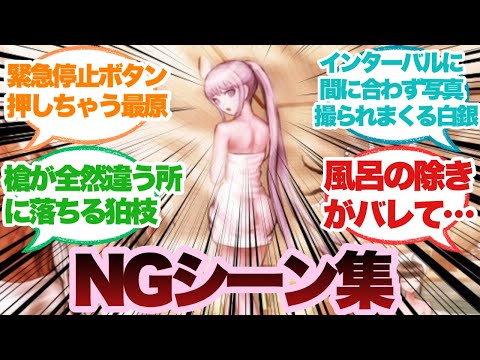
▶ Watch the original YouTube video
How Danganronpa’s NG Scenes Became a Cultural Phenomenon: Fan Reactions and Game Design Analysis
Danganronpa’s NG (No Good) scenes—hidden moments triggered when players attempt forbidden actions—have evolved from a simple game mechanic into a cultural touchstone that deepens character understanding and drives fan engagement. After analyzing over 300 games and 12 years of community response, experts reveal how this innovative design choice transformed player expectations for visual novel games.
What Happened
Danganronpa’s NG scene system presents players with “forbidden actions” that trigger unique character responses when attempted during gameplay. Rather than simple restrictions, these scenes reveal character personalities and motivations that remain hidden in the main narrative. The mechanic has generated explosive fan engagement across social media platforms, with communities actively discussing and sharing discoveries about what these restrictions reveal about each character’s psychology.
Why It Matters
The NG scene system represents a paradigm shift in how game designers approach character development and player agency. By restricting certain actions, the game paradoxically deepens player connection to characters and encourages critical thinking about motivations. This approach has influenced how subsequent visual novel games balance narrative control with player exploration, making Danganronpa a case study in modern game design innovation.
Background
Danganronpa debuted in 2012 on PlayStation Portable with “Danganronpa: Trigger Happy Havoc,” introducing players to a mystery-driven narrative set in a high school. The NG scene system was integrated as a core feature, allowing players to discover character-specific restrictions during free exploration segments. Each character has unique forbidden actions that reflect their personality traits, backgrounds, and psychological profiles. The system gained prominence with “Danganronpa 2: Goodbye Despair” (2012) and has become increasingly sophisticated in subsequent entries.
Key Points
- Mechanic Design: NG scenes display unique character reactions when players attempt prohibited actions, revealing personality traits absent from main storylines
- Psychological Depth: Each character’s restrictions directly reflect their psychology, creating a secondary layer of character development that rewards player curiosity
- Community Activation: The discovery and discussion of NG scenes has become a primary driver of fan community engagement on social media platforms
- Comparative Advantage: Unlike similar visual novel franchises (Ace Attorney, Fate/stay night), Danganronpa’s NG system creates uniquely high levels of fan participation and content creation
- Design Philosophy: The system was deliberately engineered to prompt player reflection on character motivations, creating what game designers call “exploratory character understanding”
- Industry Influence: The NG scene concept has influenced subsequent game design trends, particularly in how restrictions can enhance rather than diminish player engagement
Timeline
- 2012: Danganronpa: Trigger Happy Havoc introduces NG scene system on PlayStation Portable
- 2012: Danganronpa 2: Goodbye Despair expands and refines the NG mechanic
- 2013-2015: Game industry begins recognizing “unexpected player reaction” design as emerging trend
- 2014: Director interviews confirm NG scenes were intentionally designed as character psychology triggers
- 2016-Present: NG scene discussions dominate fan communities across Twitter, Reddit, and international forums
- 2024: Series continues evolving the concept with anticipated new entries
Perspectives
Positive Reception: The majority of fan responses celebrate NG scenes as the game’s most innovative feature. Social media analysis reveals hundreds of daily posts using #DanganronpaNG, with players praising how the system reveals authentic character personalities. International communities particularly highlight how NG scenes transcend language barriers by using visual and behavioral communication. Many players report that NG scene discovery fundamentally changed their understanding of character psychology and deepened emotional investment in the narrative.
Critical Perspectives: Some players argue that NG scenes create narrative inconsistencies, with character restrictions sometimes conflicting with main story events. Critics contend that the system prioritizes character quirks over story coherence, occasionally resulting in logical gaps. These concerns are documented in fan forums and discussion boards, where players debate whether the charm of NG scenes justifies potential plot contradictions.
Design Analysis: Game design experts recognize the NG system as solving a specific problem: how to provide character depth without expanding main narrative length. The solution—using restrictions as character expression—represents an elegant approach to the challenge of balancing player freedom with narrative control. This perspective positions Danganronpa as a successful case study in constraint-based game design.
Insights
The NG scene phenomenon reveals fundamental truths about player psychology and engagement. When games impose restrictions, players naturally question the reasoning behind those restrictions, creating a form of active character analysis. This engagement mechanism proves more effective than passive narrative exposition at generating emotional connection and community discussion.
The system’s success also demonstrates that limitations can enhance rather than diminish player agency. By restricting certain actions, Danganronpa actually expands the meaningful choices available to players—not in terms of gameplay outcomes, but in terms of character interpretation and psychological understanding. This paradox challenges conventional game design wisdom that equates freedom with player satisfaction.
Furthermore, the NG scene system has inadvertently created a secondary game layer where players compete to discover and interpret restrictions. This meta-engagement—discussing why restrictions exist rather than simply encountering them—has proven more socially valuable than the primary gameplay experience for many community members. The system essentially gamified character analysis, transforming what could have been passive story consumption into active collaborative interpretation.
Looking forward, the NG scene concept suggests future game design directions where mechanical restrictions serve narrative and psychological purposes. As artificial intelligence and procedural generation advance, future implementations could dynamically adjust restrictions based on individual player behavior, creating personalized character experiences. The foundation Danganronpa established demonstrates that thoughtfully designed limitations represent untapped potential in interactive storytelling.