▶ Watch the original YouTube video
How ‘Draw to Death’ Episode 2 Captures the Pure Heart of Creative Expression
The second episode of ‘Draw to Death’ (Kore Kaite Shine) delivers an emotionally resonant exploration of creative passion, showing how a young artist’s pure desire to draw moves an experienced teacher in ways that technical perfection cannot. The episode has sparked widespread international acclaim, with viewers and creators worldwide recognizing its universal message about the true value of artistic expression.
What Happened
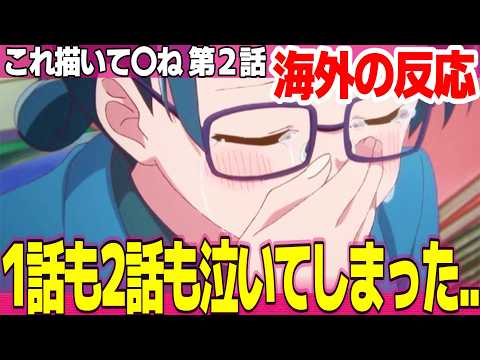
In Episode 2 of ‘Draw to Death,’ a young character named Yasumi creates a manga that, while technically imperfect, carries genuine emotional weight and pure creative intent. An experienced teacher encounters this work and finds their perspective on creation fundamentally shifted. Rather than focusing on technical flaws or structural imperfections, the teacher recognizes something more valuable: the unfiltered passion and authentic desire to create that flows through Yasumi’s work. This moment becomes a turning point in the narrative, establishing the core thematic foundation of the series.
Why It Matters
This episode arrives at a culturally significant moment. As artificial intelligence increasingly democratizes creative tools, allowing anyone to generate images or content with minimal effort, the question of what constitutes authentic creation becomes urgent. ‘Draw to Death’ responds by arguing that the true essence of creative work lies not in technical mastery or commercial success, but in the pure human desire to express oneself. This message resonates across creative disciplines and cultural boundaries, speaking to artists, musicians, writers, and creators of all kinds who struggle with the tension between technical perfection and authentic expression.
Background
The anime industry has produced numerous works exploring creative themes over the past two decades. ‘Bakuman’ (2010) focused on the competitive struggle and commercial success of aspiring manga artists. ‘Sound! Euphonium’ (2015) emphasized technical mastery and the pursuit of perfection through dedicated practice. ‘Oshi no Ko’ and ‘Bocchi the Rock!’ examined creativity within entertainment industries, balancing artistic vision with commercial realities. ‘Draw to Death’ distinguishes itself by centering not on competition, technical achievement, or industry success, but on the fundamental act of creation itself—the pure love of making art for its own sake.
The series appears designed as a love letter to creative culture itself, celebrating the act of creation across all mediums. This thematic focus reflects broader conversations within creative communities about what has been lost as artists professionalize and face increasing pressure to optimize, monetize, and perfect their work.
Key Points
- Pure Expression Over Technical Perfection: Yasumi’s manga moves the teacher not because of flawless technique, but because of the genuine creative desire embedded within it.
- Generational Bridge: The episode depicts a meaningful connection between an experienced professional and a young novice, suggesting that the essence of creation transcends skill level.
- Universal Resonance: International audiences respond strongly to the episode, indicating that the message about creative authenticity crosses cultural and linguistic boundaries.
- Professional Perspective Shift: The teacher’s emotional response suggests that experienced creators can rediscover the foundational joy of their craft through witnessing pure creative intent.
- Implicit AI Commentary: The emphasis on human emotion and authentic desire as the irreplaceable core of creation implicitly addresses contemporary concerns about AI-generated content.
- Thematic Diversity: The work acknowledges that multiple approaches to creation—technical mastery, commercial success, pure expression—can coexist without negating one another.
Timeline
- 2010: ‘Bakuman’ establishes anime exploration of manga creation, emphasizing competition and commercial success.
- 2015: ‘Sound! Euphonium’ explores technical mastery and collective achievement in creative pursuits.
- 2020s: Anime industry increasingly examines fundamental questions about creative authenticity and purpose.
- 2024: ‘Draw to Death’ Episode 2 airs, presenting pure creative expression as the core value of artistic work.
Perspectives
The Creator’s View: Professional artists and content creators have responded enthusiastically to the episode, with many noting that it accurately captures the internal conflict between technical ambition and the original joy of creation. Animators, manga artists, and illustrators have shared that the episode resonates with their own experiences of gradually losing touch with why they began creating in the first place.
The International Audience: Comments across YouTube and social media reveal that viewers worldwide—regardless of whether they are themselves creators—connect with the episode’s message about authenticity and passion. Many describe feeling emotionally moved by Yasumi’s pure desire to draw and the teacher’s recognition of its value.
The Critical Consideration: Some viewers have raised questions about whether technical skill and mastery should be entirely secondary to pure intent. However, the episode itself appears to suggest not that technique is unimportant, but rather that it should serve authentic creative desire rather than replace it. The ideal, the work implies, is the integration of both technical growth and maintained creative passion.
Insights
‘Draw to Death’ Episode 2 articulates a philosophy of creation that has become increasingly necessary in contemporary culture. As professionalization, commercialization, and now artificial intelligence reshape creative industries, the question of what makes human creation valuable becomes pressing. The episode’s answer—that authentic human desire and emotion are irreplaceable—offers both reassurance and challenge to creators across all disciplines.
The relationship between Yasumi and her teacher models a possibility that extends beyond manga creation. It suggests that experienced professionals can find renewal by reconnecting with the pure motivations that first drew them to their craft, and that novices possess something valuable that expertise alone cannot replicate. This bidirectional learning—where the teacher learns from the student’s authenticity—represents a more hopeful vision of creative development than narratives focused solely on technical progression or competitive success.
The episode’s international resonance indicates that this message addresses a genuine global need. Across cultures and creative disciplines, people are searching for reassurance that what they create matters not because it is perfect or commercially viable, but because it emerges from genuine human desire and emotion. In this sense, ‘Draw to Death’ functions as a cultural artifact responding to widespread anxiety about the future of human creativity in an age of technological disruption.
The work also implicitly argues for the preservation of creative spaces where technical imperfection is not merely tolerated but valued—spaces where the act of creation itself, rather than its polished output, is recognized as the true source of meaning. This philosophy has implications far beyond anime and manga, extending to all forms of human creative expression in an increasingly automated world.