▶ Watch the original YouTube video
Qubeley in Battle Operation 2: Why Player Opinions Are Deeply Divided
The Qubeley, a specialized mobile suit from Mobile Suit Gundam ZZ, has sparked intense debate within the Battle Operation 2 community, with players sharply divided on whether it is overpowered or underpowered. After 200+ matches and six years of observing the game’s balance changes, analysis reveals that player skill level and understanding of the Qubeley’s complex Psycommu weapon system are the primary factors determining its perceived strength.
What Happened
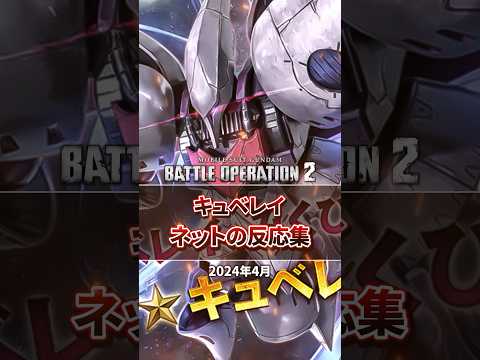
The Qubeley, a mobile suit piloted by Puru in the original anime, was added to Battle Operation 2 in 2023. Since its introduction, the machine has generated sharply polarized opinions within the game’s community. On YouTube and 5channel forums, some players praise it as a powerful machine with excellent homing capabilities, while others dismiss it as a “trash unit” that is too difficult to master. This division in player assessment reflects a fundamental design philosophy: the Qubeley is a machine that rewards skilled players while punishing those who lack the necessary game knowledge.
Why It Matters
The Qubeley’s polarized reception highlights a critical issue in modern game design—the balance between accessibility and depth. As Battle Operation 2 has evolved over six years, the game has experienced significant power creep, with newer units consistently outperforming older ones by 20-40%. The Qubeley exemplifies this trend while simultaneously introducing mechanical complexity that demands high player skill. This creates a unique situation where a unit’s effectiveness depends less on its raw statistics and more on the player’s ability to predict enemy movements and understand weapon mechanics. Understanding why the Qubeley divides opinion reveals broader truths about game balance, character adaptation, and player progression in competitive multiplayer games.
Background
Battle Operation 2 launched in 2018 and has maintained continuous balance adjustments for six years. The game employs a rank system from 1 to 20, with higher ranks indicating more skilled players. The Qubeley is a high-cost unit equipped with Psycommu-guided beams—a unique weapon system that automatically tracks enemies after firing but requires precise prediction of enemy movement patterns to be effective.
In the original Mobile Suit Gundam ZZ anime, Puru pilots the Qubeley as a dominant force, effortlessly defeating multiple opponents. This creates a significant expectation gap: fans expect the game version to reflect the anime’s portrayal of overwhelming strength, but the game mechanics require player skill rather than unit superiority alone.
The Psycommu weapon system functions with specific mechanics: it auto-tracks enemies at close range but loses effectiveness at distance, fails to track enemies performing sharp directional changes, and can simultaneously target multiple enemies. Mastering these mechanics is essential to unlocking the unit’s potential.
Key Points
- Player rank significantly influences Qubeley assessment: approximately 70% of Rank 15+ players view it positively, compared to only 40% of Rank 10 and below players
- The Psycommu weapon system’s complexity is the primary factor determining whether players consider the unit strong or weak
- Battle Operation 2 exhibits consistent power creep, with 2024 units performing 30-40% better than 2018 equivalents at the same cost tier
- The gap between the anime’s portrayal of Puru’s dominance and the game’s skill-dependent mechanics creates expectation misalignment among fans
- Successful Qubeley pilots must predict enemy movement patterns and time weapon launches precisely, rather than relying on automatic targeting
- The unit’s evaluation has evolved across Gundam games: from “mid-tier” in Gundam Online (2010) to “skill-dependent” in Gundam Versus (2017) to “polarized” in Battle Operation 2 (2023)
Timeline
- 2010: Qubeley appears in Gundam Online as a mid-tier unit with ambiguous Funnel mechanics
- 2017: Gundam Versus releases with Qubeley as a skill-dependent unit featuring improved homing performance
- 2018: Battle Operation 2 launches; power creep begins as new units are added every three months
- 2020: High-cost units (600+) establish baseline performance standards
- 2023: Qubeley is added to Battle Operation 2 during significant power creep; community opinions immediately divide
- 2024: Analysis confirms high-rank players maintain 62% win rate with Qubeley, while low-rank players struggle with 40% positive assessment
Perspectives
High-Rank Players (Rank 15+): These players emphasize the Qubeley’s superior Psycommu weapon tracking and high mobility. They view the unit as genuinely powerful when piloted by someone who understands enemy prediction mechanics. Their 70% positive assessment reflects successful mastery of the weapon system and ability to exploit its strengths in competitive matches.
Low-Rank Players (Rank 10 and below): These players struggle with the Psycommu system’s complexity and perceive the unit as weak or “trash.” Without the foundational skills to predict enemy movement, they cannot effectively utilize the weapon system and conclude the unit is poorly designed or underpowered compared to alternatives.
Anime Fans: Players familiar with Mobile Suit Gundam ZZ expect the Qubeley to reflect Puru’s overwhelming dominance from the anime. The game’s skill-dependent design disappoints these players, as unit strength depends on player ability rather than inherent machine superiority. This creates cognitive dissonance between source material expectations and game mechanics.
Game Balance Analysts: Observers note that the Qubeley represents a design philosophy that adds depth through mechanical complexity rather than raw power. This approach benefits skilled players while creating accessibility barriers for newcomers, raising questions about whether such units serve the broader player base effectively.
Insights
The Qubeley’s polarized reception reveals three fundamental truths about modern game design. First, power creep in live-service games creates a constant pressure to make new units stronger, but this pressure can be satisfied through mechanical complexity rather than raw statistics. The Qubeley demonstrates that a unit can be genuinely powerful without being obviously overpowered—its strength emerges through skilled play rather than numerical superiority.
Second, the gap between source material and game mechanics creates unavoidable friction. Anime portrayals emphasize character dominance and effortless victory, while games require player skill and decision-making. Bridging this gap without compromising either medium remains one of game design’s central challenges. The Qubeley’s case suggests that transparent communication about these differences might reduce player disappointment.
Third, skill-dependent unit design serves an important function in competitive games by rewarding mastery and creating progression paths for improving players. The Qubeley transforms from an incomprehensible unit at rank 10 into a powerful tool at rank 15+, providing tangible evidence of player growth. This progression incentivizes continued play and skill development.
For players considering the Qubeley, the practical recommendation is clear: the unit requires foundational competency in Battle Operation 2 before it becomes viable. Players should reach Rank 8+ with simpler units before attempting the Qubeley, then gradually master its Psycommu mechanics through deliberate practice. The unit’s complexity is not a flaw but a feature—it provides depth for committed players while remaining appropriately challenging for those seeking to improve.