▶ Watch the original YouTube video
One Punch Man Chapter 157: Ryumon’s Transformation Into a Monster Explained
In One Punch Man Chapter 157, the character Ryumon undergoes a shocking transformation into a monster, marking a pivotal moment in the Neo Heroes arc. This development raises fundamental questions about the nature of heroism and humanity, challenging the series’ established rules about what separates humans from monsters.
- What Happened
- Why It Matters
- Background
- Key Points
- Comparative Analysis
- Reader Reactions and Theories
- Metal Bat’s Role and Power System
- The False Fubuki Experiment Hypothesis
- Philosophical Implications: Can a Monster Be a Hero?
- Industry Trends and Narrative Context
- Predicted Future Developments
- Insights and Broader Implications
What Happened
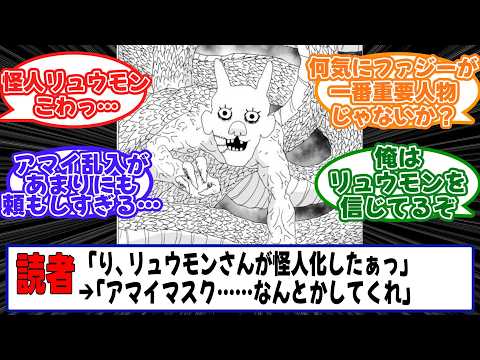
Chapter 157 of One Punch Man features the unexpected transformation of Ryumon, a significant character in the Neo Heroes arc, into a monster. The transformation appears to be based on a dragon illustration drawn by a child. What distinguishes this particular monster transformation is that Ryumon appears to retain his mental faculties and hero-oriented mindset despite his physical metamorphosis, a departure from previous monster transformations in the series.
Why It Matters
Ryumon’s transformation represents a critical evolution in One Punch Man’s central thematic concerns. Since its inception, the series has consistently explored the question: “What truly defines a hero?” and “What separates humans from monsters?” By presenting a character who becomes a monster while retaining human consciousness and heroic values, the narrative challenges the fundamental binary between human and monster that has defined the series. This development signals a shift toward greater philosophical complexity in the Neo Heroes arc, moving beyond simple combat scenarios into deeper explorations of identity and morality.
Background
One Punch Man, which began serialization in 2012 with ONE’s original web comic, has consistently used monster transformations as a narrative device to explore character psychology and moral choices. Previous notable transformations include Garou’s gradual shift from hero-aspirant to monster-embracing villain, where his mental transformation preceded and drove his physical change. The series has also established that monster transformation typically involves a fundamental shift in consciousness and values. The Neo Heroes arc, which Ryumon is part of, has introduced new elements including artificial intelligence and mechanized enhancement systems, expanding the mechanisms through which transformation can occur.
Key Points
- Consciousness Preservation: Ryumon’s transformation appears to preserve his mental faculties and hero-oriented values, distinguishing it from previous monster transformations in the series.
- Artificial Experimentation Theory: Readers have theorized that Ryumon’s transformation may be a deliberate experiment by False Fubuki to understand the mechanics of monster creation, rather than an accidental or forced change.
- Metal Bat’s Significance: The transformation elevates Metal Bat’s importance in the narrative, as his unique power system—progressively removing his limiters during combat—may be crucial to confronting the transformed Ryumon.
- Philosophical Implications: The transformation raises the question of whether someone can become a monster while remaining a hero, challenging the series’ established moral framework.
- Neo Heroes Arc Complexity: The event signals a shift from straightforward combat narratives toward deeper exploration of what defines humanity and heroism.
- Thematic Consistency: The transformation aligns with recent trends in anime and manga toward blurring the boundaries between allies and enemies, moving away from simple good-versus-evil narratives.
Comparative Analysis
Ryumon’s transformation differs significantly from other monster transformations in One Punch Man and similar series. Garou’s transformation in One Punch Man was driven by a conscious rejection of heroism and embrace of monstrosity—a spiritual and psychological shift that manifested physically. In contrast, Ryumon’s transformation appears to be externally imposed, with his consciousness and values remaining intact. This pattern resembles forced transformations seen in other series such as the titan transformations in Attack on Titan or the cursed spirit possession in Jujutsu Kaisen, where external forces override the subject’s agency. The distinction matters because it suggests Ryumon’s transformation may not represent a fundamental change in character, but rather a separation between physical form and mental identity.
Reader Reactions and Theories
Online communities have generated multiple interpretations of Ryumon’s transformation. The most prevalent theory suggests that False Fubuki orchestrated the transformation as part of a systematic study of monster creation mechanics. This interpretation gains credibility from Ryumon’s characterization as someone willing to compromise his principles for personal gain, making him an ideal experimental subject. Another significant reaction emphasizes the horror of the transformation itself—the visceral fear of losing one’s humanity while retaining consciousness. Many readers have also predicted that Ryumon will attempt to protect Metal Bat despite his monstrous form, suggesting that his core values will override his new physical nature. Some viewers expressed concern that the transformation might be narratively shallow, serving merely to increase enemy power levels rather than explore deeper thematic questions.
Metal Bat’s Role and Power System
Ryumon’s transformation has refocused attention on Metal Bat’s unique combat mechanics. Metal Bat operates under a progressive limiter-removal system, where he grows stronger as battles intensify—a mechanism distinct from other characters in the series. His previous confrontation with Garou demonstrated this escalating power curve. The transformation of Ryumon introduces a new challenge that may force Metal Bat to unlock additional power levels. Furthermore, reader analysis suggests that Metal Bat’s emotional investment in protecting his sister could trigger an even greater power increase, indicating that his strength is tied not only to combat intensity but also to emotional stakes.
The False Fubuki Experiment Hypothesis
The most logically coherent reader theory proposes that False Fubuki deliberately engineered Ryumon’s transformation as part of her broader objective to achieve perfect human replication. This hypothesis rests on three pillars: False Fubuki’s need to fully understand monster creation mechanisms to achieve her goals; Ryumon’s suitability as an experimental subject due to his demonstrated willingness to compromise ethics for personal benefit; and the narrative necessity of providing deeper meaning to the transformation beyond simple power escalation. If accurate, this theory would position Ryumon’s transformation as a calculated move within a larger strategic framework rather than an isolated incident.
Philosophical Implications: Can a Monster Be a Hero?
The most fundamental question raised by Ryumon’s transformation is whether heroism is defined by physical form or by internal values and choices. One Punch Man’s protagonist Saitama embodies the principle that heroism is not a matter of social status, official recognition, or physical capability, but rather a matter of personal choice and values. If Ryumon retains his hero-oriented mindset after becoming a monster, the series would be making a radical philosophical statement: that one’s essential nature transcends physical form. This represents a significant evolution in the series’ thematic exploration, suggesting that the boundary between human and monster is not absolute but rather permeable and dependent on consciousness and choice.
Industry Trends and Narrative Context
Ryumon’s transformation reflects broader trends in contemporary anime and manga storytelling. Over the past five years, there has been a marked increase in narratives that blur the distinction between heroes and villains, allies and enemies. Rather than presenting clear moral binaries, modern series increasingly explore the complexity of characters who occupy ambiguous positions. The Neo Heroes arc participates in this trend by introducing artificial enhancement, mechanized transformation, and questions about the authenticity of heroism itself. Ryumon’s transformation represents the cutting edge of this trend—a character who becomes physically monstrous while potentially retaining moral heroism.
Predicted Future Developments
Based on narrative structure and character analysis, three primary scenarios appear plausible. First, Ryumon could use his newfound monster strength to protect Metal Bat, demonstrating that his core values persist despite physical transformation. This scenario would most directly address the philosophical question of whether monsters can be heroes. Second, Ryumon could actively resist his transformation, attempting to reclaim his humanity through force of will. This would emphasize the psychological struggle between imposed physical change and internal identity. Third, Ryumon could accept his new form and construct a new identity as a monster-hero, representing the most radical philosophical position—that heroism transcends the human-monster dichotomy entirely. Each scenario carries different implications for the series’ thematic trajectory.
Insights and Broader Implications
Ryumon’s transformation marks a watershed moment in One Punch Man’s exploration of its central questions. The series has always used Saitama’s overwhelming power as a device to ask what strength truly means and what heroism truly requires. The Neo Heroes arc has progressively complicated these questions by introducing artificial power systems, institutional heroism, and now, the possibility of consciousness persisting across the human-monster boundary. Ryumon’s transformation suggests that the series is moving toward a more nuanced understanding of identity—one where physical form, social role, and internal values can diverge. This development enriches the narrative by suggesting that the fundamental conflict in One Punch Man is not between strong and weak, or human and monster, but between authentic and inauthentic expressions of heroism. The transformation also serves as a test case for the series’ philosophical commitments: if the creators allow Ryumon to remain heroic despite becoming a monster, they will have made a definitive statement about the nature of heroism. If they do not, the series will have affirmed that some boundaries—particularly between human and monster—remain absolute. Either way, Ryumon’s fate will clarify what One Punch Man ultimately believes about the relationship between form and essence, power and morality, and the possibility of redemption across seemingly unbridgeable divides.