▶ Watch the original YouTube video
The Hyrule Shield Explained: Why It’s Not Actually a Legendary Artifact
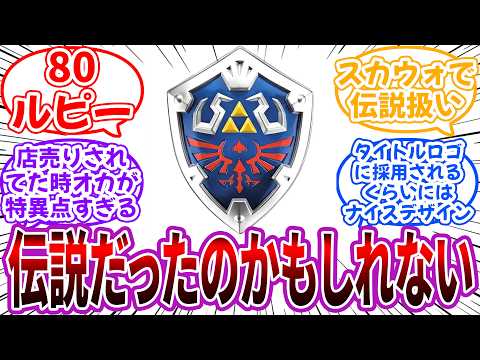
A viral YouTube video has challenged decades of assumptions about the Hyrule Shield, revealing that in Ocarina of Time it was purchasable for just 80 Rupees as a mass-produced item. This discovery raises fundamental questions about what “legendary” actually means in the Legend of Zelda series and how game design shapes player perception.
- What Happened
- Why It Matters
- Background
- Key Points
- Timeline of the Hyrule Shield Across Games
- Comparative Analysis: Legendary Items in the Zelda Series
- Design Philosophy: Perception vs. Implementation
- The Goddess Hylia Connection
- Community Response and Interpretation
- Broader Implications for Game Design
- Future Possibilities
- Conclusion: Defining Legend
What Happened
A YouTube video examining the Hyrule Shield across the Legend of Zelda series has sparked widespread discussion among fans by highlighting a critical contradiction: in Ocarina of Time, the Hyrule Shield—widely assumed to be a legendary artifact—was actually available for purchase from merchants for 80 Rupees. This contradicts the perception many players developed over 20+ years of playing the series, where the shield’s distinctive blue coloring and Triforce emblem suggested legendary status.
The revelation has prompted fans to reconsider the shield’s role across different games. In Skyward Sword, it appears as a genuine legendary artifact imbued with the goddess Hylia’s power. Yet in Wind Waker, it’s presented as a family heirloom. In Breath of the Wild and Tears of the Kingdom, it appears in a dormant state, described as “sleeping” rather than broken. This inconsistency has become a focal point for analyzing how Nintendo’s design philosophy treats the concept of legend itself.
Why It Matters
This discovery reveals a sophisticated layer of game design philosophy that extends beyond simple continuity. The gap between what players perceive as legendary and what the game mechanics define as legendary demonstrates how visual design, narrative framing, and mechanical implementation can intentionally diverge to create meaning.
The Hyrule Shield’s ambiguous status challenges players to reconsider what makes something legendary. Is it the mechanical properties? The visual presentation? The narrative context? Or is it ultimately the emotional significance players attach to it? This question becomes particularly relevant when comparing the Hyrule Shield to the Master Sword, which maintains consistent legendary status across all appearances.
Understanding this design choice provides insight into how Nintendo uses player psychology and expectation management as narrative tools, a technique that has influenced game design across the industry.
Background
The Hyrule Shield first appeared in Ocarina of Time (1998), where its distinctive design—a blue shield bearing the Triforce symbol—immediately suggested significance. Players spent considerable effort obtaining it, reinforcing the perception that it was a special, legendary item. However, the mechanical reality was different: it was simply another purchasable shield available from merchants.
Across subsequent games, the shield’s treatment varied dramatically. Skyward Sword, which serves as a chronological prequel, established the Hyrule Shield as a genuine legendary artifact blessed by the goddess Hylia. This retroactive narrative framing created a timeline where the “legendary” shield eventually became mass-produced in later eras—a philosophical inversion of how legendary items typically function in game narratives.
The Master Sword, by contrast, has maintained consistent legendary status throughout the series. It appears as the same singular artifact across multiple games and timelines, never as a mass-produced item. This distinction between the Master Sword’s singular legendary nature and the Hyrule Shield’s ambiguous status appears intentional.
Key Points
- In Ocarina of Time, the Hyrule Shield was purchasable for 80 Rupees, contradicting its perceived legendary status
- The shield’s treatment varies significantly across games: legendary in Skyward Sword, a family heirloom in Wind Waker, and dormant in Breath of the Wild and Tears of the Kingdom
- The Master Sword maintains consistent legendary status across all appearances, unlike the Hyrule Shield
- Visual design and narrative framing create the perception of legend, independent of mechanical implementation
- The shield’s ambiguity suggests Nintendo intentionally explores the question: “What defines a legend?”
- Multiple versions of the Hyrule Shield likely exist across the timeline, whereas the Master Sword appears to be singular
Timeline of the Hyrule Shield Across Games
- Skyward Sword (chronologically first): Introduced as a legendary artifact blessed by goddess Hylia
- Ocarina of Time: Available as a purchasable item for 80 Rupees
- Wind Waker: Presented as a family heirloom received from an elderly woman
- Twilight Princess and other titles: Appears with varying degrees of significance
- Breath of the Wild: Found in a dormant state, described as “sleeping”
- Tears of the Kingdom: Awakens from dormancy, emphasizing restoration of legend
Comparative Analysis: Legendary Items in the Zelda Series
| Item | Legendary Status | Multiple Versions Possible | First Appearance |
|---|---|---|---|
| Master Sword | Consistently High | Unlikely (singular artifact) | The Legend of Zelda (1986) |
| Hyrule Shield | Ambiguous/Variable | Likely (multiple versions) | Ocarina of Time (1998) |
| Mirror Shield | Moderate | Moderate | A Link to the Past (1991) |
| Light Arrows | High | Unlikely (singular artifact) | Ocarina of Time (1998) |
Design Philosophy: Perception vs. Implementation
The Hyrule Shield exemplifies a deliberate gap between player perception and mechanical reality. Its visual presentation—the distinctive blue coloring, the Triforce emblem, and its association with the goddess Hylia—creates a strong psychological impression of legendary status. Yet its mechanical implementation as a purchasable item contradicts this impression.
This design choice appears intentional, possibly reflecting a philosophical question posed by Nintendo’s development team: What makes something legendary? Is it the object itself, or is it the meaning players assign to it?
The approach mirrors techniques used in other acclaimed game franchises, where narrative framing and mechanical implementation deliberately diverge to create thematic depth. By making the shield mechanically accessible while visually and narratively special, Nintendo forces players to confront their own assumptions about value and legend.
The Goddess Hylia Connection
In Skyward Sword, the Hyrule Shield is explicitly identified as bearing the power of goddess Hylia. This retroactive narrative framing suggests that the original legendary shield eventually became replicated and mass-produced in later eras of the timeline. Rather than the legendary item being diluted, this interpretation suggests that knowledge of its creation spread, allowing craftspeople to produce versions based on the original design.
This represents a unique approach to legendary items in game narratives. Rather than remaining singular and irreplaceable, the Hyrule Shield’s legend spawned copies—a concept that raises philosophical questions about authenticity and the nature of legend itself. The distinction between an original legendary artifact and its mass-produced replicas adds narrative complexity often absent from game design.
Community Response and Interpretation
The YouTube video’s comments section reveals that many long-time Zelda fans were genuinely surprised to learn that the Hyrule Shield was purchasable in Ocarina of Time. Comments like “Wait, it’s not a legendary shield?” and “It’s been mass-produced this whole time?” indicate that the visual and narrative presentation successfully created a false perception of legendary status for decades.
However, community discussion also revealed nuanced perspectives. Some players argued that regardless of mechanical availability, the shield’s cultural significance within the series and its design make it legendary in practice. Others questioned the timeline inconsistency, asking how a legendary artifact from Skyward Sword became a common purchase in Ocarina of Time.
This discourse demonstrates that legend is partly constructed by community consensus and player experience, not solely by developer intent.
Broader Implications for Game Design
The Hyrule Shield’s treatment across the series illustrates how game design can use intentional contradictions to explore philosophical themes. By creating a gap between mechanical implementation and narrative/visual presentation, Nintendo invites players to question fundamental assumptions about value, legend, and authenticity.
This approach contrasts sharply with the Master Sword, which maintains consistent legendary status across all appearances. The deliberate difference in treatment suggests that the variation is not oversight but intentional design philosophy. The Master Sword represents singular, unchanging legend, while the Hyrule Shield represents legend that evolves, replicates, and transforms across time.
For players and designers alike, the Hyrule Shield serves as a case study in how perception shapes meaning in interactive media. The shield’s legendary status exists not in its mechanical properties but in the collective understanding and emotional investment of players—a profound insight into how games create meaning beyond their systems.
Future Possibilities
In Tears of the Kingdom, the Hyrule Shield appears in a dormant state, described as “sleeping” rather than broken or lost. This framing suggests potential narrative directions for future games. The concept of a sleeping legend that might awaken introduces temporal and thematic possibilities aligned with the series’ recurring exploration of time and cyclical legend.
Given that Tears of the Kingdom revealed Zelda is not descended from goddess Hylia—contradicting long-established series lore—the Hyrule Shield’s role may undergo significant reinterpretation. The shield’s connection to the goddess may take on new meaning in a world where that bloodline no longer defines the kingdom’s destiny.
Conclusion: Defining Legend
The Hyrule Shield’s journey across the Legend of Zelda series reveals that legend is not a fixed property but a dynamic concept shaped by design, narrative, and player perception. A shield available for 80 Rupees can be legendary if its visual presentation, narrative context, and cultural significance convince players of its importance.
This realization invites deeper appreciation for how Nintendo crafts meaning through game design. Rather than simply declaring items legendary through mechanics or narrative, the studio creates the conditions for players to discover and construct legend themselves. The Hyrule Shield, whether mass-produced or singular, legendary or common, ultimately becomes what players believe it to be—a sophisticated reflection of how games create meaning through the interaction between design intent and player interpretation.