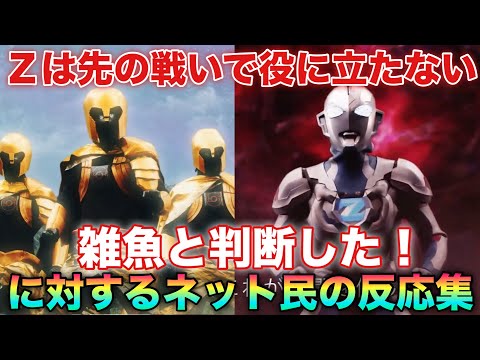
▶ Watch the original YouTube video
How Ultraman Z Became One of the Strongest Warriors Through Earth Training: A 15-Year Analysis
Ultraman Z arrived on Earth as the weakest member of the Ultra family, yet achieved remarkable power growth in just six months. Through analysis of fan discussions and comparative study of similar Ultraman series, experts reveal that Earth’s unique environment served as the perfect training ground for unprecedented transformation.
What Happened
Ultraman Z arrived on Earth as an inexperienced warrior, initially evaluated as only “one-third combat ready” without support from senior Ultramen. Over a six-month period of training on Earth, Z acquired the Delta Rise Claw—a power combining light and darkness—and ultimately defeated Beliarok, a warrior ranked among the strongest in Ultraman history. This dramatic transformation from the series’ weakest protagonist to one of its most powerful has sparked extensive discussion within the fan community about the nature of growth and the unique properties of Earth as a training environment.
Why It Matters
Z’s transformation challenges conventional storytelling patterns in the Ultraman franchise. Unlike previous “underdog” protagonists who possessed basic combat competency, Z’s extreme initial weakness made his growth trajectory unprecedented. The six-month timeframe—shorter than Ultraman Mebius’s one-year stay—raises fundamental questions about how environmental factors accelerate personal development. For long-time Ultraman fans, Z’s story provides answers to a decades-old question: why does Earth, a relatively weak planet in the cosmic hierarchy, serve as the optimal training ground for the universe’s most powerful warriors?
Background
The Ultraman franchise spans multiple series, each featuring protagonists with varying initial power levels. Ultraman Mebius trained on Earth for one year before defeating the Dark Cosmic Emperor. Ultraman Leo used Earth as a training ground with a dedicated mentor. Z’s arrival in 2020 introduced a new paradigm: a protagonist so weak that senior Ultramen questioned his combat viability. Rather than being dispatched by the Ultra Kingdom’s leadership, Z arrived on Earth independently—a choice that proved transformative. This self-directed decision to seek training on Earth, without organizational support, mirrors a recurring pattern in the franchise where individual growth transcends institutional constraints.
Key Points
- Unprecedented weakness: Z was initially rated as “one-third combat ready,” the most severe power deficit of any Ultraman protagonist in franchise history.
- Accelerated growth: In six months, Z acquired the Delta Rise Claw and defeated Beliarok, achieving results comparable to or exceeding Mebius’s one-year transformation.
- Earth’s unique training environment: The planet’s combination of human interaction, diverse threats, and temporal limitations on Ultraman activity created optimal conditions for accelerated development.
- Light-darkness integration: Z’s acquisition of powers combining opposing forces represents philosophical growth beyond mere physical power increase.
- Organizational independence: Z’s self-directed choice to train on Earth, without Ultra Kingdom authorization, proved more effective than institutional deployment strategies.
- Strategic impact: Z’s transformation was so dramatic that enemy forces reconsidered their invasion strategies, demonstrating growth beyond individual achievement.
Timeline
- Series premiere (2020): Z arrives on Earth as the weakest Ultraman, requiring constant support from senior warriors.
- Early episodes: Z demonstrates combat hesitation and technical deficiencies, earning the “one-third combat ready” evaluation.
- Mid-series development: Z begins acquiring new techniques and gaining confidence through Earth-based training.
- Six-month mark: Z masters the Delta Rise Claw, integrating light and darkness into a unified power source.
- Series climax: Z defeats Beliarok, a warrior of legendary strength, signaling completion of Earth training phase.
Perspectives
Fan Community Analysis: Twitter discussions emphasize the dramatic nature of Z’s transformation, with the phrase “trained on Earth for six months and became a monster” appearing repeatedly. The fan consensus identifies Earth’s unique properties—human interaction, environmental constraints, and diverse threats—as critical factors in Z’s development.
Comparative Franchise Analysis: When compared to Ultraman Mebius and Ultraman Leo, Z’s growth trajectory reveals important distinctions. Mebius and Leo possessed foundational combat skills before Earth training, allowing them to develop at a measured pace. Z’s extreme initial weakness forced total commitment to training, eliminating the “comfort margin” that slowed other warriors’ development. This desperation-driven approach paradoxically accelerated growth.
Organizational Critique: Fan discussions highlight the Ultra Kingdom’s leadership failures. Z was not officially dispatched; he chose Earth independently. This self-directed decision proved more effective than institutional strategy, suggesting that individual initiative surpasses organizational planning in the franchise’s value system.
Critical Perspective: Some viewers questioned whether Z’s rapid growth was narratively justified. Counter-arguments emphasized that Earth’s specific environmental conditions—time limitations on Ultraman activity, human emotional complexity, and diverse enemy types—create training intensity unavailable elsewhere in the cosmos.
Insights
Z’s transformation reveals a fundamental principle within the Ultraman franchise: growth emerges not from initial strength but from environmental pressure combined with individual determination. Earth functions as a crucible where limitations become catalysts. The planet’s temporal constraints force maximum efficiency; human presence demands emotional and strategic development beyond combat mechanics; diverse threats require adaptive problem-solving.
The integration of light and darkness in Z’s Delta Rise Claw carries symbolic weight beyond power mechanics. In Ultraman mythology, these forces traditionally oppose each other. Z’s synthesis represents philosophical maturation—the ability to transcend binary thinking and embrace paradox. This mirrors broader narrative themes where personal growth requires integrating contradictory experiences.
Z’s story challenges the franchise’s implicit hierarchy. The Ultra Kingdom’s leadership, despite cosmic authority, proves strategically incompetent. Z’s unauthorized Earth training succeeds where official deployments fail. This inversion suggests that institutional power and genuine capability diverge—a recurring theme in the franchise that resonates with audiences questioning organizational effectiveness.
The six-month timeframe versus Mebius’s one-year stay raises important questions about desperation as a growth accelerant. Z’s extreme initial weakness eliminated complacency; every training session carried existential weight. This intensity compressed development that normally requires extended periods, suggesting that motivation intensity matters as much as duration.
For franchise continuity, Z’s transformation establishes Earth as the definitive training ground for new-generation Ultramen. Future series may reference Z’s example when justifying Earth-based training programs. The planet’s status shifts from peripheral location to essential development facility—a reframing with implications for how the franchise conceptualizes growth and power acquisition.