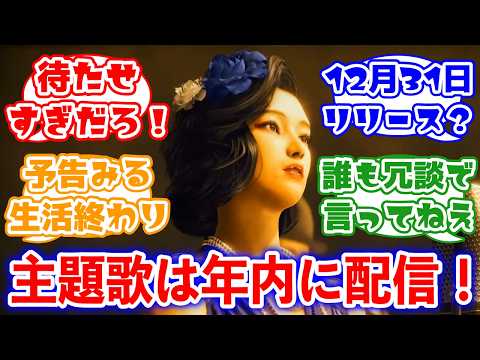
▶ Watch the original YouTube video
Ryu Ga Gotoku Studio Announces ‘Stranger Than Heaven’ Theme Song Coming This Year—Fan Reactions and Industry Expectations
Ryu Ga Gotoku Studio has announced that the theme song for its upcoming title ‘Stranger Than Heaven’ will be distributed before the end of the year. The announcement has sparked significant excitement within the gaming community, with fans speculating about the game’s release window and the musical direction of the new project.
- What Happened
- Why It Matters
- Background
- Key Points
- The Evolution of Game Music and Industry Trends
- Comparative Analysis: Theme Song Release Strategies
- Fan Community Reactions
- Industry Perspective and Marketing Strategy
- What to Expect When the Theme Song Releases
- Broader Implications for Game Industry
- Looking Forward
What Happened
Ryu Ga Gotoku Studio has confirmed that the theme song for ‘Stranger Than Heaven,’ the studio’s upcoming new title, will be released to the public before the end of the current year. This announcement has generated substantial discussion across gaming communities, with fans analyzing what the theme song’s release timing might reveal about the game’s launch window and creative direction.
Why It Matters
The Ryu Ga Gotoku series has established itself as a cornerstone of narrative-driven gaming, with theme songs playing a crucial role in defining each installment’s identity and atmosphere. The decision to release ‘Stranger Than Heaven’s’ theme song ahead of the full game launch represents a deliberate marketing strategy that extends beyond traditional game music distribution. This approach reflects broader industry trends where game soundtracks function as standalone cultural products on streaming platforms, capable of generating anticipation and reaching audiences beyond the core gaming demographic. For the studio, the theme song serves as a statement of creative confidence and a tool for shaping fan expectations about the new project.
Background
The Ryu Ga Gotoku series, which debuted in 2006 on PlayStation 2, has become renowned for its cinematic storytelling and high-quality musical compositions. Each major installment has featured a memorable theme song that encapsulates the game’s thematic essence—from the original ‘Ryu Ga Gotoku ~Main Theme~’ to the acclaimed theme from ‘Ryu Ga Gotoku 0: The Beginning.’ These theme songs have transcended their role as background music, functioning instead as cultural touchstones that define the series’ identity.
The title ‘Stranger Than Heaven’ suggests a departure from previous entries while maintaining the series’ core focus on human drama and underworld narratives. The phrase implies a more sophisticated and universally resonant thematic scope compared to earlier installments. The studio’s decision to distribute the theme song before year’s end aligns with industry precedent, where major titles typically release theme songs 3–6 months before the main game launch, suggesting a potential 2025 release window for the full game.
Key Points
- Ryu Ga Gotoku Studio will release the ‘Stranger Than Heaven’ theme song before the end of the year
- The theme song release is expected to serve as a marketing catalyst, building anticipation for the game’s full launch
- The Ryu Ga Gotoku series has a strong tradition of high-quality, cinematically-influenced theme compositions that define each game’s identity
- Fan communities are actively discussing the theme song’s release timing as a potential indicator of the game’s launch window, with speculation pointing to early 2025
- The announcement reflects broader industry trends where game music functions as independent cultural content distributed across streaming platforms
- Fan reactions span three primary categories: expectations for series tradition continuity, anticipation for creative innovation, and analytical speculation about release timing
The Evolution of Game Music and Industry Trends
Over the past decade, game music has undergone significant evolution, transitioning from purely functional background accompaniment to standalone artistic works. The Ryu Ga Gotoku series exemplifies this shift through its adoption of cinematic music production approaches that rival film and television soundtracks in quality and sophistication.
The rise of streaming platforms such as Spotify and Apple Music has fundamentally altered how game music reaches audiences. Previously, game soundtracks were primarily experienced within the context of gameplay. Today, millions of listeners engage with game music independently, without playing the games themselves. This shift has elevated the status of game theme songs, making them valuable marketing assets and cultural products in their own right.
The Ryu Ga Gotoku studio’s decision to announce a pre-release theme song distribution exemplifies this industry evolution. By releasing the theme song months before the game’s launch, the studio leverages the track’s standalone appeal while simultaneously building narrative anticipation. This strategy has proven effective across major franchises, including Final Fantasy XVI and other AAA titles.
Comparative Analysis: Theme Song Release Strategies
Different major gaming franchises employ distinct approaches to theme song distribution:
| Title | Theme Song Release Timing | Interval Before Main Release | Distribution Platforms |
|---|---|---|---|
| Ryu Ga Gotoku 0 | 3 months before launch | Pre-release | YouTube, streaming services |
| Final Fantasy XVI | 4 months before launch | Pre-release | Streaming services |
| Persona 5 | Simultaneous with main release | Same-day launch | Streaming services |
| Stranger Than Heaven (projected) | Year-end 2024 | 3–6 months before estimated launch | YouTube, streaming services |
Fan Community Reactions
Online responses to the theme song announcement have been predominantly positive, though multifaceted. Fan reactions can be categorized into three distinct patterns:
Tradition-Focused Expectations: A significant portion of the fanbase expresses desire for the new theme song to maintain the series’ established musical and narrative standards. Comments frequently reference ‘Ryu Ga Gotoku 0’ as a benchmark for emotional impact and compositional quality, with fans hoping the new title will deliver comparable artistic achievement.
Innovation-Oriented Anticipation: Another segment of the community interprets the ‘Stranger Than Heaven’ title as signaling creative evolution. These fans actively speculate about potential new musical directions and thematic departures from previous entries, viewing the title’s unconventional phrasing as evidence of the studio’s willingness to experiment.
Analytical Speculation: A third category of responses focuses on extracting release timing information from the theme song announcement. Fans engage in detailed discussions about what a year-end theme song release implies about the main game’s launch window, with many concluding that a spring 2025 release is probable.
On social media platforms including Twitter, the announcement generated thousands of retweets and sustained hashtag trending. Notably, engagement extended beyond existing franchise fans to include new audiences attracted by the theme song announcement alone, suggesting the strategy effectively reaches beyond the core gaming demographic.
YouTube comments predominantly express high expectations, with many viewers explicitly comparing anticipated quality to previous series entries. Some critical voices on discussion forums expressed frustration about the absence of additional game information, viewing the theme song announcement as insufficient without concrete details about gameplay or narrative direction.
Industry Perspective and Marketing Strategy
Gaming industry analysts and music professionals have interpreted the theme song announcement as evidence of Ryu Ga Gotoku Studio’s sophisticated understanding of contemporary marketing dynamics. The decision to release the theme song independently reflects recognition that game music now functions as a distinct cultural product with value independent of gameplay.
The studio’s approach demonstrates strategic confidence in the new title’s quality. Releasing a theme song before the main game launch represents a calculated risk—the track must generate positive reception and sustain interest across months of waiting for the full release. The studio’s willingness to make this commitment suggests internal confidence in both the theme song’s quality and the game’s eventual reception.
This strategy also serves a secondary function: the theme song becomes a vehicle through which fans attempt to decode the game’s thematic direction, narrative scope, and musical identity. By distributing the theme song, the studio invites fan analysis and speculation, effectively extending the marketing campaign across the months preceding the main launch.
What to Expect When the Theme Song Releases
When ‘Stranger Than Heaven’s’ theme song becomes available, several developments are likely to follow:
Repeated Listening and Analysis: Ryu Ga Gotoku series theme songs characteristically contain layered musical elements that reveal themselves through multiple listens. Fans typically engage in detailed analysis of instrumentation, compositional structure, and lyrical content across numerous plays.
Community Discussion: Fan communities across Twitter, Reddit, and dedicated forums will immediately begin discussing the track’s musical characteristics, comparing it to previous series entries, and speculating about the game’s narrative direction based on musical cues.
Comparative Analysis: Fans will likely conduct side-by-side comparisons with theme songs from previous Ryu Ga Gotoku titles, analyzing how the new track either continues established traditions or introduces novel elements.
Creator Research: The gaming community will investigate the theme song’s composers, arrangers, and production team, researching their previous work to understand the musical and creative context informing the new composition.
Broader Implications for Game Industry
The ‘Stranger Than Heaven’ theme song announcement exemplifies evolving relationships between game development studios, music distribution, and fan communities. The decision to release a theme song as a standalone product reflects recognition that game music has achieved cultural legitimacy as an independent art form.
This trend carries implications for how future game launches will be marketed and how fan communities will engage with unreleased titles. Theme songs increasingly function as narrative previews, allowing audiences to form impressions of a game’s thematic direction before experiencing the full product. Studios that effectively leverage this dynamic can extend marketing campaigns across extended pre-release periods while maintaining audience engagement.
For Ryu Ga Gotoku Studio specifically, the theme song announcement reinforces the studio’s position as an industry leader in narrative-driven game design and sophisticated marketing strategy. The decision demonstrates understanding that contemporary gaming audiences value artistic quality and thematic coherence across all aspects of game presentation, including music.
Looking Forward
The announcement of ‘Stranger Than Heaven’s’ year-end theme song release marks the beginning of what promises to be a significant moment in the Ryu Ga Gotoku series’ evolution. The title itself suggests both continuity with series traditions and willingness to explore new creative territory.
As the theme song release approaches, attention will focus on several key questions: Will the composition maintain the series’ established musical identity while introducing fresh elements? How will the fan community respond to the track’s artistic direction? What additional information about the game will the studio reveal in the months following the theme song’s release?
‘Stranger Than Heaven’ has the potential to represent a significant milestone in the Ryu Ga Gotoku franchise’s 18-year history. The theme song release will serve as the first substantial artistic statement from this new project, providing audiences with their initial window into the game’s creative vision. For fans of the series and observers of game industry trends alike, the upcoming theme song distribution represents a moment of considerable significance.