▶ Watch the original YouTube video
Anime Series ‘Tengaku’s Chardugal’ Sparks Mixed Reactions in Mongolia Over Historical Accuracy
A new anime series depicting 13th-century Mongolian history has ignited a nuanced debate in Mongolia, where viewers praise the production’s cultural sensitivity while raising concerns about historical accuracy. The show’s portrayal of historical figures like Töregene Khatun and events such as the Otrar incident has prompted constructive dialogue about the responsibility of international media in representing non-Western history.
What Happened
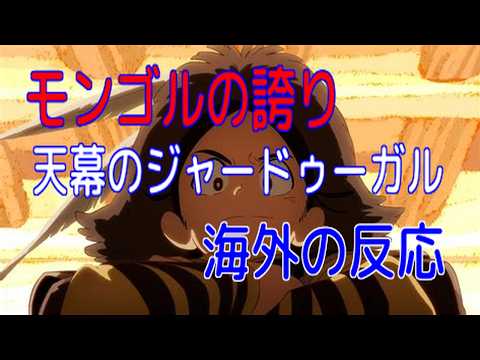
The anime series “Tengaku’s Chardugal” (天幕のジャードゥーガル) has been broadcast on Mongolia’s children’s channel TV Mongolia, generating significant attention with its second episode trailer accumulating over 120,000 views. The series, which focuses on 13th-century Mongolian Empire history, has prompted a complex range of responses from Mongolian viewers—neither purely positive nor negative, but rather a multifaceted discussion about how foreign productions depict local history.
Why It Matters
This situation reflects a broader tension in international media: the balance between creative freedom and cultural responsibility. When foreign productions depict another nation’s history, particularly to young audiences, they shape how that history is understood globally and how a nation’s people see their own heritage represented. The Mongolian response to “Tengaku’s Chardugal” demonstrates how audiences increasingly engage critically with international content, demanding both entertainment value and historical integrity. This sets a precedent for how anime and other media should approach depicting non-Western historical narratives.
Background
The Mongolian Empire, established by Genghis Khan in the 13th century, represents one of history’s largest territorial empires. For Mongolian audiences, the portrayal of this era is deeply connected to national identity and cultural pride. The anime’s central figures—particularly Töregene Khatun, the wife of Ögedei Khan and a woman who wielded significant political power for approximately five years—and historical events like the Otrar incident (a conflict that triggered Genghis Khan’s western campaigns) carry substantial historical weight. The production’s decision to cast an active Mongolian sumo wrestler as a voice actor demonstrates deliberate cultural consideration, yet this has not entirely resolved concerns about narrative accuracy.
Key Points
- Broadcast Reach: The series airs on TV Mongolia’s children’s channel with significant viewership, indicating substantial audience engagement across demographics.
- Critical Concerns: Mongolian viewers have raised concerns about inaccurate portrayals of Töregene Khatun, the depiction of Mongolians as antagonists, and distorted historical context surrounding the Otrar incident.
- Constructive Dialogue: Rather than simple dismissal, Mongolian comment sections feature detailed historical analysis, with viewers explaining the actual historical context of events depicted in the anime.
- Production Sensitivity: The inclusion of a prominent Mongolian voice actor and careful character translation demonstrates the production team’s commitment to cultural respect.
- Positive Reception: Alongside criticism, viewers acknowledge the series’ entertainment value and express hope that it will increase international interest in Mongolian history and culture.
- Nuanced Debate: Comments reveal viewers simultaneously appreciating creative freedom while maintaining standards for historical accuracy, particularly given the young target audience.
Perspectives
Critical Perspective: Mongolian viewers concerned about historical accuracy argue that simplifying complex historical figures like Töregene Khatun into straightforward villains misrepresents their ancestors’ legacies. They point out parallels to Disney’s “Mulan,” where cultural nuance was sacrificed for narrative simplicity. These critics emphasize that children consuming this content may develop distorted understandings of their own history.
Historical Context Perspective: Many Mongolian commenters provide detailed historical explanations, noting that the Otrar incident involved Mongolian envoys being killed by the Khorazmian Empire—framing the Mongolian response as justified retaliation rather than unprovoked aggression. This perspective seeks to educate fellow viewers about the complexity underlying historical events.
Supportive Perspective: Other viewers appreciate the series’ entertainment value and argue that anime, as a creative medium, should not be held to strict documentary standards. They suggest that increased interest in Mongolian history—even sparked by a fictionalized account—represents a positive cultural outcome.
Measured Perspective: Some commenters advocate for patience, suggesting viewers wait until the series concludes before forming final judgments, and caution against uninformed historical debates in comment sections.
Insights
The Mongolian response to “Tengaku’s Chardugal” reveals a sophisticated audience that distinguishes between entertainment and education, between creative interpretation and historical distortion. Unlike purely oppositional reactions seen with some international media, Mongolian viewers demonstrate what might be called “critical engagement”—they acknowledge production efforts while maintaining standards for accuracy.
This response pattern suggests that audiences in nations with significant historical legacies increasingly view international media representations as matters of cultural importance. The Mongolian Empire’s status as a world-historical force means its depiction carries weight beyond mere entertainment; it touches on national identity and global perception.
The production team’s cultural considerations—casting a Mongolian voice actor, careful translation work—indicate growing awareness that international productions require genuine cultural partnership, not superficial localization. However, the ongoing debate suggests that such gestures, while appreciated, do not substitute for substantive historical accuracy in narrative content.
Ultimately, “Tengaku’s Chardugal” demonstrates that anime has evolved into a medium of international cultural exchange with real consequences. The Mongolian engagement with this series—balancing appreciation with critique—models how global audiences might productively engage with international media: acknowledging creative intent while maintaining standards for how their own histories are represented to the world.