▶ Watch the original YouTube video
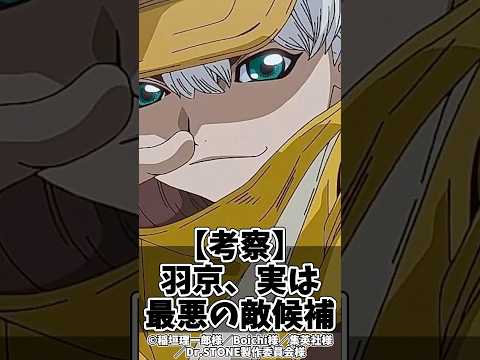
Dr. STONE: How Hakyo’s Moderate Stance Prevents Him From Becoming the Empire’s Ultimate Threat
A deep analysis of Dr. STONE’s character Hakyo reveals that his moderate political stance is essential to the narrative. If he had adopted radical ideology instead, he would have become the most dangerous adversary the protagonists could face, fundamentally altering the story’s trajectory.
What Happened
Online discussions surrounding the anime Dr. STONE have highlighted a critical character design choice: Hakyo, the Empire’s capable vice-official, maintains a moderate political position despite possessing exceptional intelligence and strategic acumen. Content creators and fans have begun analyzing what would occur if Hakyo had instead adopted radical ideology, concluding that such a scenario would have transformed him into an existential threat to the protagonists and their village.
Why It Matters
Hakyo’s characterization exemplifies sophisticated narrative design in anime storytelling. The juxtaposition of high competence with moderate ideology creates narrative complexity that elevates Dr. STONE beyond simple hero-versus-villain dynamics. This character choice directly reflects the series’ central theme: examining how scientific knowledge should be used and by whom. Understanding Hakyo’s role illuminates how a single character decision can fundamentally reshape an entire story’s moral landscape and thematic resonance.
Background
Dr. STONE is a science-focused anime that premiered in 2019, exploring themes of human advancement and the ethical application of scientific knowledge. The series presents two opposing factions: the protagonists led by Senku, who seek to use science for human development, and the Empire, which employs science to maintain power. Hakyo serves as the Empire’s second-in-command, possessing both scientific expertise and strategic intelligence. His introduction in the series’ second season creates immediate tension, as viewers recognize his potential threat level. However, Hakyo consistently chooses dialogue and cooperation over aggression, a choice that fundamentally shapes the narrative’s direction.
Key Points
- Hakyo combines exceptional competence with moderate ideology—an unusual character combination that creates narrative tension and complexity
- If Hakyo had adopted radical ideology, he could have monopolized the Empire’s scientific capabilities, eliminated the protagonist village, and established authoritarian control
- Hakyo’s moderate stance enables dialogue between opposing factions, preventing the story from devolving into simple conflict
- Online communities widely recognize that “radical Hakyo” would represent the worst-case scenario for the protagonists, validating the character design’s sophistication
- This characterization directly supports Dr. STONE’s thematic exploration of science’s proper application and the importance of ideological choice
- Hakyo’s position demonstrates that character choices—not just abilities—determine narrative outcomes and moral complexity
Character Analysis: Hakyo’s Unique Position
Hakyo’s characterization stands apart from similar characters in other anime. Comparisons with characters like Char Aznable from Mobile Suit Gundam, Erwin Smith from Attack on Titan, and Lelouch from Code Geass reveal Hakyo’s distinctiveness. While these characters combine high competence with either radical ideology or morally questionable methods, Hakyo maintains both competence and restraint. This combination is exceptionally rare in anime narratives, where powerful characters typically pursue their ambitions aggressively.
The following comparison illustrates this distinction:
| Character | Competence Level | Ideological Radicalism | Dialogue Capacity | Narrative Impact |
|---|---|---|---|---|
| Hakyo | High | Low (Moderate) | High | Complex relationship building |
| Char Aznable | High | High (Radical) | Low | Escalating conflict |
| Erwin Smith | High | Moderate | Moderate | Goal-driven pursuit |
| Lelouch | High | High (Radical) | Low | Path to destruction |
Hypothetical Scenarios: If Hakyo Had Chosen Radicalism
Scenario 1: Hakyo Seizes Imperial Power
Had Hakyo pursued radical ideology and sought power consolidation within the Empire, his knowledge and abilities would have enabled rapid scientific advancement. The Empire would have achieved overwhelming technological superiority, leaving the protagonist village defenseless against imperial military force. This scenario mirrors how radical characters in other series consolidate power through superior capabilities.
Scenario 2: Hakyo Becomes Actively Hostile
If Hakyo had adopted a radical stance prioritizing imperial interests, he would have classified the protagonist village as an existential threat requiring elimination rather than dialogue. His strategic capabilities would have enabled systematic destruction of the village’s scientific infrastructure and personnel, potentially resulting in tragic narrative conclusions.
Scenario 3: Hakyo Establishes Authoritarian Rule
With his knowledge and capabilities, a radical Hakyo could have constructed an authoritarian power structure within the Empire, using scientific superiority as the foundation for totalitarian control. This would have transformed the Empire from a mere antagonistic faction into a civilization-threatening force.
Thematic Significance
Hakyo’s moderate stance directly embodies Dr. STONE’s central theme: the examination of how scientific knowledge should be applied. While Senku advocates for science serving human development and the Empire seeks science as a power-maintenance tool, Hakyo represents a third path—scientific knowledge applied constructively within existing power structures. This ideological positioning creates narrative nuance that transcends simple good-versus-evil frameworks.
Furthermore, Hakyo’s character raises fundamental questions about enemy and ally definitions. His affiliation with the Empire does not automatically make him an antagonist; his moderate ideology enables cooperation despite factional differences. This complexity reflects real-world dynamics where ideological alignment matters as much as organizational membership.
Online Reception and Community Response
Internet communities have extensively discussed Hakyo’s character design. Twitter users frequently express sentiments like “Hakyo as an enemy would be terrifying,” indicating that viewers intuitively recognize his threat potential. YouTube commenters provide analytical observations about how Hakyo’s moderate stance maintains narrative balance. Discussion forums on platforms like 5channel debate whether Hakyo represents a character with genuine choice—someone who could have become an antagonist but chose cooperation instead.
This widespread recognition validates the character design’s sophistication. Viewers understand that Hakyo’s “moderate” designation is not a passive trait but an active choice with profound narrative consequences. The character resonates precisely because his competence combined with restraint creates genuine dramatic tension.
Insights
Hakyo’s characterization demonstrates that narrative complexity emerges not from character power levels alone but from ideological choices. A character’s decision to pursue moderation despite possessing the capability for radicalism creates more compelling storytelling than simple power escalation. Dr. STONE uses Hakyo to explore how scientific advancement intersects with human values and choices. The series suggests that technology’s impact depends entirely on the ideological framework guiding its application. By presenting Hakyo as a capable individual who chooses dialogue over domination, the narrative affirms that restraint and cooperation represent viable paths even for those with superior capabilities. This thematic positioning elevates Dr. STONE beyond entertainment into social commentary about power, responsibility, and the choices that define civilization.