▶ Watch the original YouTube video
Why Fans Don’t Want to Become Kamen Rider 555’s Inui Takumi—And Why That’s a Sign of Genius
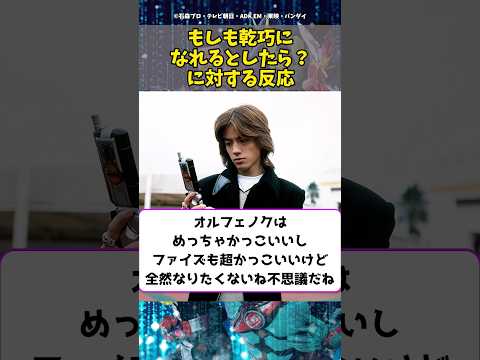
A viral question asking “What if you could become Inui Takumi?” has sparked widespread debate among Kamen Rider 555 fans, revealing a fundamental truth about one of tokusatsu’s most unconventional protagonists. Unlike traditional heroes that audiences aspire to emulate, Takumi represents something far more human: a reluctant, passive hero forced into circumstances beyond his control—and viewers overwhelmingly reject the idea of becoming him.
What Happened
A social media question posed to Kamen Rider 555 (Faiz) fans asked whether they would want to become the series’ protagonist, Inui Takumi. The overwhelming response was negative. Viewers consistently answered that they would not want to take on Takumi’s role, citing the character’s tragic circumstances, constant forced conflicts, and pervasive sense of hopelessness. This reaction has sparked deeper analysis about what the character represents and why his refusal to embrace heroism resonates so strongly with audiences.
Why It Matters
Inui Takumi represents a watershed moment in tokusatsu and anime history. Rather than embodying the traditional hero archetype—a character audiences want to emulate—Takumi deliberately subverts this expectation. His passive, apathetic approach to being a Kamen Rider challenges decades of convention in the special effects genre, where protagonists typically fight with clear moral conviction and heroic determination. Understanding why audiences reject Takumi’s role reveals something profound about how modern storytelling reflects contemporary anxieties and the psychological toll of forced responsibility. The character’s design suggests that authentic heroism may not be aspirational at all, but rather a burden imposed by circumstance.
Background
Kamen Rider 555 aired from 2003 to 2004, during a transitional period in Japanese tokusatsu. The series was written by Kobayashi Yasuko, who deliberately set out to deconstruct the concept of the hero. Unlike previous Kamen Rider protagonists—such as Kuuga’s Godai Yusuke, who believed in human potential, or Agito’s Tsugami Shoichi, who fought to protect others—Takumi fundamentally does not want to fight. He acquires the Rider System by accident and is forced into combat against mysterious enemies called Orphenochs. His reluctance is not a character flaw but rather the core of his identity.
This approach parallels Neon Genesis Evangelion’s Shinji Ikari, another protagonist forced into combat against his will. When Evangelion aired in 1995, Shinji’s passivity was widely criticized—audiences rejected a protagonist who “did nothing” and “only ran away.” However, over time, Shinji’s character was reappraised as genuinely human and psychologically authentic. Takumi appears to follow a similar trajectory, though his apathy extends even further than Shinji’s explicit desire to escape.
Key Points
- Takumi as the “Unwanted Hero”: Unlike traditional protagonists designed to inspire emulation, Takumi is deliberately constructed as someone audiences would not want to become, making him a revolutionary figure in tokusatsu.
- Forced Combat as Psychological Burden: Takumi’s apathy functions as a defense mechanism against overwhelming stress—being forced to fight mysterious enemies, competing with other Rider System users, and lacking trustworthy relationships.
- Reflection of 2000s Malaise: Takumi’s character embodies the post-bubble collapse anxiety and societal stagnation of early 2000s Japan, where young people faced uncertain futures and forced responsibilities.
- Authenticity Over Aspiration: The widespread rejection of Takumi’s role paradoxically proves the character’s success, as his “unwantability” demonstrates his psychological realism and human authenticity.
- Influence on Modern Storytelling: Takumi’s archetype influenced subsequent works including Attack on Titan’s Eren Yeager and Puella Magi Madoka Magica’s Homura, establishing a lineage of reluctant, forced heroes.
- Psychological Defense Mechanism: Takumi’s passivity is not weakness but adaptation—a psychologically sound response to unbearable circumstances that makes him more human than traditional heroes.
Timeline
- 1995: Neon Genesis Evangelion introduces Shinji Ikari, the prototype reluctant protagonist, initially criticized for his passivity.
- 2003–2004: Kamen Rider 555 airs, introducing Inui Takumi as an even more apathetic forced hero, pushing the archetype further.
- 2000s–2010s: The “reluctant hero” archetype becomes established in anime and tokusatsu, with works like Puella Magi Madoka Magica and Attack on Titan exploring variations.
- 2010s onward: Shinji Ikari undergoes critical reappraisal, with audiences recognizing his psychological authenticity; similar reassessment of Takumi begins.
- Present: Viral question about becoming Takumi sparks renewed analysis of his character and what his rejection reveals about modern heroism.
Perspectives
The Rejection Response: Most viewers answer “no” to becoming Takumi, citing his tragic circumstances. His life involves fighting mysterious enemies, competing with other Rider users, losing agency over his own existence, and lacking meaningful human connections. This response is psychologically sound—audiences rationally recognize that Takumi’s situation is undesirable.
The Reappraisal Response: A smaller but significant group of viewers argue that Takumi is the most authentically human protagonist in tokusatsu history. They contend that his apathy is not a flaw but a rational response to impossible circumstances. These viewers see in Takumi a mirror of their own experiences with forced responsibilities and unwanted obligations.
The Historical Perspective: Critics and analysts view Takumi as a reflection of early 2000s Japanese society—a period marked by economic stagnation, youth unemployment, and widespread anxiety about the future. His passivity becomes a cultural artifact, encoding the psychological state of a generation.
The Production Intent: Screenwriter Kobayashi Yasuko deliberately designed Takumi to question the nature of heroism itself. Rather than creating an aspirational figure, she sought to expose the burden and cost of forced heroism, asking: “What if an ordinary person was suddenly forced to become a hero?” The audience’s rejection of Takumi validates this intent—the character succeeds precisely by being undesirable.
Comparative Analysis: The Reluctant Hero Lineage
Takumi’s position within tokusatsu and anime becomes clearer when compared to similar characters:
| Work | Protagonist | Source of Reluctance | Audience Response |
|---|---|---|---|
| Neon Genesis Evangelion | Shinji Ikari | Fear of combat and rejection | Initial criticism; later reappraisal |
| Kamen Rider 555 | Inui Takumi | Forced into Rider System; no choice | “I don’t want to become him” |
| Puella Magi Madoka Magica | Homura Akemi | Time loop despair and sacrifice | Sympathy and understanding |
| Attack on Titan | Eren Yeager | Revenge drive mixed with coercion | Conflicted support and debate |
Takumi occupies a unique position within this lineage. Shinji explicitly expresses his desire to escape; Takumi goes further, refusing to even engage with the question of fighting. His apathy is more complete, his withdrawal more total. This makes him simultaneously the most psychologically realistic and the most alienating of these reluctant heroes.
Insights
The question “What if you could become Inui Takumi?” and the overwhelming negative response it generates reveals several profound truths about modern storytelling and audience psychology.
Authenticity as Undesirability: Takumi’s rejection by audiences paradoxically proves his success as a character. In traditional storytelling, protagonists are designed to be aspirational. Takumi inverts this logic—his undesirability is evidence of his authenticity. A character who accurately reflects the psychological burden of forced responsibility will naturally repel audiences who recognize those burdens in their own lives.
The Shift in Heroic Ideals: The emergence and influence of characters like Takumi suggests a fundamental shift in how contemporary audiences understand heroism. The post-1995 era, beginning with Evangelion, marks a transition from heroism as aspiration to heroism as burden. This reflects broader social changes: the collapse of grand narratives, the rise of precarious employment, and the generalized anxiety of late capitalism. Takumi embodies this shift perfectly—he is a hero not because he wants to be, but because circumstances demand it.
Psychological Realism as Genre Innovation: Takumi’s passivity is not a narrative flaw but a psychological truth. When faced with unbearable stress, apathy is a rational defense mechanism. By centering this response in a protagonist, Kamen Rider 555 achieved something remarkable: it made psychological authenticity the core of the hero’s identity. This innovation influenced subsequent works and established a new standard for what heroism could mean in contemporary media.
The Universality of Forced Responsibility: Takumi’s situation—being forced into a role he never chose, bearing burdens he never accepted, lacking agency over his own life—resonates because it mirrors universal human experience. Employment, family obligations, social expectations, and systemic pressures all force individuals into roles they did not choose. By making this the central experience of his protagonist, Kobayashi Yasuko created a character whose “unwantability” is actually his deepest point of connection with audiences.
Legacy and Ongoing Influence: The reluctant hero archetype that Takumi exemplifies has become increasingly common in contemporary anime and tokusatsu. Works like Attack on Titan, Puella Magi Madoka Magica, and numerous others explore variations on the theme of forced heroism. This suggests that Takumi’s influence extends far beyond Kamen Rider 555, shaping how an entire generation of creators and audiences understand what it means to be a hero.
The question “What if you could become Inui Takumi?” ultimately asks something deeper: “What if heroism was not about becoming someone you want to be, but about enduring what you never wanted to face?” In answering “no,” audiences demonstrate not a rejection of Takumi, but an honest recognition of the human cost of heroism—and perhaps, an unexpected form of respect for a character who refuses to pretend that cost does not exist.