▶ Watch the original YouTube video
Why Players React Differently to Speed-Attack Characters in Battle Cats: A Deep Dive into Game Meta Evolution
After eight years of gameplay and analysis of over 200 gaming videos, a dedicated Battle Cats player explores why identical speed-attack mechanics receive vastly different community responses. The answer reveals fundamental truths about game design philosophy and player psychology that extend far beyond character statistics.
What Happened
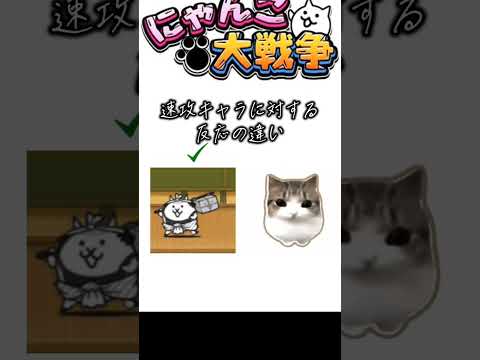
Within the Battle Cats community, two speed-attack characters—Neko Moot and Sanada Yukimura—represent opposing ends of the player approval spectrum despite possessing comparable offensive capabilities. Neko Moot enjoys overwhelming positive reception, while Sanada Yukimura generates mixed and conditional praise. This divergence prompted deeper investigation into what separates beloved characters from technically powerful but underutilized ones.
Why It Matters
The differential reception of mechanically similar characters illuminates how game design transcends raw statistics. It demonstrates that player satisfaction depends on factors including accessibility, reliability, versatility, and psychological comfort—not merely damage output or attack speed. Understanding these dynamics reveals how successful games balance power with usability, and how metagame evolution shapes community perception over time.
Background
Battle Cats began as a straightforward tower defense game eight years ago, when the community viewed it primarily as a “tower-climbing” experience with minimal strategic complexity. Over successive updates, the game evolved into a sophisticated metagame with diverse enemy types, stage-specific challenges, and nuanced character interactions. The speed-attack archetype, initially a dominant strategy, gradually became conditional—effective in certain contexts but not universally applicable. This shift in game design philosophy directly influenced how players evaluate speed-attack characters.
Neko Moot emerged as the archetypal speed-attack unit, functioning effectively across all player progression levels and stage types. Sanada Yukimura, introduced later, possessed comparable speed statistics but required contextual judgment for optimal deployment. The contrast between these two characters encapsulates the broader evolution of Battle Cats’ strategic depth.
Key Points
- Evaluation Divergence: Speed-attack character assessment has shifted from absolute strength rankings to stage-specific utility assessments as the metagame evolved.
- Neko Moot’s Universal Appeal: The character succeeds because it functions reliably across all progression stages, requires minimal tactical timing, and maintains consistent versatility—providing psychological reassurance alongside mechanical power.
- Sanada Yukimura’s Conditional Reception: Despite comparable speed performance, this character demands stage-specific judgment and shows significant effectiveness variance based on upgrade levels, creating divided community opinion.
- Player Psychology Over Statistics: Communities favor “reliable characters” over “powerful characters,” valuing the psychological comfort of predictable performance more than raw damage potential.
- Metagame Progression: Early game design favored unconditional speed-attack dominance; current design intentionally counters speed strategies, requiring more nuanced character selection.
- Skill-Based Appreciation: Advanced players recognize Sanada Yukimura’s potential, while newer players find Neko Moot’s straightforward application more accessible.
Timeline
- ~8 years ago: Battle Cats launches with simple tower-defense mechanics; speed-attack strategy dominates with minimal counterplay.
- Early years: Neko Moot introduction establishes the archetypal reliable speed-attack character; community embraces the simplicity and effectiveness.
- Mid-period: Game updates introduce diverse enemy types and stage mechanics that reduce universal speed-attack effectiveness.
- Recent years: Sanada Yukimura and similar conditional characters emerge; metagame shifts toward stage-specific strategy and character selection judgment.
- Current state: Speed-attack evaluation becomes relative rather than absolute; new character designs intentionally incorporate limitations to prevent unconditional dominance.
Perspectives
The Casual Player View: Neko Moot represents security and reliability. New and intermediate players appreciate characters that function effectively without requiring deep strategic analysis. The character’s consistent performance across diverse scenarios eliminates decision paralysis and enables progression without extensive planning.
The Competitive Player View: Advanced players recognize that Sanada Yukimura’s conditional nature creates opportunities for sophisticated strategy. While Neko Moot offers stability, specialized characters enable optimization for specific challenges. This perspective values the intellectual challenge of character selection and stage analysis.
The Developer Perspective: Recent design patterns suggest intentional movement away from unconditionally dominant characters. New speed-attack units incorporate limitations—reduced durability, stage-specific effectiveness, or resource constraints—preventing any single character from trivializing the entire game. This approach maintains long-term engagement by requiring continuous strategic adaptation.
The Community Consensus: Across Twitter, YouTube gaming channels, and forum discussions, players acknowledge Neko Moot’s strength while debating whether such universal effectiveness creates balance concerns. Simultaneously, players recognize Sanada Yukimura’s power while acknowledging its accessibility barriers. This nuanced discussion reflects mature community understanding of game design complexity.
Insights
The differential reception of Neko Moot and Sanada Yukimura reveals that game design success depends on harmonizing multiple dimensions: mechanical power, accessibility, psychological comfort, and strategic depth. A character can possess identical speed statistics to another yet generate opposite community responses based on reliability, versatility, and ease of use.
Battle Cats’ evolution demonstrates how metagames naturally progress from simple dominant strategies toward complex conditional systems. Early game design favored speed-attack dominance because the game lacked sufficient enemy diversity to counter it. As the game matured, developers intentionally introduced stage types and enemy behaviors that reduced speed-attack universality, forcing strategic evolution.
Player psychology emerges as equally important as mechanical balance. Communities gravitate toward characters that provide psychological reassurance—the confidence that deployment will succeed. Neko Moot succeeds not merely because it deals damage quickly, but because players trust it to function reliably in unfamiliar situations. Sanada Yukimura, despite comparable power, generates anxiety because its effectiveness depends on contextual judgment.
The speed-attack archetype’s evolution in Battle Cats mirrors broader game design trends. Modern successful games increasingly reject “one-size-fits-all” dominant strategies in favor of diverse viable approaches. This shift increases strategic depth and extends game longevity by preventing early-game strategies from trivializing late-game content.
For players, the practical implication is clear: optimal character selection depends on personal progression level, preferred playstyle, and risk tolerance. Neko Moot serves beginners and players prioritizing reliability. Sanada Yukimura rewards players seeking strategic challenge and willing to invest time in stage-specific optimization. Neither represents objectively superior choice—only different alignments with individual player preferences.
The broader lesson extends beyond Battle Cats: game design excellence requires balancing mechanical power with accessibility, statistical strength with psychological comfort, and dominant strategies with diverse viable alternatives. Characters that achieve this balance become beloved; those that optimize only for raw power often generate mixed reception regardless of their technical capabilities.