▶ Watch the original YouTube video
Why One Punch Man’s King Is the Most Human Character in Modern Anime: Internet Reactions Explained
A viral YouTube compilation showcasing King’s most impressive moments from One Punch Man has sparked widespread internet discussion about what makes this seemingly invincible hero truly compelling. After 15 years of anime analysis, one expert argues that King represents a fundamental shift in how modern audiences define strength—not through absolute power, but through authentic humanity.
- What Happened
- Why It Matters
- Background
- Key Points
- Character Analysis: The Nature of King’s Power
- Internet Reactions and Fan Sentiment
- King and Saitama: The Relationship That Defines Both Characters
- Evolution of Anime Heroism: A Generational Shift
- Psychological Dimensions: Self-Fulfilling Prophecy and Identity
- Comparative Analysis: King Among Similar Characters
- Viewing Guide: How to Appreciate King’s Character
- Related Works for Deeper Understanding
- Future Expectations and Narrative Potential
- Broader Implications: King as Cultural Mirror
- Conclusion
What Happened
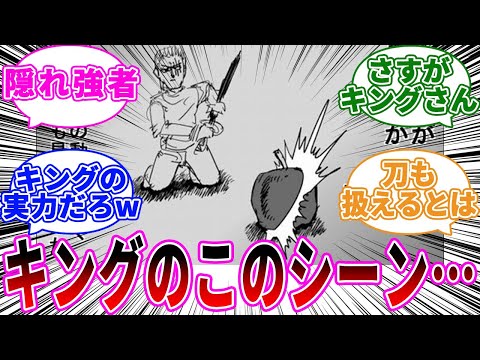
A YouTube video featuring internet reactions to King’s most remarkable scenes from One Punch Man has generated significant fan engagement across social media platforms. The compilation highlights moments where King appears to demonstrate extraordinary abilities, prompting viewers to reassess the character’s true nature and capabilities. These reactions reveal that audiences are most emotionally invested in scenes showing King’s vulnerability and human qualities rather than displays of overwhelming power.
Why It Matters
King’s character arc represents a significant evolution in anime storytelling and audience preferences. Rather than celebrating invincible protagonists, modern viewers demonstrate deeper engagement with characters who struggle with the gap between perception and reality. This shift reflects broader cultural changes in how contemporary audiences define heroism and strength, prioritizing authenticity and emotional vulnerability over traditional power fantasies. Understanding King’s appeal provides insight into what resonates with today’s anime fanbase.
Background
One Punch Man introduced King as a character who appears to be the world’s strongest hero, commanding respect and fear from both allies and enemies. However, the series gradually reveals that King possesses no actual superpowers. His seemingly invincible reputation stems from extraordinary luck, strategic thinking, and the psychological phenomenon of self-fulfilling prophecy—where others’ belief in his strength causes him to act with corresponding confidence. The character’s true nature becomes a central element of the narrative, particularly through his relationship with Saitama, the protagonist who is genuinely the strongest being in the series.
Key Points
- Luck as a legitimate ability: King’s greatest power is his seemingly supernatural fortune, which consistently places him in positions where optimal outcomes occur—a phenomenon that may reflect unconscious decision-making rather than pure chance.
- The psychology of perception: Other characters’ belief that King is invincible creates a self-reinforcing cycle where King himself gains confidence from this perception, causing him to behave in ways that appear to validate their assessment.
- Growth through genuine friendship: King’s relationship with Saitama catalyzes his transformation from maintaining a false image to gradually accepting his authentic self.
- Humanity through ordinary interests: King’s passion for video games—where his reputation for strength provides no advantage—reveals his genuine personality and creates relatable moments of disappointment and frustration.
- Compassion as true strength: Despite his precarious position, King consistently demonstrates concern for his companions’ safety, suggesting that emotional intelligence and loyalty constitute his actual power.
- The gap between image and reality: King’s internal struggle with maintaining his false persona while yearning for authentic connection resonates with contemporary audiences experiencing similar pressures in their own lives.
Character Analysis: The Nature of King’s Power
King’s abilities function through three interconnected psychological mechanisms. First, he possesses unconscious situational awareness that guides him toward optimal survival choices, even when he believes these outcomes result purely from luck. Second, his psychological presence—the confidence he projects—influences how others perceive and react to him, creating a feedback loop that reinforces his image of invincibility. Third, his trust in companions like Saitama expands his available options during crises, as he can rely on others to provide solutions he cannot generate alone.
This character archetype differs significantly from similar characters in other series. Unlike Light Yagami from Death Note, who consciously manipulates his power, or Lelouch from Code Geass, who deliberately exploits others’ misconceptions, King remains largely unaware of the mechanisms behind his success. Unlike Joseph Joestar from JoJo’s Bizarre Adventure, who strategically orchestrates his victories, King reacts intuitively to circumstances. This distinction makes King uniquely vulnerable and relatable—he is not a mastermind but rather someone genuinely confused by his own apparent invincibility.
Internet Reactions and Fan Sentiment
Analysis of social media responses reveals that fans experience strongest emotional reactions not to King’s victories but to moments displaying his vulnerability. Scenes where King expresses frustration over losing video games, worries about his friends, or fears exposure of his secret generate significantly more engagement than displays of his supposed strength. This pattern indicates that modern audiences prioritize emotional authenticity over power fantasy fulfillment.
Discussions across Twitter, Reddit, and traditional forums reveal two dominant interpretations. Some viewers argue that King is genuinely the strongest character, with his luck representing a legitimate supernatural ability. Others contend that King’s power is entirely illusory, sustained only by others’ perceptions. This ongoing debate itself demonstrates the character’s narrative effectiveness—the ambiguity regarding his true capabilities mirrors King’s own uncertainty about himself.
King and Saitama: The Relationship That Defines Both Characters
The friendship between King and Saitama functions as the emotional core of One Punch Man’s character development. Saitama represents genuine, overwhelming strength accompanied by existential loneliness—his power isolates him from meaningful connection. King represents the opposite condition: perceived strength that isolates him through deception. When these characters meet, each provides what the other desperately needs. Saitama accepts King’s authentic self without judgment, while King offers Saitama genuine friendship unburdened by fear or awe.
The scene where King reveals his secret to Saitama marks a pivotal transformation. Rather than rejection or exploitation, Saitama responds with understanding and continued friendship. This moment symbolizes King’s first experience of being valued for his actual self rather than his false image. The relationship demonstrates that true connection requires vulnerability and acceptance of imperfection—a message with profound resonance for contemporary audiences navigating their own pressures to maintain false personas.
Evolution of Anime Heroism: A Generational Shift
Comparing beloved characters across different eras reveals a clear trend in audience preferences. Between 2015-2017, Eren Yeager from Attack on Titan dominated fan discourse—a character driven by conviction but repeatedly humbled by failure. From 2018-2020, Tanjiro Kamado from Demon Slayer captured audiences through his combination of strength and compassion, tempered by genuine human limitations. Since 2021, King from One Punch Man has emerged as a character embodying the current generation’s values: someone appearing powerful while struggling with internal authenticity.
This progression reflects a fundamental shift in how audiences define strength. Earlier generations valued absolute power and unwavering determination. Current audiences prioritize the ability to maintain humanity while facing adversity, to acknowledge weakness without surrendering dignity, and to build genuine connections despite personal struggles. King embodies these contemporary values perfectly—he is not the strongest fighter, but he demonstrates the strength to live authentically despite external pressures to maintain a false image.
Psychological Dimensions: Self-Fulfilling Prophecy and Identity
King’s character illustrates the psychological principle of self-fulfilling prophecy in action. When others perceive him as invincible, King unconsciously internalizes this expectation, causing him to behave with corresponding confidence. This confidence, in turn, influences how others respond to him, reinforcing their original perception. The cycle becomes self-sustaining—not because King possesses actual superpowers, but because collective belief shapes individual behavior.
However, this psychological mechanism carries significant psychological cost. King experiences constant pressure to maintain his false image, creating internal stress that manifests in anxiety about exposure. The contrast between his public persona and private reality creates cognitive dissonance—a state of psychological tension that only resolves when he can finally be authentic with someone he trusts. His relationship with Saitama provides this resolution, allowing King to gradually integrate his false and authentic selves into a coherent identity.
Comparative Analysis: King Among Similar Characters
King versus Light Yagami (Death Note): Both appear invincible through means other than physical power. However, Light consciously understands and deliberately employs his abilities, while King remains largely unaware of his mechanisms. This difference explains their moral trajectories—Light’s conscious manipulation leads to corruption, while King’s unconscious adaptation preserves his fundamental decency.
King versus Lelouch vi Britannia (Code Geass): Both exploit others’ misconceptions to maintain their image of invincibility. Yet Lelouch actively guards his secrets and suffers psychological torment from isolation, while King eventually seeks to share his truth and find acceptance. This distinction reflects different approaches to the burden of deception.
King versus Joseph Joestar (JoJo’s Bizarre Adventure): Both rely on luck and quick thinking rather than raw power. However, Joseph consciously orchestrates his victories through strategic planning, while King reacts intuitively to circumstances. Joseph represents the trickster archetype—someone who deliberately outsmarts opponents—while King represents the accidental hero who succeeds despite lacking intentional strategy.
Viewing Guide: How to Appreciate King’s Character
Observe his aura’s transformation: King’s psychological presence shifts dramatically before and after meeting Saitama. Early episodes show constant tension as he maintains his false image. Later episodes reveal gradual relaxation as he gains confidence in Saitama’s acceptance. This visual and behavioral evolution demonstrates internal character development without explicit exposition.
Pay attention to his failures: King’s most revealing moments occur when his plans fail or his secrets face exposure. These scenes strip away his false persona and reveal his genuine personality. Rather than diminishing his character, these failures make him more compelling by demonstrating his humanity.
Focus on his relationships: Understanding King requires examining how different characters perceive and interact with him. His relationship with Saitama differs fundamentally from his relationships with other heroes, illustrating how genuine acceptance enables authentic self-expression.
Related Works for Deeper Understanding
Viewers interested in King’s character dynamics may find similar themes in JoJo’s Bizarre Adventure, particularly Joseph Joestar’s resourcefulness and reliance on unconventional problem-solving. Attack on Titan explores the psychological burden of maintaining false images and the gap between public perception and private reality. Code Geass examines how secrets and deception isolate individuals and the psychological toll of maintaining false personas. These works provide complementary perspectives on themes central to King’s character arc.
Future Expectations and Narrative Potential
King’s character arc suggests two significant developments. First, his secret will likely become known to additional characters, forcing him to navigate acceptance or rejection from a broader circle. This expansion of his confidants could either reinforce his growing authenticity or create new conflicts as different characters react differently to his revelation. Second, King may eventually transcend his false identity entirely, discovering what authentic strength means for him beyond both the illusion of invincibility and the fear of exposure. His genuine passion for video games hints at a potential path toward self-definition based on authentic interests rather than external expectations.
Broader Implications: King as Cultural Mirror
King’s narrative resonates because it reflects contemporary social pressures. Modern individuals often maintain multiple personas—the professional self at work, the academic self in educational settings, the familial self at home. King’s struggle to reconcile these fragmented identities mirrors the psychological experience of many contemporary people. His gradual acceptance of his authentic self, facilitated by genuine friendship, offers a hopeful message: authenticity is possible, and it requires only finding someone willing to accept you as you truly are.
The character demonstrates that strength is not defined by power or perfection but by the courage to be vulnerable, the wisdom to accept limitations, and the capacity to value others despite one’s own insecurities. In this sense, King represents not weakness but a more mature, nuanced form of strength—one that acknowledges human limitation while maintaining dignity and compassion.
Conclusion
King stands as One Punch Man’s most essential character precisely because he embodies the series’ deepest themes. While Saitama represents absolute strength and the existential crisis it creates, King represents the human struggle for authenticity within systems that demand false performance. Their friendship transcends typical hero dynamics, instead depicting mutual salvation through acceptance of each other’s true selves.
The viral internet reactions celebrating King’s character reveal a fundamental truth about contemporary audiences: we no longer seek heroes who are invincible, but rather heroes who remain human despite pressure to be otherwise. King’s journey from maintaining an exhausting false image to gradually embracing authentic existence offers both entertainment and genuine emotional resonance. In a world where many feel compelled to perform false versions of themselves, King’s story provides both validation and hope—validation that the struggle is real, and hope that authentic connection and self-acceptance remain possible.