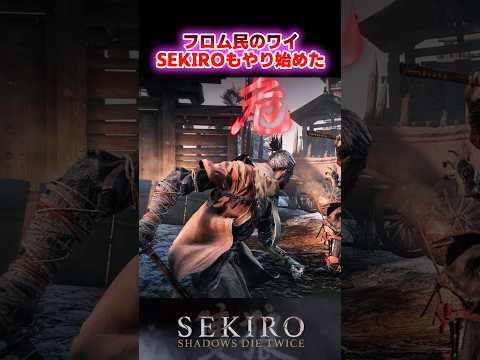
▶ Watch the original YouTube video
Why Even FromSoftware Veterans Struggle With Sekiro: A Deep Analysis of Game Design Philosophy
A comprehensive analysis reveals why Sekiro: Shadows Die Twice challenges even experienced Dark Souls players, fundamentally shifting FromSoftware’s design philosophy from freedom-based gameplay to enemy-interaction-focused combat. This shift has reshaped how the gaming industry approaches difficulty design and player expectations.
What Happened
Since its 2019 release, Sekiro: Shadows Die Twice has become a watershed moment in gaming, not because it introduced new mechanics, but because it fundamentally contradicted the expectations of FromSoftware’s existing fanbase. Players who had mastered Dark Souls—veterans with thousands of hours of experience—found themselves struggling against Sekiro’s demanding combat system. This phenomenon has sparked widespread discussion within gaming communities about game design philosophy, difficulty balancing, and what makes a challenging game truly engaging.
Why It Matters
Sekiro’s approach to game design has influenced the entire industry’s perspective on difficulty settings and player accessibility. By removing traditional difficulty options and emphasizing a single, unified experience, FromSoftware proved that modern games could succeed without catering to multiple skill levels. This decision challenged decades of industry convention and opened new possibilities for how developers approach challenge and player engagement. The game’s commercial and critical success validated an experimental design philosophy that many developers are now exploring.
Background
FromSoftware’s Hidetaka Miyazaki, the game’s producer, explicitly stated that Sekiro was designed to break away from Dark Souls conventions. After over a decade of Dark Souls games, a established player “meta” had formed—a set of strategies and tactics that experienced players relied upon. Miyazaki’s vision was to create a game where existing knowledge became a liability rather than an asset, forcing players to unlearn established patterns and adapt to fundamentally different combat mechanics.
Sekiro is set in a fictional feudal Japan and centers on sword-based combat, a departure from Dark Souls’ medieval fantasy setting. This thematic shift enabled the introduction of the “parry” mechanic as a core gameplay element, replacing the dodge-and-counterattack formula that defined Dark Souls. The development team included many new staff members unfamiliar with Dark Souls’ design philosophy, allowing for more radical departures from established conventions.
Key Points
- Fundamental Combat Philosophy Shift: Dark Souls emphasizes stamina management and distance control through evasion; Sekiro prioritizes posture destruction through parrying and continuous engagement with enemies.
- Psychological Difficulty vs. Mechanical Difficulty: Sekiro’s challenge extends beyond numerical difficulty values—the psychological burden of learning entirely new mechanics creates a perception of extreme difficulty even for experienced players.
- Posture System Innovation: Unlike traditional health-based damage systems, Sekiro’s posture mechanic requires players to break an enemy’s stance before dealing significant damage, fundamentally changing how players approach combat encounters.
- No Difficulty Settings: Sekiro’s refusal to offer difficulty options proved commercially viable, contradicting industry assumptions that accessibility options were necessary for commercial success.
- Community Polarization: The FromSoftware fanbase split into two camps—those who embraced Sekiro’s focused design and those who preferred Dark Souls’ tactical flexibility.
- Industry Influence: Sekiro’s success prompted subsequent FromSoftware titles like Elden Ring to adopt similar design philosophies, establishing a new industry trend toward unified difficulty experiences.
Timeline
- 2016: Dark Souls 3 releases, establishing the peak of the traditional Dark Souls formula with 1000+ hours of potential gameplay for dedicated players.
- 2019 (March): Sekiro: Shadows Die Twice launches, introducing parry-focused combat and posture-based damage systems.
- 2019 (June): Approximately three months after launch, experienced Dark Souls players begin publicly discussing their struggles with Sekiro’s mechanics.
- 2022: Elden Ring releases, combining Sekiro’s combat philosophy with Dark Souls’ tactical freedom, demonstrating the lasting influence of Sekiro’s design approach.
Perspectives
The Dark Souls Traditionalist View: Players who prioritize tactical flexibility and character customization argue that Sekiro’s limited combat options reduce player agency. They contend that Dark Souls’ magic systems, varied weapon choices, and multiple viable build strategies create richer, more personalized experiences. From this perspective, Sekiro’s streamlined design feels restrictive rather than focused.
The Sekiro Advocate Position: Players who embrace Sekiro’s design philosophy argue that its limitations create depth through mastery. By removing tactical choices, Sekiro forces players to develop profound understanding of enemy patterns and combat timing. This perspective views the game’s constraints as a feature that enables deeper engagement with individual encounters, creating what some describe as a “dance” between player and enemy.
The Industry Analysis: Game developers have recognized Sekiro’s validation of the “no difficulty settings” approach as liberating. Rather than designing multiple difficulty curves, developers can now create unified experiences optimized for a single vision. This has proven commercially viable and artistically coherent, influencing how studios approach challenge design.
The Accessibility Concern: Critics note that Sekiro’s uncompromising difficulty excludes players with different skill levels or accessibility needs. This perspective acknowledges Sekiro’s design excellence while questioning whether artistic vision should override player inclusivity.
Combat System Comparison: Dark Souls vs. Sekiro
| Element | Dark Souls 3 | Sekiro |
|---|---|---|
| Enemy Attack Patterns | Relatively straightforward and predictable | Complex and difficult to anticipate |
| Tactical Freedom | High (magic, miracles, varied weapons) | Low (parrying and consecutive strikes) |
| Enemy Enhancement Mechanic | None | Present (Dragon’s Heritage system) |
| Perceived Difficulty | Moderate | Extremely High |
| Core Mechanic | Stamina management and evasion | Posture destruction through parrying |
The Ashina Clan General: A Case Study in Enemy Design
Sekiro’s most significant boss encounter—the Ashina Clan General—exemplifies the game’s revolutionary approach to enemy design. Unlike Dark Souls bosses that follow relatively fixed attack patterns, the Ashina General responds dynamically to player behavior. When players attack aggressively, the general counters with increased aggression. When players adopt defensive parrying, the general mirrors that caution. This creates what players describe as a “dance”—a rhythmic exchange where both combatants respond to each other’s actions.
This interactive quality represents a fundamental departure from traditional action game design. Rather than defeating a predetermined opponent, players engage in a conversation with an enemy that adapts to their approach. This psychological shift—from “defeating an enemy” to “communicating with an opponent”—creates a profoundly different emotional experience.
Industry Influence and Future Trends
Difficulty Design Evolution: Sekiro demonstrated that eliminating difficulty settings could enhance rather than diminish player experience. By committing to a single difficulty curve, developers can optimize every encounter for maximum impact. This approach has influenced subsequent titles, with many studios now reconsidering traditional difficulty tiers.
Enemy Interaction Emphasis: Sekiro’s success has elevated the importance of enemy AI responsiveness and behavioral complexity. Modern game development increasingly focuses on creating enemies that feel like intelligent opponents rather than scripted obstacles, directly influenced by Sekiro’s design philosophy.
Tactical Limitation as Design Tool: Rather than offering unlimited options, contemporary game design increasingly uses constraint as a creative tool. By limiting player options, developers can create deeper mastery experiences and more focused gameplay narratives.
Community Reception and Divided Opinion
Positive Reception: “Sekiro is a completely different game from Dark Souls, but its level of polish is extraordinary. The enemy interactions are incredibly deep, and it’s a game you want to replay repeatedly.” This sentiment, common across gaming forums, highlights appreciation for Sekiro’s focused design and enemy complexity.
“As a FromSoftware veteran, I love Sekiro precisely because it forced me to reset my knowledge. The process of adapting to new mechanics was incredibly fulfilling.” This perspective emphasizes the psychological satisfaction of learning and adaptation.
Critical Reception: “Sekiro is too difficult to function as a proper game. Dark Souls is objectively superior.” This criticism, found on gaming message boards, prioritizes accessibility and questions whether extreme difficulty serves the game’s artistic vision.
“Sekiro is merely an experiment in ‘no difficulty settings.’ Without Dark Souls’ freedom and variety, it’s simply boring.” This perspective values player agency and tactical flexibility over focused challenge.
Practical Guidance for Dark Souls Veterans
Reset Your Knowledge: The most critical step is consciously abandoning Dark Souls strategies. The dodge-and-counterattack rhythm that defines Dark Souls becomes a liability in Sekiro. Success requires unlearning established patterns and embracing parrying as the primary defensive mechanism.
Master Enemy Patterns: Sekiro demands deeper enemy knowledge than Dark Souls. Repeated encounters with the same boss—often 10+ attempts—are necessary for attack patterns to become intuitive. This repetition, while challenging, creates the “body memory” that enables mastery.
Embrace Combat as Dialogue: Rather than viewing combat as a puzzle to solve, approach it as a conversation with an intelligent opponent. The rhythm and flow of parrying and striking creates a meditative, almost musical quality that distinguishes Sekiro from other action games.
Consider Elden Ring as a Bridge: For players who struggled with Sekiro’s limitations, Elden Ring offers a middle ground. It maintains Sekiro’s sophisticated combat mechanics while restoring Dark Souls’ tactical flexibility, creating a more balanced experience that honors both design philosophies.
Insights
Sekiro represents a pivotal moment in game design philosophy. By deliberately contradicting player expectations and forcing experienced gamers to unlearn established strategies, FromSoftware created a game that transcends traditional difficulty metrics. The challenge isn’t merely numerical—it’s psychological and philosophical.
The game’s success validates a counterintuitive design principle: constraints can create depth. By limiting tactical options, Sekiro forces players into profound engagement with individual encounters. This approach has proven commercially viable and artistically coherent, influencing how the entire industry approaches challenge design.
The polarization within the FromSoftware community reflects deeper questions about game design philosophy. Should games prioritize player freedom or focused vision? Should accessibility override artistic intent? Sekiro doesn’t answer these questions—it demonstrates that both approaches have merit, depending on a developer’s creative goals.
Looking forward, Sekiro’s influence will likely manifest in two ways: more games will experiment with unified difficulty experiences, and enemy AI will become increasingly sophisticated and responsive. The game has proven that modern audiences appreciate challenge when it’s paired with intelligent design and meaningful progression.
For FromSoftware veterans specifically, Sekiro offers a valuable lesson: expertise in one system doesn’t guarantee success in another. The willingness to abandon established knowledge and embrace new challenges is itself a form of mastery. In this sense, Sekiro’s greatest achievement may not be its combat system or difficulty, but its demonstration that growth requires unlearning.