▶ Watch the original YouTube video
Bardock’s Super Saiyan Transformation in Sparking Zero: Fan Reaction and Industry Implications
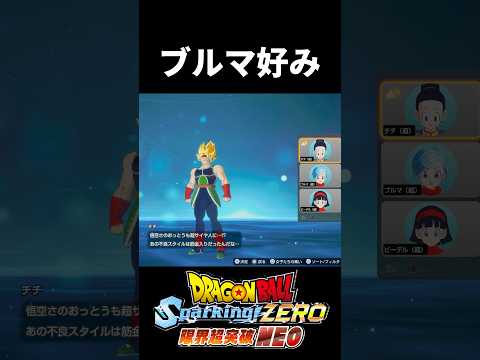
Sparking Zero has introduced a Super Saiyan transformation for Bardock, a character who never achieved this form in the original Dragon Ball canon. This game-exclusive reinterpretation has sparked debate among fans about the balance between respecting source material and creative innovation in modern gaming.
What Happened
Sparking Zero has implemented a new Super Saiyan transformation for Bardock, Goku’s father, marking a significant departure from the original Dragon Ball canon. Unlike main characters such as Goku and Vegeta, who achieved Super Saiyan forms in the original series, Bardock never obtained this transformation in any official Dragon Ball storyline. The game developers have created this form as an exclusive game interpretation, complete with new visual design and enhanced combat mechanics. This addition represents not merely a graphical update but a fundamental reinterpretation of the character’s potential.
Why It Matters
Bardock’s Super Saiyan transformation signals a broader shift in how game developers approach established franchises. Rather than strictly adhering to canon, studios are increasingly exploring “what if” scenarios that expand character possibilities. This approach reflects changing player expectations: fans want deeper engagement with beloved characters, even if it means diverging from source material. For Dragon Ball enthusiasts, particularly those who grew up with the franchise in the 1990s, this reinterpretation offers both excitement and concern about the boundaries between fan imagination and official canon.
Background
Bardock first appeared in the Dragon Ball Z theatrical film “The World’s Strongest” approximately 30 years ago. The character gained prominence as Goku’s father, defined by his role as a tragic parent figure who fought and died to protect his son. Unlike other Saiyan characters, Bardock’s story remained largely confined to flashbacks and past events, with no opportunity for power progression shown in the original series. The character’s appeal stems from this very limitation—his inability to achieve higher transformations underscores his tragic arc. In recent years, Bardock received renewed attention through appearances in Dragon Ball Super: Broly (2018), though even this film did not depict him achieving a Super Saiyan form.
Previous Dragon Ball fighting games, including Dragon Ball FighterZ, have portrayed Bardock as a powerful character while maintaining his primitive, feral aesthetic. Game developers have historically balanced respect for source material with gameplay innovation, as evidenced by the Dragon Ball Xenoverse series, which introduced original characters and alternate timelines as core gameplay elements.
Key Points
- Game-Exclusive Innovation: Bardock’s Super Saiyan form exists only in Sparking Zero and has no basis in Dragon Ball canon, representing a creative interpretation rather than an adaptation of existing material.
- Visual and Mechanical Enhancement: The new transformation maintains Bardock’s feral combat style while incorporating the refined aesthetics associated with Super Saiyan forms, creating a hybrid visual identity.
- Gameplay Balance Impact: The addition of a new transformation tier for Bardock introduces tactical diversity in competitive play and expands his role in the game’s meta environment.
- Character Reinterpretation: Unlike character expansions for Goku or Vegeta, which extend existing canonical forms, Bardock’s transformation represents the creation of an entirely new possibility for a character previously limited to a single form.
- Fan Reception Complexity: Online communities display mixed reactions, with enthusiasm from players seeking character depth balanced against concerns from purists regarding canon integrity.
- Industry Trend Indicator: This decision reflects a growing industry pattern of prioritizing player satisfaction and character exploration over strict adherence to source material.
Timeline
- 1990: Bardock debuts in Dragon Ball Z theatrical film “The World’s Strongest.”
- 2018: Bardock appears in Dragon Ball Super: Broly, receiving renewed canonical attention.
- 2018–2019: Dragon Ball game releases focus primarily on introducing new characters (Broly, Jiren).
- 2019–2021: Game developers shift toward adding new forms to existing characters (Super Saiyan God variants).
- 2021–Present: Industry trend emerges of creating non-canonical forms for established characters.
- 2024: Sparking Zero announces and implements Bardock’s Super Saiyan transformation.
Perspectives
Fan Enthusiasm: Long-time Dragon Ball enthusiasts, particularly those who experienced the franchise during the Z era, express excitement about Bardock receiving new depth and relevance. Social media platforms show numerous positive reactions emphasizing the character’s iconic status and the appeal of exploring untapped potential.
Canon Purists: Some community members raise concerns about diverging from established storylines. Their primary argument centers on Bardock’s tragic arc being partially defined by his inability to achieve higher transformations—a limitation that underscores his mortality and sacrifice. These fans question whether game-exclusive forms undermine the character’s narrative integrity.
Game Design Perspective: Developers view this decision as fulfilling player expectations for character depth and gameplay variety. The implementation reflects a philosophy prioritizing player engagement over strict canonical adherence, similar to the approach taken in Dragon Ball Xenoverse, where alternate timelines and original scenarios form core gameplay elements.
Comparative Analysis: Bardock’s transformation differs fundamentally from similar character updates. While Goku and Vegeta receive form expansions that extend existing canonical progressions, Bardock’s Super Saiyan form represents creative invention. Jiren, by contrast, received no new forms in games, maintaining his single canonical appearance. This distinction positions Bardock as receiving uniquely special treatment within the game’s character roster.
Insights
Bardock’s Super Saiyan transformation in Sparking Zero represents a pivotal moment in how major franchises approach game development. The decision reflects three converging trends: first, the industry’s recognition that character depth matters as much as new character introductions; second, the normalization of “what if” scenarios as legitimate creative expressions rather than fan fiction; and third, the acknowledgment that player satisfaction sometimes requires departing from source material.
This approach carries implications beyond a single character update. If successful, Bardock’s transformation may establish a precedent for reimagining other characters who never achieved certain forms in canon—potentially opening doors for Super Saiyan versions of characters like Raditz or God transformations for characters like Turles. The decision signals that game developers are willing to blur the line between adaptation and original creation.
The mixed fan reception also reveals important truths about modern fandom. Dragon Ball audiences are not monolithic; they simultaneously value both canonical fidelity and creative exploration. The debate surrounding Bardock’s transformation is not fundamentally about whether the change is good or bad, but rather about how franchises should evolve when they reach creative saturation with existing material.
For the Dragon Ball franchise specifically, this represents a maturation of its gaming presence. Rather than simply recreating canonical moments, games now serve as laboratories for exploring character potential. Sparking Zero’s approach suggests that the future of Dragon Ball gaming lies not in strict adaptation but in collaborative storytelling—where developers and players together imagine possibilities the original creator never explicitly addressed.