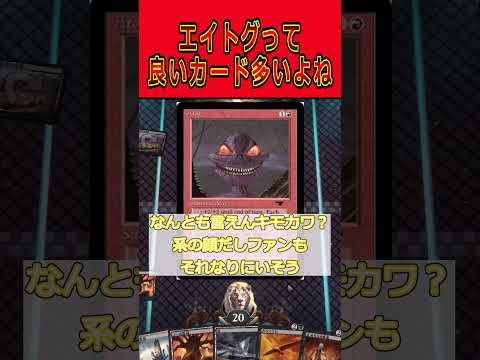
▶ Watch the original YouTube video
How Magic: The Gathering’s Planeswalkers React to Diverse Aetog Creatures
A recent video compilation showcases the complex interactions between Magic: The Gathering’s Planeswalker characters and various Aetog creatures, revealing how each character’s personality and abilities shape their responses to these ancient beings. This analysis explores the strategic and narrative depth of these character interactions, demonstrating why MTG’s storytelling approach sets it apart from other collectible card games.
What Happened
A video titled “Diverse Aetog Creatures and Planeswalker Reactions” has sparked renewed interest in how Magic: The Gathering’s iconic Planeswalker characters interact with Aetog creatures. The compilation demonstrates that these interactions are not random but carefully designed to reflect each Planeswalker’s personality, abilities, and background. Different Planeswalkers—such as Jace, Nissa, Chandra, and Garruk—display distinct reactions to Aetogs, ranging from curiosity and respect to caution and opposition.
Why It Matters
This video highlights a fundamental strength of Magic: The Gathering that distinguishes it from competitors like Hearthstone and Yu-Gi-Oh!: the integration of character development and narrative depth directly into the game system itself. Rather than confining storytelling to external media, MTG embeds character interactions into card mechanics, flavor text, and ability synergies. This approach creates a richer, more emotionally engaging experience for players and demonstrates the game’s commitment to treating its world as a living, evolving narrative rather than merely a collection of mechanical systems.
Background
Magic: The Gathering has evolved significantly over its three decades of existence. Planeswalkers, introduced as a card type in 2007, transformed from simple powerful cards into complex characters with distinct personalities and story arcs. Aetogs, meanwhile, represent one of MTG’s most intriguing creature types—often depicted as ancient knowledge-keepers that exist across multiple planes and transcend typical color-based limitations. The interaction between these two elements reflects MTG’s broader design philosophy: creating a world where mechanical complexity mirrors narrative complexity.
The video’s analysis draws from multiple MTG sets spanning from “Return to Ravnica” through “Strixhaven,” showing how Planeswalker characterization has become increasingly nuanced. Each Planeswalker’s journey across different planes has shaped their perspective, making their reactions to Aetogs—as ancient, multifaceted beings—particularly meaningful within the game’s lore.
Key Points
- Aetog Diversity: Multiple Aetog cards featured in the video each possess unique abilities and characteristics, reflecting their role as complex, multifaceted creatures rather than a monolithic creature type.
- Planeswalker Reaction Patterns: Each Planeswalker’s response to Aetogs correlates directly with their personality traits and mechanical abilities—knowledge-focused characters like Jace and Nissa show curiosity, while power-focused characters like Chandra display caution or opposition.
- Cross-Planar Interactions: The interactions extend beyond simple creature-versus-ability relationships, incorporating the complex lore of different planes and how characters from various worlds perceive ancient beings.
- Strategic Implications: Aetog and Planeswalker combinations offer significant tactical flexibility in deck construction, enabling players to optimize mana efficiency and create unexpected synergies.
- Narrative Depth: Each character interaction reflects complex background relationships within MTG’s expansive world, suggesting that character development is intentional and ongoing across multiple sets.
- Community Engagement: The video has generated significant discussion across social media platforms, with players requesting deeper analysis of character interactions and expanded content exploring similar themes.
Timeline
- 2007: Planeswalkers introduced as a card type, beginning their evolution from mechanical elements to narrative characters.
- 2012-2013: “Return to Ravnica” block demonstrates Planeswalker interactions across multiple planes, establishing the foundation for complex character relationships.
- 2013-2014: “Theros” block explores mythological worldbuilding and how Planeswalkers interact with ancient, god-like entities.
- 2018: “Dominaria” block emphasizes the value of ancient knowledge and history, positioning Aetogs as important narrative elements.
- 2021: “Strixhaven” block marks a shift toward more explicit character interactions within game mechanics and card design.
- Present: Video compilation catalyzes renewed player interest in Aetog-Planeswalker interactions and their strategic-narrative significance.
Perspectives
Competitive Players’ View: From a strategic standpoint, the Aetog-Planeswalker combinations offer genuine mechanical advantages. The multifaceted nature of Aetogs—often spanning multiple colors and abilities—combined with Planeswalkers’ flexible power sets creates opportunities for mana optimization and unexpected synergies. Competitive players view this video as a resource for identifying underutilized deck-building strategies.
Narrative Enthusiasts’ View: For players invested in MTG’s storytelling, these interactions represent something deeper: evidence that character development is embedded into the game’s DNA. The fact that Planeswalkers respond differently to Aetogs based on their established personalities suggests that Wizards of the Coast treats these characters as autonomous entities with consistent motivations, rather than arbitrary mechanical constructs.
Casual Players’ View: Many casual players appreciate the video as an entry point into understanding MTG’s world-building. By seeing how different characters interact, newcomers gain insight into the game’s broader narrative and are encouraged to explore flavor text and official story content.
Design Philosophy Perspective: The video implicitly validates Wizards of the Coast’s design decision to integrate narrative elements directly into game mechanics. Unlike competitors that separate story from gameplay, MTG’s approach creates a unified experience where mechanical choices feel narratively justified.
Insights
This video reveals a critical truth about Magic: The Gathering’s enduring appeal: it functions simultaneously as a strategic game, a collectible card system, and an interactive narrative experience. The Aetog-Planeswalker interactions exemplify how MTG transcends the limitations of traditional card games by treating character relationships as both mechanically meaningful and narratively significant.
The video also highlights an underexploited aspect of MTG’s design: most players focus on card abilities and competitive strategy, overlooking the rich character development embedded in flavor text and mechanical synergies. By making these interactions explicit, the video encourages players to engage with MTG as a complete artistic work rather than merely a system of rules.
Furthermore, the community response—requests for deeper analysis and expanded content—suggests that players hunger for more explicit acknowledgment of these narrative elements. This presents an opportunity for Wizards of the Coast to strengthen player engagement by more actively promoting the storytelling dimensions of the game.
The positioning of Aetogs as “ancient knowledge-keepers” also reflects a broader cultural trend: in an era emphasizing novelty and innovation, MTG deliberately valorizes accumulated wisdom and historical continuity. This philosophical stance, embedded in creature design and character interactions, contributes to the game’s distinctive identity and appeal to players seeking depth beyond mechanical optimization.
Ultimately, this video demonstrates that Magic: The Gathering’s greatest competitive advantage lies not in isolated mechanical innovations but in its holistic integration of strategy, narrative, and character development—a synthesis that creates a uniquely immersive gaming experience.