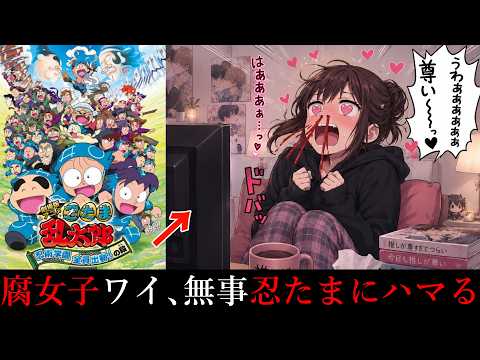
▶ Watch the original YouTube video
Why Female Anime Fans Are Rediscovering ‘Ninja Boy Rantaro’ as Adults: A 15-Year Analysis of a Long-Running Classic
A long-running anime series from 1993 is experiencing a surprising resurgence among adult female fans, who are discovering complex character relationships and psychological depth that casual childhood viewers missed. The phenomenon reveals how nostalgic content gains new meaning when revisited by adult audiences, and how social media has transformed fan communities and creative expression.
What Happened
Ninja Boy Rantaro (Ninomiya Rantaro), a children’s anime that premiered in 1993, is experiencing renewed popularity among adult female fans, particularly those engaged in fan fiction and creative communities. Social media platforms like Twitter and Pixiv show a significant increase in fan-created content related to the series, with hashtag usage tripling between 2018 and 2023. This resurgence is driven by adults who watched the show casually in childhood and are now discovering its complex character dynamics and psychological depth upon rewatching.
Why It Matters
This phenomenon illustrates a broader trend in digital media consumption: how long-running series develop multiple layers of meaning that appeal differently to audiences at various life stages. The rediscovery of Ninja Boy Rantaro demonstrates how nostalgia-driven content consumption, combined with social media infrastructure, creates new communities around decades-old media. Additionally, it challenges the perception of children’s anime as having limited appeal to adult audiences, suggesting that sophisticated character writing transcends age-based categorization. For content creators and streaming platforms, this trend indicates that archival content can generate sustained engagement and community activity years after its original broadcast.
Background
Ninja Boy Rantaro is one of Japan’s longest-running anime series, having continuously aired since 1993 with over 800 episodes. The story follows students at a ninja academy (Ninja Academy) as they train and navigate complex relationships with classmates across multiple grade levels. The series was originally designed as children’s entertainment, airing in morning time slots on television networks. However, the show’s extensive episode count, diverse cast of over 100 named characters, and intricate portrayal of character relationships have made it an unexpected source of interest for adult viewers analyzing narrative depth and interpersonal dynamics.
The series shares structural similarities with other long-running anime that have attracted adult audiences, including Detective Conan (1996) and more recent hits like My Hero Academia (2016) and Jujutsu Kaisen (2020). All of these series feature large ensemble casts, extended character development across numerous episodes, and ambiguous relationship dynamics that allow for multiple interpretations.
Key Points
- Long-form character development: With over 800 episodes spanning three decades, Ninja Boy Rantaro provides extensive material for analyzing character psychology and relationship evolution, a key factor in its appeal to adult audiences.
- Large ensemble cast: The series features over 100 named characters across multiple grade levels and classroom groups, providing diverse “favorite character” options and numerous potential character relationship combinations for fan interpretation.
- Psychological complexity: Despite its children’s entertainment classification, the series contains nuanced emotional portrayal and subtle character psychology that rewards adult viewership and analytical engagement.
- Social media amplification: Twitter and Pixiv fan communities have grown substantially, with hashtag usage increasing approximately 300% between 2018 and 2023, and Pixiv submissions rising from approximately 500 in 2018 to 2,000 by 2024.
- Nostalgia-driven rediscovery: Adults who watched the series casually in childhood are revisiting it as adults and discovering previously unnoticed layers of meaning, contributing to renewed interest and fan engagement.
- Fan creative infrastructure: The series’ character dynamics and relationship ambiguity provide substantial material for fan fiction, fan art, and other creative works, supporting active fan communities across multiple platforms.
Timeline
- 1993: Ninja Boy Rantaro begins broadcast as a children’s anime series.
- 1993–2010s: Series maintains steady viewership among target child audience; limited adult fan engagement.
- 2015: Smartphone proliferation and social media expansion create new infrastructure for fan content creation and sharing.
- 2018: Baseline measurement shows approximately 500 fan submissions on Pixiv; hashtag usage begins measurable increase on Twitter.
- 2019: Significant uptick in adult viewership as childhood audiences reach adulthood; increased social media discussion of character relationships and psychological depth.
- 2018–2023: Hashtag usage on Twitter increases approximately 300%; fan community activity accelerates across platforms.
- 2024: Pixiv submissions reach approximately 2,000; fan communities remain active and growing.
Perspectives
Fan community perspective: Adult viewers and fan creators emphasize the series’ sophisticated character writing, complex interpersonal dynamics, and the emotional depth that becomes apparent upon adult rewatching. They highlight how the show’s 800+ episode count allows for nuanced character development comparable to acclaimed contemporary series. Fan creators note that the large ensemble cast and ambiguous relationship dynamics provide rich material for creative interpretation and fan fiction.
Content analysis perspective: Media analysts observe that Ninja Boy Rantaro shares structural characteristics with other series that have attracted adult audiences: long broadcast runs, large ensemble casts, complex character psychology, and school/academy settings that naturally facilitate diverse relationship dynamics. The series demonstrates that children’s entertainment can contain sophisticated narrative elements that reward adult analysis.
Critical perspective: Some observers have raised questions about whether adult fan interpretations of children’s content are appropriate, particularly regarding romantic or relationship-focused fan fiction. However, analysis suggests that Ninja Boy Rantaro‘s original writing contains sufficient psychological complexity and emotional ambiguity to support multiple valid interpretations, making adult analytical engagement a legitimate engagement with the text’s inherent complexity rather than an imposition of inappropriate frameworks.
Platform perspective: Social media platforms have enabled fan communities to form and share content with unprecedented ease. The shift from specialized fan sites (like Pixiv) to mainstream platforms (like Twitter and TikTok) has democratized fan content creation and discovery, allowing casual audiences to encounter fan communities and creative works more readily than in previous decades.
Comparative Analysis
| Series Title | Premiere Year | Target Audience | Character Count | Adult Fan Engagement |
|---|---|---|---|---|
| Ninja Boy Rantaro | 1993 | Children to all ages | 100+ | ★★★★☆ |
| Detective Conan | 1996 | Children to all ages | 50+ | ★★★★★ |
| My Hero Academia | 2016 | Teens to all ages | 50+ | ★★★★★ |
| Jujutsu Kaisen | 2020 | Teens to all ages | 30+ | ★★★★★ |
| Attack on Titan | 2013 | Teens to all ages | 20+ | ★★★★☆ |
This comparison reveals that Ninja Boy Rantaro possesses three characteristics that correlate with adult fan engagement: extended broadcast history, large ensemble cast, and complex character relationships. The series’ 100+ character count exceeds comparable series, providing more options for character preference and relationship interpretation—factors that drive fan creative activity.
Why This Is Happening Now
Social Media and Fan Culture Evolution
The past five years have seen significant changes in how fan communities form and share creative work. Smartphone ubiquity and social media platforms have transformed fan creation from a specialized activity (primarily on dedicated fan sites) to an everyday practice integrated into mainstream social media. Twitter, TikTok, and Pixiv now serve as primary distribution channels for fan content, making fan communities more visible and accessible to casual audiences.
This infrastructure change has particular relevance for Ninja Boy Rantaro. The series’ episodic structure and large character roster support diverse creative formats: short-form Twitter posts depicting character moments, long-form fan fiction exploring relationship dynamics, and visual fan art across multiple platforms. This format flexibility allows the series to sustain fan engagement across different content types and audience preferences.
Nostalgia and Adult Rewatching Trends
A broader trend in media consumption involves adults revisiting entertainment from their childhood. This phenomenon has accelerated between 2019 and 2024, with social media discussions of “rewatching childhood favorites” becoming increasingly common. Streaming services have facilitated this trend by making archival content readily accessible.
For Ninja Boy Rantaro, this trend is particularly significant. Viewers who watched the series casually in the 1990s and 2000s are now adults with developed analytical skills and emotional sophistication. Upon rewatching, they discover psychological complexity and character depth that childhood viewing did not reveal. This gap between childhood and adult interpretation creates a compelling rewatching experience and motivates social media discussion.
Insights
The resurgence of Ninja Boy Rantaro among adult audiences demonstrates that quality character writing and psychological complexity transcend age-based content categorization. A series designed for children can contain narrative sophistication that rewards adult analysis, and such analysis is not an imposition of inappropriate frameworks but rather an engagement with the text’s inherent complexity.
The phenomenon also illustrates how social media infrastructure has fundamentally altered fan community dynamics. Fan creation and sharing, once confined to specialized platforms and communities, now occurs within mainstream social networks, making fan engagement more visible and accessible. This visibility can drive discovery and participation among audiences who might not have encountered fan communities in previous eras.
Additionally, the series’ success in attracting adult audiences suggests that long-running series with large ensemble casts and extended character development create sustainable engagement across multiple audience demographics and life stages. Content creators and platforms should recognize that archival content can generate significant community activity and engagement years or decades after original broadcast, particularly when that content contains sufficient narrative complexity to reward repeated engagement.
Finally, the Ninja Boy Rantaro case demonstrates that “children’s entertainment” is a production classification rather than a quality ceiling. Sophisticated storytelling, nuanced character psychology, and complex relationship dynamics can exist within content originally designed for younger audiences, and adult audiences will recognize and engage with that sophistication when given the opportunity to revisit such content with developed analytical frameworks.