▶ Watch the original YouTube video
Liar Game Anime Adaptation Confirmed for 20th Anniversary: Fan Reactions and Industry Analysis
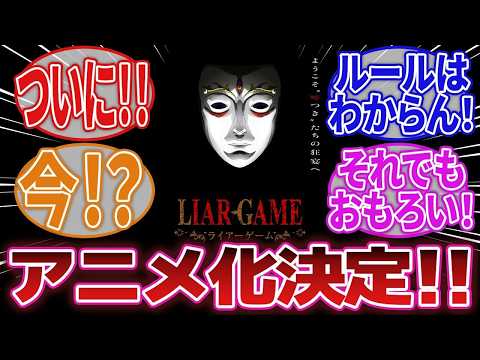
After two decades since its debut, the acclaimed psychological thriller manga Liar Game is finally receiving an anime adaptation to mark its 20th anniversary. The announcement has sparked mixed reactions online, with fans expressing both excitement and concern about how the adaptation will compare to the highly successful 2008 live-action drama series.
What Happened
Liar Game, the psychological thriller manga that debuted in 2005, has been officially greenlit for an anime adaptation as part of its 20th-anniversary celebration. The announcement coincides with a major promotional campaign featuring significant discounts on the original manga across multiple digital platforms, including Kindle and BookWalker. The news has generated substantial discussion online, with fans weighing the potential of the anime against the legacy of the 2008 live-action drama adaptation, which remains widely regarded as one of the most successful manga-to-drama conversions in Japanese television history.
Why It Matters
Liar Game represents a significant case study in manga adaptation strategy. The series is notable for its intricate game design and complex psychological narratives—elements that present unique challenges for visual media adaptation. The timing of the anime announcement, two decades after the original serialization and years after the manga’s 2015 conclusion, suggests that publishers and studios recognize renewed commercial and cultural interest in the property. For the anime industry, this adaptation offers an opportunity to demonstrate how animation can effectively visualize complex game mechanics and psychological tension in ways that complement or differentiate from the existing live-action version. The project also reflects broader industry trends of revisiting established properties through new media formats to reach both legacy audiences and new demographics.
Background
Liar Game originally serialized from 2005 to 2015, establishing itself as a landmark work in the psychological thriller genre. The manga’s central premise revolves around a series of elaborate games designed to test human psychology and morality, with protagonists navigating increasingly complex rules and interpersonal dynamics. The 2008 live-action drama adaptation, which aired on Nippon Television, became a cultural phenomenon and is frequently cited as a benchmark for successful manga adaptations. The drama ran for two seasons (2008–2009) and spawned multiple film adaptations, cementing Liar Game’s status as a multimedia franchise. Despite the manga’s conclusion over a decade ago, the property has maintained cultural relevance through continued discussion online and periodic re-engagement with the source material.
Key Points
- Liar Game receives anime adaptation greenlight for its 20th anniversary, marking a significant milestone for the psychological thriller franchise
- Major digital retailers are offering substantial discounts on the original manga across multiple platforms as part of the anniversary campaign
- The 2008 live-action drama adaptation maintains exceptionally high regard among fans, creating both elevated expectations and potential comparison challenges for the anime version
- The original manga’s ending remains divisive among readers, with some criticizing the introduction of the final antagonist and the design of the concluding game as narratively inconsistent
- Character modifications in the drama adaptation—particularly the reimagining of secondary characters—are credited as key factors in the live-action version’s success
- Online discourse reveals that despite narrative concerns about the ending, the overall quality of the work remains highly regarded, with fans acknowledging the excellence of all preceding content
Timeline
- 2005: Liar Game manga begins serialization
- 2008–2009: Live-action drama adaptation airs on Nippon Television, becomes critically acclaimed
- 2008–2009: Film adaptations released alongside drama series
- 2015: Original manga serialization concludes
- 2025: 20th-anniversary anime adaptation officially announced; digital sales campaign launched
Perspectives
Fan Enthusiasm and Nostalgia: Online reactions reveal strong positive sentiment regarding the anime announcement itself. Many fans express relief that the property is finally receiving animation treatment after years of anticipation. Comments such as “finally an anime adaptation” reflect long-standing demand within the fanbase for this specific medium adaptation.
Concern About Comparison: A significant portion of online discourse centers on anxiety about the anime being measured against the live-action drama’s high standard. Fans acknowledge that the drama version’s exceptional quality creates an inherent challenge for any subsequent adaptation, noting that direct comparison is inevitable and potentially disadvantageous for the anime.
Narrative Ending Critique: Multiple online voices express reservations about the manga’s conclusion, with specific criticism directed at the sudden introduction of the “dark power” antagonist and the design of the final game. However, this criticism is frequently tempered by acknowledgment that the work’s quality in all preceding sections justifies engagement with the complete narrative.
Appreciation for Adaptation Strategy: Fans demonstrate sophisticated understanding of how the live-action drama successfully modified character designs and narrative elements to suit the live-action medium. This recognition suggests openness to similar creative choices in the anime adaptation, provided they serve the narrative and medium effectively.
Character Adaptation and Design Considerations
The live-action drama’s success is substantially attributed to strategic character modifications. The character Fukunaga, originally conceived in the manga with a specific gender presentation, was reimagined in the drama adaptation as a more conventionally structured antagonist-turned-ally. This modification is widely credited with enhancing the drama’s narrative coherence and dramatic tension. Similarly, the character Yokoya received significant redesign to deepen his connection with the protagonist, creating stronger interpersonal stakes. These modifications were not perceived by fans as compromises but rather as intelligent adaptation choices that leveraged the strengths of live-action media. The anime adaptation faces the strategic question of whether to maintain fidelity to the original manga designs or implement similar modifications optimized for animation.
Game Mechanics and Narrative Complexity
Liar Game distinguishes itself through meticulously designed original game systems rather than adaptation of existing games. This approach creates both the work’s primary appeal and its primary challenge. The complexity of game rules frequently requires extended exposition in manga form, with some readers acknowledging difficulty in tracking mechanics while simultaneously finding the work compelling due to character psychology and narrative momentum. Online commentary reveals that while rule comprehension can be challenging, the emotional and psychological dimensions of the narrative sustain engagement. The anime medium offers potential advantages in visualizing complex game mechanics through animation, visual effects, and sound design—techniques that the live-action drama effectively employed through cinematography and musical composition.
Comparative Analysis: Liar Game and One Outs
Online discussion frequently references One Outs, another manga centered on complex game mechanics and psychological strategy. The comparison illuminates key differences: while One Outs grounds its narrative in baseball—an existing game with inherent audience familiarity—Liar Game constructs entirely original game systems. This distinction creates different accessibility profiles; One Outs benefits from pre-existing knowledge of baseball rules, while Liar Game requires readers to learn novel systems from exposition. However, Liar Game’s originality also constitutes its distinctive strength, offering game designs unbound by real-world constraints. The anime adaptation can potentially leverage visual storytelling to make these original systems more immediately comprehensible than manga exposition allows.
Promotional Strategy and Market Response
The anniversary campaign demonstrates coordinated multimedia strategy, with digital retailers offering substantial discounts across multiple platforms. Fan responses indicate appreciation for this commercial approach, with comments reflecting both gratitude for sales information and recognition that the pricing strategy effectively encourages new audience engagement. This promotional framework suggests publisher confidence in renewed market interest and strategic intent to convert casual interest into sustained readership.
Insights
The Liar Game anime announcement represents a calculated decision to revitalize a property with established cultural credibility but limited recent media presence. The 20-year milestone provides natural narrative justification for renewed investment, while the existing live-action drama creates both a quality benchmark and a strategic challenge. Fan discourse reveals sophisticated understanding of adaptation mechanics; audiences recognize that successful adaptation requires not slavish fidelity but intelligent translation of source material into medium-specific strengths.
The divisive reception of the manga’s ending presents both obstacle and opportunity. The anime adaptation can either commit to the original conclusion, potentially disappointing viewers who share existing criticisms, or implement modifications similar to those the drama employed when it concluded before the manga’s final narrative arc. Either approach carries strategic implications.
Ultimately, the anime’s success will likely depend on its ability to establish independent identity while respecting the property’s legacy. The live-action drama succeeded by making purposeful creative choices; the anime must similarly demonstrate that animation enables narrative and visual possibilities distinct from live-action, justifying the adaptation’s existence beyond commercial exploitation of established intellectual property. The complexity of the source material, combined with the sophistication of existing fan discourse, suggests an audience capable of evaluating the adaptation on its own merits rather than as mere comparison to the drama version.