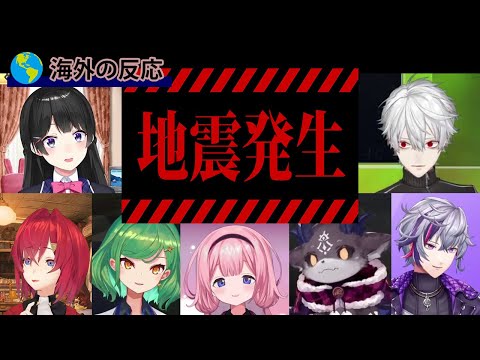
▶ Watch the original YouTube video
How Nijisanji VTubers Responded to a Magnitude 7.3 Earthquake: A Study in Crisis Management and Global Community
On February 13, 2021, a magnitude 7.3 earthquake struck off the coast of Fukushima, Japan, during peak VTuber streaming hours. The crisis revealed how Nijisanji streamers balanced individual judgment with corporate responsibility, while their response garnered international recognition for professionalism and community care.
What Happened
At 11:07 PM on February 13, 2021, a magnitude 7.3 earthquake centered off Fukushima struck Japan during active streaming hours for numerous VTubers. Multiple Nijisanji streamers were broadcasting live when the earthquake occurred. Rather than following a uniform response protocol, individual streamers made different decisions: some immediately halted broadcasts to prioritize viewer safety, while others continued streaming while inserting real-time safety information and evacuation guidance. This divergence in approach—all within a single talent agency—demonstrated how VTuber crisis management differs fundamentally from traditional broadcast media.
Why It Matters
The February 2021 earthquake response represents a critical moment in VTuber industry maturation. Unlike traditional entertainment media, where crisis protocols are centralized and uniform, VTuber streaming operates in a space where individual streamer judgment is valued alongside corporate responsibility. This event tested whether the industry had developed adequate crisis management frameworks while preserving the personal connection between streamers and audiences that defines the medium. The global response to how Japanese VTubers handled a natural disaster also highlighted the international reach and cultural significance of VTuber communities.
Background
The VTuber industry emerged as a significant entertainment sector in the late 2010s, combining animated avatars with live streaming to create a unique form of parasocial connection between streamers (called “livers”) and audiences. Unlike traditional anime voice actors or gaming streamers, VTubers maintain daily streaming schedules that foster continuous, intimate communication with viewers. By 2021, major agencies like Nijisanji had established themselves as professional entertainment companies, yet the industry still lacked standardized crisis management protocols comparable to traditional broadcasting.
The 2011 Tōhoku earthquake and tsunami had occurred before VTuber culture matured, so the 2021 earthquake represented the first major test of how this new medium would handle a natural disaster. The response would reveal whether the industry had developed professional standards and whether the unique characteristics of VTuber streaming—real-time interaction, individual streamer autonomy, and deep audience connection—could function effectively during emergencies.
Key Points
- Diverse Response Patterns: Nijisanji streamers employed three distinct approaches: immediate broadcast suspension prioritizing safety, continued streaming with integrated safety information, and adaptive responses that evolved as earthquake information updated.
- Individual Judgment Respected: Unlike television broadcasting’s uniform protocols, VTuber crisis management allowed individual streamers to make autonomous decisions while maintaining basic corporate safety guidelines.
- Viewer Safety Prioritized: Across all response types, streamers consistently placed audience welfare first, whether through direct safety confirmation or psychological support during the crisis.
- Corporate Trust Demonstrated: The ability of Nijisanji to allow streamer autonomy while maintaining coherent crisis response indicated mature trust relationships between the company and its talent.
- Global Community Recognition: International VTuber communities, particularly in English-speaking regions, responded positively to the professional and thoughtful crisis management demonstrated by Japanese streamers.
- Community Strengthened: Rather than damaging the streamer-audience relationship, the crisis response reinforced trust and emotional bonds within VTuber communities.
Timeline
- 2011: Tōhoku earthquake and tsunami occur before VTuber industry maturity; crisis management protocols for streaming media remain underdeveloped.
- 2017–2018: VTuber industry emerges; early crisis management frameworks are minimal or absent.
- 2019–2020: VTuber industry experiences rapid professionalization; major agencies begin establishing crisis management guidelines.
- February 13, 2021, 11:07 PM: Magnitude 7.3 earthquake strikes off Fukushima; multiple Nijisanji streamers are broadcasting live.
- February 13–14, 2021: Global VTuber communities respond to streamer crisis management on Twitter, Reddit, and Discord.
- Post-February 2021: VTuber industry anticipates further development of standardized crisis management protocols.
Perspectives
Domestic Response: Japanese Twitter users overwhelmingly praised streamers’ crisis responses, with particular appreciation for those who continued broadcasting while providing safety information. Viewers expressed gratitude for the sense of security and community support provided during the emergency.
International Community Analysis: English-language Reddit discussions characterized the response as “professional and thoughtful,” noting that individual streamer autonomy within a corporate framework demonstrated mature crisis management. Some commenters observed that witnessing Japanese VTubers handle a natural disaster deepened their understanding of Japanese culture and disaster preparedness.
Critical Perspective: A minority of commenters questioned whether continuing broadcasts during a natural disaster was appropriate, raising fundamental questions about crisis management priorities. However, even critical voices acknowledged the genuine care demonstrated by streamers for their audiences.
Industry Analysis: The varied responses revealed that Nijisanji’s crisis management philosophy balanced corporate responsibility with individual streamer autonomy—a model distinct from traditional broadcasting but comparable to radio personality-driven formats.
Insights
The February 2021 earthquake response demonstrates that the VTuber industry has matured beyond its experimental phase into a medium with genuine social responsibility. The crisis revealed several critical insights about VTuber culture and digital community formation.
Trust as Crisis Infrastructure: Unlike traditional media, where crisis protocols are imposed from above, VTuber crisis management depends on trust between companies and streamers. Nijisanji’s ability to allow individual judgment while maintaining safety standards indicates that this trust-based model can function effectively during emergencies.
Parasocial Relationships as Stabilizing Force: The intimate, daily communication between VTubers and audiences—often criticized as unhealthy parasocial connection—functioned as a stabilizing force during the earthquake. Viewers found psychological comfort in streamer presence and guidance, suggesting that parasocial relationships have genuine value during crises.
Digital Community Resilience: The earthquake demonstrated that digital communities can provide real-world support during physical emergencies. VTuber streaming, despite being entirely virtual, functioned as a genuine community infrastructure during a natural disaster.
Professionalism Redefined: The response shows that VTuber professionalism differs from traditional entertainment professionalism. Rather than maintaining distance or following rigid protocols, professional VTubers demonstrate care for individual audience members while maintaining ethical boundaries.
Global Media Maturation: The international recognition of Japanese VTuber crisis management indicates that VTuber culture has achieved global cultural significance. The industry’s response to a local natural disaster was evaluated by international communities as a meaningful cultural event.
Character-Human Boundary Questions: The crisis highlighted an ongoing tension in VTuber culture: the blurred boundary between character and human. While this ambiguity strengthens audience connection, it also raises questions about streamer privacy and the potential for audience overreach. Future industry development will require careful navigation of this boundary.
Looking Forward
The February 2021 earthquake response suggests several likely developments in VTuber industry standards. Major agencies will likely develop more detailed natural disaster response manuals while preserving individual streamer autonomy. New streamer training programs will probably include crisis management education as standard curriculum. Additionally, as VTuber communities become increasingly international, crisis management protocols will need to account for global audience considerations.
The industry’s challenge moving forward is to maintain the personal connection and individual autonomy that define VTuber culture while establishing clear professional standards for crisis situations. The February 2021 response demonstrated that this balance is achievable, but sustained attention to both community care and professional responsibility will be necessary as the industry continues to grow.