▶ Watch the original YouTube video
Hunter x Hunter’s Scrapped Ending Revealed: Adult Killua Ripping Out Gon’s Heart Sparks Massive Fan Debate
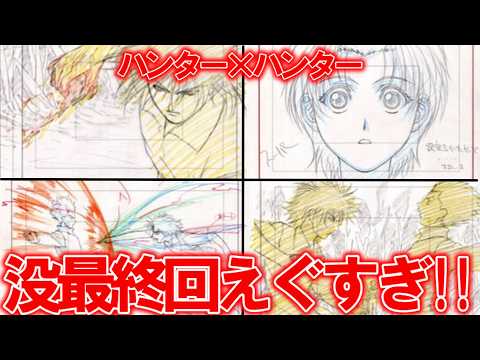
A controversial scrapped ending for Hunter x Hunter has surfaced online, depicting an adult Killua murdering Gon by extracting his heart. The revelation has ignited intense debate among fans about character consistency, thematic integrity, and why creator Yoshihiro Togashi ultimately rejected this dark conclusion.
What Happened
A previously unrevealed scrapped ending for Hunter x Hunter has emerged, showing a drastically different conclusion than what fans have experienced. In this abandoned storyline, an adult version of Killua kills Gon by removing his heart—a shocking departure from the series’ established themes of friendship and growth. The revelation has sparked widespread discussion across social media platforms and fan communities about whether this ending would have been appropriate for the long-running manga.
Why It Matters
This scrapped ending raises fundamental questions about character development, narrative consistency, and thematic coherence in long-running serialized stories. Hunter x Hunter has been defined by its exploration of friendship, personal growth, and overcoming one’s circumstances—themes directly contradicted by Killua murdering his closest companion. The revelation offers insight into creator Yoshihiro Togashi’s creative decision-making process and demonstrates how even celebrated manga artists reconsider their narrative directions during extended serialization.
Background
Hunter x Hunter began serialization in 1998 and has continued for over 25 years, with Togashi frequently taking hiatuses to reconsider the story’s direction. Killua Zoldyck, one of the series’ main characters, comes from the Zoldyck family of assassins and has spent much of the narrative attempting to escape his family’s violent legacy through his friendship with protagonist Gon. The relationship between these two characters has been central to the series’ emotional core, making the proposed ending particularly jarring to longtime fans.
Key Points
- The scrapped ending depicted adult Killua killing Gon by extracting his heart, fundamentally contradicting the series’ friendship-centered themes
- This abandoned conclusion would have represented the complete triumph of Killua’s assassin bloodline over his personal growth and bonds
- Fan reactions have been overwhelmingly negative, with most viewers expressing relief that this ending was rejected
- The scrapped ending raises questions about character consistency—Killua’s entire arc involves escaping his family’s curse, not succumbing to it
- Multiple narrative alternatives from other long-running series (Code Geass, Fate/Zero, Attack on Titan) demonstrate how character transformations require clear psychological justification
- The revelation provides insight into Togashi’s creative process and how industry trends may have influenced early story considerations
Character Consistency and Narrative Logic
A central criticism of this scrapped ending concerns Killua’s character arc. Throughout the series, Killua’s primary motivation has been escaping the Zoldyck family’s assassin legacy and finding freedom through his friendship with Gon. During the Chimera Ant arc, Killua demonstrates his commitment to protecting Gon, even at great personal cost. For Killua to ultimately murder Gon would require a complete psychological reversal that contradicts his established character development.
Unlike comparable character transformations in other series—such as Lelouch’s calculated descent into villainy in Code Geass or the gradual corruption depicted in Fate/Zero—Killua’s proposed heart-extraction lacks clear psychological justification. The scrapped ending appears to suggest that Killua’s assassin heritage would inevitably override his personal growth, a premise that undermines the series’ central message about transcending one’s circumstances.
Thematic Implications
Hunter x Hunter’s primary theme centers on friendship, growth, and the power of human connection to overcome adversity. The scrapped ending would have completely negated this thematic foundation by depicting the series’ most important friendship ending in betrayal and murder. This represents a fundamental contradiction between the narrative’s established values and its proposed conclusion.
The rejection of this ending suggests that Togashi recognized this thematic incompatibility. By choosing an alternative path, the creator demonstrated commitment to maintaining narrative coherence and respecting the emotional investment fans had made in Killua and Gon’s relationship.
Fan Reactions and Community Response
Online fan communities have responded to this revelation with near-universal skepticism. Common criticisms include:
- “Killua wouldn’t change that drastically” — expressing doubt about the psychological plausibility of such a transformation
- “This contradicts the friendship theme” — noting the fundamental incompatibility with the series’ core message
- “We’re glad this was scrapped” — the dominant sentiment across YouTube comments and social media platforms
- “This would have ruined the series” — expressing concern about how this ending would have affected the overall legacy
Notably, even fans who appreciate the boldness of considering such a dark conclusion acknowledge that the execution would have felt unmotivated and inconsistent with established character development.
Comparison with Other Long-Running Series
The scrapped ending can be understood through comparison with how other extended manga and anime handle character transformation:
Code Geass: Lelouch’s descent into villainy works because it stems from his own choices and ideological commitment to achieving his goals through any means necessary. His transformation is gradual and motivated by his personal philosophy.
Fate/Zero: Character deterioration occurs through external circumstances and the inherent cruelty of the Holy Grail War system. Characters’ downfalls result from the conflict’s structure, not from abandoning their core values.
Attack on Titan: Character changes are driven by revealed information and evolving circumstances that force characters to reconsider their beliefs and allegiances.
In contrast, the Hunter x Hunter scrapped ending lacks this clear causality. Killua’s proposed murder of Gon appears unmotivated by character logic, external pressure, or thematic necessity.
Creator’s Creative Process
The existence of this scrapped ending reveals important aspects of Togashi’s creative methodology. During the 2010s, when this ending was likely conceived, the manga and anime industry was experiencing a trend toward darker, more tragic conclusions—influenced partly by works like Neon Genesis Evangelion. This cultural moment may have prompted Togashi to explore a more nihilistic ending.
However, as the industry evolved and series like Demon Slayer and Jujutsu Kaisen found success with narratives emphasizing character growth and friendship, Togashi appears to have reconsidered this direction. The scrapped ending demonstrates a creator willing to challenge their own assumptions and ultimately choose narrative coherence over shock value.
Predicted Actual Ending
Based on the series’ narrative trajectory since the Chimera Ant arc, the actual ending will likely depict Killua and Gon choosing separate paths as they mature, but maintaining their emotional connection despite physical distance. This approach would honor the series’ friendship theme while acknowledging that growing up sometimes means pursuing different goals. Such an ending would parallel conclusions in series like Bleach, where characters move forward while preserving the bonds that defined their journey.
Insights
The revelation of this scrapped ending provides valuable insight into the creative challenges of long-running serialized storytelling. Over 25 years, characters evolve, industry trends shift, and creators’ perspectives mature. What seemed compelling at one point in the creative process may later appear inconsistent with the work’s fundamental values.
The scrapped ending’s rejection demonstrates that Togashi ultimately prioritized thematic integrity and character consistency over shock value. This decision reflects a mature understanding that a satisfying conclusion must honor both the characters’ established arcs and the narrative’s core themes.
For fans, this revelation serves as a reminder of why character consistency matters. Killua’s entire journey involves escaping his family’s violent legacy through friendship and personal choice. An ending where he succumbs to that legacy would erase that journey’s significance. The scrapped ending’s rejection affirms that meaningful character development cannot be arbitrarily reversed without clear narrative justification.
Ultimately, this abandoned storyline’s greatest value lies not in what it proposes, but in what its rejection reveals: that even in exploring the darkest possibilities for beloved characters, a responsible creator must ensure that the conclusion serves the story’s thematic foundation and respects the emotional investment audiences have made in the characters’ growth.