▶ Watch the original YouTube video
How Dragon Quest 11S Subverts Character Expectations: The Rowe Bunny Magazine Incident Explained
In Dragon Quest 11S, a seemingly innocent scene in the Ancient Library reveals that Rowe, the party’s intellectual sage, has been secretly collecting adult magazines—a moment that fundamentally redefines his character and reflects a broader shift in modern RPG design toward depicting flawed, human protagonists.
What Happened
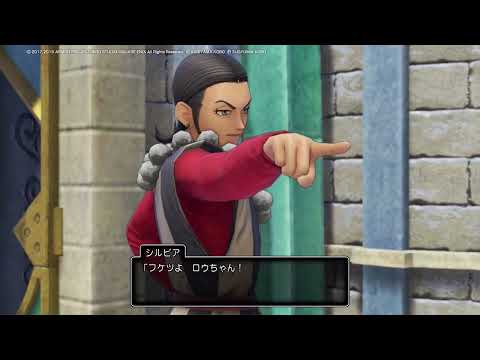
During gameplay in the Ancient Library, the character Rowe accidentally drops a book he has been reading. When the item is revealed, players discover it is not a scholarly tome but rather “Pichi Pichi Bunny”—a suggestive magazine collection. This moment shatters the carefully constructed image of Rowe as the party’s composed, knowledgeable strategist and advisor.
The scene is executed with deliberate subtlety: Rowe’s own unconscious action—dropping the book—exposes his secret without dialogue or explanation. This physical manifestation of his hidden nature creates an immediate, visceral impact on players who have spent hours trusting in his intellectual authority.
Why It Matters
This moment represents a significant evolution in character design philosophy within the RPG industry. Rather than maintaining the “perfect hero” archetype that defined earlier Dragon Quest titles, DQ11S deliberately introduces character flaws and contradictions to create psychological depth. The scene demonstrates how modern game developers prioritize human authenticity over idealized character archetypes.
The incident also reveals a deliberate creative choice: the revelation has no bearing on the main story. Instead, it exists purely to humanize Rowe and challenge player expectations. This reflects what industry analysts call “character-first design”—where developers invest in character complexity independent of narrative necessity.
Background
Rowe has been established throughout DQ11S as the party’s intellectual anchor—a calm, knowledgeable advisor whose dialogue consistently emphasizes wisdom and reason. Players naturally develop expectations around this archetype: competence, restraint, and intellectual superiority. The Ancient Library scene deliberately exploits these expectations by introducing a contradiction that forces players to reconcile two incompatible images of the same character.
DQ11S released on Nintendo Switch in 2019 as an enhanced version of the 2017 original. The Switch version, known as “S,” included numerous character-focused additions and refinements. The Rowe magazine incident appears to be part of this deliberate character deepening effort, suggesting the development team made conscious decisions to add layers of personality to established characters.
Key Points
- Character Contradiction: Rowe’s secret hobby directly contradicts his established intellectual persona, creating a psychological gap that forces players to see him as multidimensional
- Narrative Independence: Unlike similar character revelations in other RPGs, this secret has zero impact on the main story, existing solely for character development
- Execution Through Action: The revelation occurs through physical action (dropping the book) rather than dialogue, making it feel organic and unforced
- Player Reception Diversity: Social media reactions range from “this ruins his character” to “this makes him more relatable,” reflecting different player expectations
- Industry Trend: The scene exemplifies modern RPG design’s shift toward depicting flawed, human characters rather than archetypal heroes
- Psychological Effect: The larger the gap between expected and revealed character traits, the stronger the emotional impact on players
Timeline
- 2017: Dragon Quest 11 releases on PlayStation 4 and PC; Rowe established as intellectual party member
- 2019: DQ11S releases on Nintendo Switch with enhanced character content; Rowe magazine scene included as part of character deepening
- 2019 onwards: Scene gains attention on social media; players share reactions and interpretations
Perspectives
Player Perspective – Positive: Many players view the scene as humanizing, arguing that flawed characters are more relatable and interesting than perfect archetypes. Comments like “I like Rowe even more because of this” reflect appreciation for character complexity. The revelation transforms Rowe from an idealized sage into a recognizable human with contradictions.
Player Perspective – Critical: Other players express disappointment, viewing the scene as undermining Rowe’s established character. The sentiment “He was cool until this ruined it” represents players who preferred the original archetype and see the revelation as comedic subversion rather than meaningful character development.
Design Perspective: From a game design standpoint, the scene demonstrates intentional character-first development. The creators deliberately chose to add this element during the Switch version’s development, suggesting they valued character depth over maintaining archetypal consistency. This reflects broader industry trends seen in titles like Persona 5 (2016) and Final Fantasy VII Remake (2020), where character contradictions and secrets drive emotional engagement.
Voice Acting Perspective: YouTube comments frequently praise the voice actor’s performance during this scene, noting that the delivery of Rowe’s dialogue and reactions sells the moment’s impact. The technical execution—tone, pacing, and emotional subtext—elevates what could have been a throwaway gag into a meaningful character moment.
Comparative Analysis
The Rowe magazine incident follows a pattern established in contemporary RPGs, though with distinct characteristics:
Persona 5 (2016): Characters’ secrets are gradually revealed and directly impact the main narrative. The gap between public persona and private truth is central to the story’s themes. Unlike Rowe’s incident, these revelations carry narrative weight.
Final Fantasy VII Remake (2020): Cloud’s identity and memories are progressively destabilized throughout the game. The character contradiction unfolds across the entire experience rather than in a single moment, creating sustained psychological tension.
Okami (2006): Issun’s secret identity as a divine messenger is revealed and becomes crucial to the story’s resolution. Like Persona 5, the revelation drives narrative forward.
Rowe’s incident is unique because it exists outside narrative necessity. It serves purely to deepen character perception without affecting plot, representing the most refined form of “character-for-character’s-sake” design.
Insights
The Rowe magazine incident symbolizes a fundamental shift in RPG character design philosophy. For decades, RPG characters were defined by their narrative function: the sage provides wisdom, the warrior provides strength, the healer provides support. Modern RPG design increasingly defines characters through personality and contradiction, treating them as psychological entities rather than functional roles.
This shift reflects broader cultural changes in entertainment. Contemporary audiences demonstrate greater engagement with flawed, contradictory characters who mirror human complexity. The gap between Rowe’s intellectual persona and his private interests creates the same psychological recognition that makes real people interesting—the acknowledgment that everyone contains multitudes and contradictions.
The scene also demonstrates sophisticated understanding of player psychology. By establishing strong expectations around Rowe’s character before subverting them, the developers maximize emotional impact. The larger the expectation gap, the stronger the cognitive and emotional response. This principle, grounded in psychological research on expectation violation, has become a cornerstone of modern character design.
Furthermore, the scene’s placement in the Ancient Library—a location symbolizing knowledge and history—creates thematic resonance. The revelation of human desire in the temple of intellect reinforces the message that knowledge and humanity are not opposing forces but coexisting aspects of complete personhood.
Looking forward, the incident raises questions about narrative integration. If DQ11S’s developers invested this much in character deepening, future story developments may reveal how this secret connects to larger themes. The deliberate craftsmanship suggests the moment may carry significance beyond immediate comedy.
Ultimately, the Rowe magazine incident represents the maturation of RPG character design—a recognition that authentic humanity, including contradiction and hidden desires, creates more meaningful player engagement than archetypal perfection. It signals that modern RPGs are evolving beyond role-based character definition toward psychological authenticity.