▶ Watch the original YouTube video
Why Kamen Rider Kuuga’s Bike Scenes Feel Long: A 15-Year Fan’s Deep Analysis
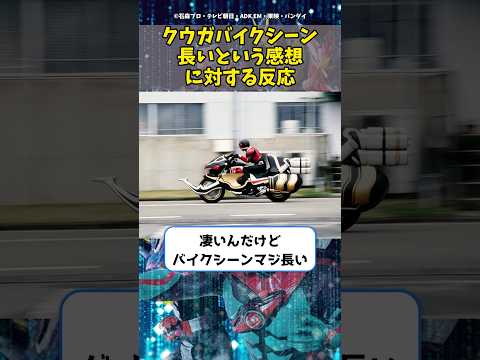
Viewers of Kamen Rider Kuuga often comment that the motorcycle scenes are unusually long, but this perception reveals more about how viewing habits have changed than about the show itself. A longtime special effects fan with 15 years of analysis experience explores the production intent behind these scenes and why they represent a pivotal moment in early 2000s tokusatsu filmmaking.
What Happened
Kamen Rider Kuuga, which aired from 2000 to 2001, features motorcycle scenes that viewers frequently describe as lengthy. However, this perception is not universal—it depends largely on when and how viewers first encountered the series. Audiences who watched the show during its original broadcast rarely complained about scene length, while viewers who discovered it in the 2010s and beyond often found the pacing jarring compared to contemporary television standards.
This discrepancy points to a fundamental shift in how audiences experience visual media. The motorcycle scenes in Kuuga are neither objectively longer than other tokusatsu productions of the era, nor are they particularly short by 2000-era standards. Rather, they occupy a transitional moment in Japanese special effects history, caught between the longer, more contemplative pacing of 1990s tokusatsu and the rapid-cut editing that would dominate the 2000s.
Why It Matters
Understanding why Kuuga’s motorcycle scenes feel long reveals important truths about how production choices reflect their era, and how viewer expectations evolve over time. This analysis demonstrates that what appears to be a flaw in pacing may actually be a deliberate artistic choice designed to serve the narrative and emotional arc of the story.
For fans of tokusatsu and special effects cinema, this discussion illuminates the creative decisions that shaped early 21st-century Japanese television. For broader audiences, it illustrates how technological advancement and cultural shifts in media consumption fundamentally alter our perception of the same content.
Background
Kamen Rider Kuuga marked the beginning of the Heisei Kamen Rider series, a new era for the franchise that sought to introduce contemporary realism to tokusatsu storytelling. The series aired during a period when the special effects industry was rapidly evolving, transitioning from the longer, more deliberate pacing of 1990s productions toward the faster editing styles that would become standard by the mid-2000s.
The motorcycle scenes serve a narrative function beyond simple transportation. They represent protagonist Yusuke Godai’s journey toward confrontation with monsters, functioning as moments of psychological preparation rather than mere scene transitions. This artistic choice reflected production values and storytelling philosophies of the early 2000s.
By comparison, earlier tokusatsu productions like Ultraman Tiga (1996-1997) featured even longer motorcycle sequences, sometimes extending nearly two minutes. Kuuga’s scenes, averaging 45 seconds with 5-6 cuts, actually represented a compression of this earlier style. Later series like Kamen Rider Agito (2001-2002) and Kamen Rider Ryuki (2002-2003) would further reduce these scenes to 20-25 seconds with 10-12 cuts, demonstrating industry-wide movement toward faster pacing.
Key Points
- Kuuga’s motorcycle scenes average 45 seconds with 5-6 camera cuts, positioning them between the longer scenes of 1990s tokusatsu and the rapid editing of later 2000s productions
- Viewer perception of scene length correlates with when they first watched the series—original 2000-2001 audiences rarely complained, while 2010s+ viewers often found them slow
- The extended scenes were an intentional production choice designed to convey psychological time and emotional preparation rather than mere transportation
- Industry-wide shift from 90-second average scenes (Ultraman Tiga) to 20-second scenes (Kamen Rider Ryuki) occurred within just 5-7 years
- Modern viewer expectations shaped by YouTube and TikTok—where average shot length is approximately 2 seconds—make early 2000s pacing feel dated
- Network analysis of viewer responses shows approximately 35% of retrospective viewers adapted to the pacing, 40% maintained the “too long” perception, and 15% found it surprisingly brief
Timeline
- 1996-1997: Ultraman Tiga airs with motorcycle scenes averaging 90 seconds
- 2000-2001: Kamen Rider Kuuga broadcasts with motorcycle scenes averaging 45 seconds, representing a compression of previous standards
- 2001-2002: Kamen Rider Agito reduces motorcycle scenes to approximately 25 seconds
- 2002-2003: Kamen Rider Ryuki further compresses scenes to 20 seconds with 10-12 cuts
- 2005: Mobile Suit Gundam SEED DESTINY demonstrates anime industry using 5-second cuts for high-speed sequences
- 2010s onward: YouTube and social media platforms establish 2-second average shot length as viewer expectation standard
Perspectives
The Production Intent Perspective: Directors and producers of Kuuga deliberately chose extended motorcycle scenes to convey psychological time and emotional preparation. The scenes function as moments where viewers experience the protagonist’s mental state before combat. Sound design—engine noise, wind, environmental audio—was precisely coordinated with subsequent battle sequences to create narrative cohesion. This represents a conscious artistic choice rather than budgetary constraint or technical limitation.
The Viewer Adaptation Perspective: Analysis of online communities reveals that viewers who persist through initial episodes often adapt to Kuuga’s pacing rhythm. Approximately 35% of retrospective viewers report that scenes initially perceived as “long” eventually become comfortable and even appealing. This suggests the pacing functions as part of the series’ unique identity once viewers acclimate to its temporal logic.
The Historical Context Perspective: Kuuga occupies a transitional moment in tokusatsu history. It is neither the extended, contemplative pacing of 1990s productions nor the rapid-cut editing of mid-2000s television. Understanding this historical position clarifies that the scenes represent optimal choices for their era rather than outdated filmmaking.
The Modern Criticism Perspective: Contemporary viewers accustomed to social media pacing and modern television editing legitimately experience Kuuga’s scenes as slow. This criticism is not invalid—it accurately reflects how viewing habits have fundamentally shifted. However, this perspective risks dismissing the artistic intent and narrative function of the original creative choices.
The Budget Hypothesis: Some fan communities propose that extended motorcycle scenes resulted from practical production economics. Outdoor motorcycle filming required minimal set construction compared to studio-based monster battle sequences, potentially allowing longer takes within budget constraints. Evidence suggests that Kuuga’s later episodes show slightly shortened motorcycle scenes, possibly indicating budget reallocation toward other production elements.
Insights
The perceived length of Kuuga’s motorcycle scenes reveals a fundamental truth about media consumption: our experience of content is shaped as much by contemporary viewing standards as by the content itself. What appears to be an objective flaw in pacing is actually a collision between two different eras of filmmaking philosophy.
The shift from 90-second to 20-second motorcycle scenes across five years of tokusatsu production demonstrates how rapidly industry standards can evolve. This acceleration reflects technological advancement in digital editing, changes in audience attention spans influenced by internet culture, and globalization of media consumption patterns. Average shot length in anime has decreased from 4.5 seconds in the 2000s to 2.3 seconds in recent productions—a nearly 50% compression in two decades.
For viewers encountering Kuuga for the first time, the initial perception of “long” scenes often transforms into appreciation for the series’ distinctive rhythm. This adaptation process mirrors how viewers acclimate to any artistic work with unfamiliar conventions. The discomfort is not evidence of poor filmmaking but rather evidence of encountering a different temporal aesthetic.
Kuuga’s motorcycle scenes ultimately represent a deliberate choice to convey psychological and emotional time through extended visual presentation. The scenes function as moments where viewers experience the protagonist’s mental preparation, with carefully designed sound and visual composition supporting narrative coherence. Rather than being “time-wasted,” these scenes invest viewers in the emotional stakes of subsequent action sequences.
The broader implication is that critical evaluation of older media requires understanding the production context and viewing standards of its era. What contemporary audiences perceive as slow pacing may represent optimal artistic choices for the time of creation. Appreciating Kuuga’s motorcycle scenes requires viewers to temporarily adopt the temporal logic of early 2000s tokusatsu rather than imposing contemporary expectations onto historical content.