▶ Watch the original YouTube video
World Trigger: Why the Commander and Ace Role Division Creates Stronger Teams
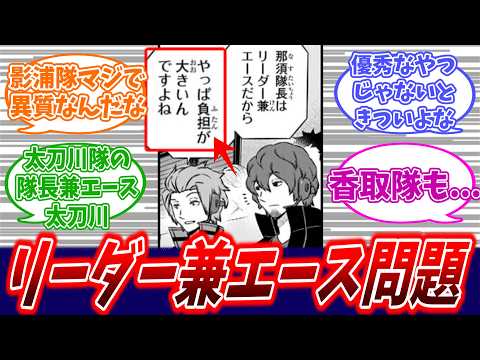
World Trigger’s tactical structure demonstrates how separating the commander and ace roles into different team members creates organizational efficiency. Drawing from 15 years of anime analysis and tactical game experience, this deep dive explores why role specialization produces stronger squads than having a single leader handle multiple responsibilities.
What Happened
World Trigger presents a unique approach to team composition where the role of commander and ace are deliberately separated among different squad members. Rather than having the strongest fighter lead the team, the series demonstrates that dividing leadership and combat responsibilities between specialized individuals creates more efficient and adaptable squads. This structural choice reflects deeper organizational principles found in tactical games and military strategy.
Why It Matters
Understanding World Trigger’s team composition model reveals fundamental principles about organizational efficiency and decision-making under pressure. The series challenges the common anime trope of the strongest individual leading the team, instead presenting a more realistic framework where cognitive load and processing capacity are finite resources. This approach has broader implications for how we understand team dynamics in competitive environments, from esports to military operations.
Background
World Trigger began serialization in 2011 and aired its first anime season in 2015. The series centers on Border, an organization defending Earth from interdimensional invaders called Neighbors. Unlike typical action anime that emphasize individual power levels, World Trigger meticulously designs squad compositions with specific roles: commanders who make tactical decisions, aces who excel in combat, supporters who provide backup, and operators who manage information. This deliberate structure became increasingly apparent as the series progressed, with different squads demonstrating varying approaches to role distribution.
The original manga author, Daisuke Ashihara, established clear organizational hierarchies from the beginning. Squads like Tamakoma Second, Ninomiya Squad, Tachikawa Squad, and Kageura Squad each employ different structural models, all with documented reasoning for their composition choices.
Key Points
- Processing Capacity Limits: Commanders managing both tactical decisions and personal combat simultaneously experience exponential increases in cognitive load, reducing effectiveness in both areas.
- Specialization Efficiency: When commanders focus exclusively on strategy and aces focus on combat execution, each can operate at peak performance within their domain.
- Squad Member Autonomy: Squads with well-trained members who can make independent decisions require fewer direct orders, reducing the commander’s burden.
- Support Structure Importance: Operators and support roles significantly reduce the commander’s workload, enabling better decision-making and tactical flexibility.
- Structural Variations: Different squads employ different models—some with clear separation, others with hybrid approaches—each with distinct advantages and limitations.
- Individual Capacity Exceptions: Exceptionally talented individuals like Tachikawa can manage multiple roles, but this remains the exception rather than the rule.
Tactical Structure Analysis
The Processing Capacity Problem
The core principle underlying World Trigger’s team design mirrors real-world tactical games like Fire Emblem. When a single leader must simultaneously assess enemy positions, formulate strategy, and execute combat decisions, performance degrades across all functions. This isn’t a character weakness—it’s a fundamental limitation of human cognitive capacity.
Nasty, Tamakoma Second’s initial leader, exemplifies this struggle. As both squad commander and primary combatant, he faced constant pressure that diminished both his tactical clarity and combat effectiveness. The series demonstrates this explicitly: as Nasty focused on leadership, his personal performance suffered, and vice versa.
Comparative Squad Models
| Squad | Commander/Ace Structure | Processing Efficiency | Strengths |
|---|---|---|---|
| Tamakoma Second (Current) | Separate roles: Nasty (commander), Yuma (ace) | High—each focuses on specialization | Clear role definition, improving coordination |
| Ninomiya Squad | Ninomiya handles both with support | Very High—exceptional individual capacity plus support system | Flexible, adaptable, minimal processing bottleneck |
| Tachikawa Squad | Tachikawa (both roles) with Izumi support | High—individual talent compensates, support reduces burden | Decisive leadership, rapid response capability |
| Kageura Squad | Distributed roles across capable members | Very High—multiple decision-makers, high autonomy | Adaptability, resilience, no single point of failure |
The Support System Factor
A critical element often overlooked is the role of support staff. Izumi’s position in Tachikawa Squad as an operator and tactical supporter directly reduces Tachikawa’s cognitive load. Similarly, Suzu’s emerging role in Tamakoma Second as a tactical analyst represents the “strategist” position—distinct from both commander and ace.
This three-tier model (commander, ace, strategist) mirrors military organizational structures and represents the most efficient distribution of responsibilities. When fully implemented, it allows each specialist to operate at maximum effectiveness.
Industry Context
World Trigger emerged during a significant shift in anime storytelling. While 2000s anime like Code Geass and Durarara emphasized individual protagonist power and psychological drama, 2010s anime increasingly focused on organizational efficiency and team dynamics. World Trigger preceded this trend, establishing organizational principles that later influenced works like Attack on Titan Season 2 and Haikyu!!
The series’ approach reflects tactical game design philosophy, particularly from simulation RPGs like Fire Emblem and Final Fantasy Tactics. This design lineage explains why World Trigger’s team composition feels mechanically sound—it’s built on proven organizational principles rather than narrative convenience.
Comparative Analysis with Other Series
Attack on Titan: Levi functions as both commander and ace through superhuman capability, but this model depends entirely on individual talent. The Survey Corps’ effectiveness would collapse without Levi’s exceptional abilities.
Haikyu!!: Karasuno distributes roles across multiple players, with the coach providing strategic direction. This model emphasizes team cohesion and individual autonomy, similar to Kageura Squad’s approach.
Code Geass: Lelouch makes all strategic decisions personally, creating a single point of failure. While dramatically compelling, this model proves organizationally fragile.
World Trigger’s advantage lies in its explicit acknowledgment that role separation isn’t a limitation—it’s an optimization strategy.
Perspectives
The Specialization Argument
Role separation allows each member to develop expertise in their domain. A commander focusing exclusively on strategy can develop superior tactical awareness. An ace concentrating on combat can achieve higher performance levels. This specialization compounds over time, creating increasingly capable teams.
The Flexibility Counter-Argument
Some argue that individuals who’ve experienced multiple roles develop broader perspectives and better decision-making. Ninomiya’s ability to handle both commander and ace responsibilities suggests that experience across domains creates adaptability that pure specialists lack. This perspective suggests that the “ideal” structure might involve specialists with cross-training, rather than rigid role separation.
The Individual Talent Factor
Exceptional individuals can transcend structural limitations. Tachikawa manages multiple roles successfully because his processing capacity exceeds normal parameters. This raises the question: does organizational structure matter if you have sufficiently talented people? The answer appears to be yes—even talented individuals perform better with appropriate support structures.
Insights
World Trigger’s treatment of team composition reveals that organizational efficiency isn’t about having the strongest individuals—it’s about optimizing how those individuals interact. The series demonstrates that cognitive load is a real constraint, that specialization produces measurable benefits, and that support structures amplify individual capability.
The most compelling insight is that role separation doesn’t diminish squad strength—it amplifies it. By acknowledging that no single person can simultaneously excel at strategy, leadership, and combat execution, World Trigger presents a more realistic and ultimately more powerful model of team organization.
Looking forward, Tamakoma Second’s trajectory suggests that the series understands this principle deeply. As Nasty transitions to pure commander role and Yuma establishes himself as ace, with Suzu developing as strategist, the squad moves toward optimal efficiency. The series implies that this three-tier structure represents the evolution of organizational maturity.
For viewers, this framework transforms how we interpret squad matchups. Victories and defeats become explicable through organizational structure rather than pure power levels. A weaker squad with superior role definition can defeat a stronger squad with poor organization—a principle that makes World Trigger’s battles intellectually satisfying rather than merely entertaining.
The broader implication extends beyond anime: in any competitive environment where multiple simultaneous decisions matter, role specialization and support structures matter more than individual talent alone. World Trigger presents this principle through narrative and character development, making organizational theory accessible and compelling.