▶ Watch the original YouTube video
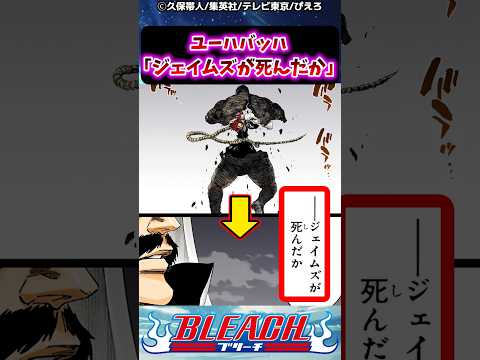
Yhwach’s Question About James’ Death Sparks Deep Fan Theories in BLEACH Final Arc
A single line of dialogue from antagonist Yhwach in BLEACH’s final arc—”Did James die?”—has ignited widespread fan discussion about the nature of death, narrative structure, and character development in the series. The seemingly simple question functions as a philosophical inquiry that challenges both readers and the story’s fundamental logic.
What Happened
During the Thousand-Year Blood War arc, the final chapter of BLEACH, Yhwach delivers a deceptively simple line of dialogue: “Did James die?” Rather than making a definitive statement about a character’s death, Yhwach poses the question in interrogative form. This departure from typical antagonist behavior—where enemies usually make absolute declarations about their victims’ fates—has become a focal point for fan analysis and interpretation across social media platforms including Twitter, YouTube, and online forums.
Why It Matters
This moment represents a significant evolution in how BLEACH portrays its antagonists and narrative structure. The question challenges the conventional shonen manga formula where victory is clearly defined and death is absolute. By introducing uncertainty into what should be a straightforward confirmation, Yhwach’s dialogue forces readers to reconsider fundamental concepts: What does death mean in a series centered on the afterlife? How do we define victory and defeat? The line exemplifies a broader trend in contemporary anime and manga where antagonists function as philosophical challengers rather than simple obstacles to overcome.
Background
BLEACH, which began serialization in 2001, has consistently explored themes related to death and the afterlife through its core setting of Soul Society and the spirit world. Throughout previous arcs, particularly the Aizen and Ulquiorra battles, the series established that death operates as a relative concept rather than an absolute endpoint. Characters presumed dead have returned, and protagonists have transcended conventional limitations of mortality. This thematic foundation makes Yhwach’s interrogative phrasing particularly significant—it builds upon years of narrative precedent where death’s finality remains ambiguous. The Thousand-Year Blood War arc intensifies these philosophical questions, moving beyond typical action-focused storytelling toward deeper existential inquiry.
Key Points
- Interrogative Structure as Narrative Tool: Yhwach’s use of a question rather than a statement introduces psychological uncertainty and challenges reader expectations about how antagonists communicate.
- Redefinition of Death in Narrative: The dialogue questions the series’ treatment of death as a definitive concept, reflecting BLEACH’s thematic exploration of mortality and the afterlife.
- Psychological Warfare Through Language: The phrasing functions as a form of mental pressure, unsettling both characters within the story and readers engaging with the narrative.
- Departure from Shonen Convention: Unlike typical Weekly Shonen Jump antagonists who make absolute declarations, Yhwach’s uncertainty suggests a more complex, philosophically-minded villain.
- Diverse Fan Interpretations: The ambiguous nature of the statement has generated multiple readings, from appreciation for narrative sophistication to criticism of unclear character motivation.
- Thematic Consistency: The question aligns with BLEACH’s long-standing engagement with concepts of existence, identity, and the boundaries between life and death.
Timeline
- 2001: BLEACH begins serialization in Weekly Shonen Jump, establishing death and the afterlife as central themes.
- 2001-2012: Multiple story arcs explore the relative nature of death through character resurrections and transcendence of mortality.
- 2012: The Thousand-Year Blood War arc begins, introducing Yhwach as the primary antagonist.
- During Final Arc: Yhwach delivers the line “Did James die?” in interrogative form, departing from conventional antagonist dialogue patterns.
- Post-Publication: Fan communities across Twitter, YouTube, and forums engage in extensive analysis and debate regarding the statement’s meaning and implications.
Perspectives
Positive Reception: Many fans praised the line for elevating narrative tension and demonstrating sophisticated character writing. They viewed Yhwach’s uncertainty as a sign that even the antagonist cannot fully control or predict events, adding psychological depth to the conflict. This interpretation aligns with appreciation for how the final arc subverts typical shonen manga structures.
Critical Interpretation: Some viewers expressed confusion about the statement’s purpose and questioned whether Yhwach’s characterization remained consistent. Critics suggested that the ambiguity, while potentially intentional, lacked sufficient narrative explanation to justify the departure from established antagonist behavior patterns.
Analytical Perspective: Fan theorists and content creators examined the line as a philosophical statement about the nature of death within BLEACH’s universe. They connected it to previous story arcs and identified it as a potential narrative turning point that could determine the final outcome of the conflict. This group viewed the question as evidence of the series’ thematic maturation.
Comparative Analysis: Some fans drew parallels to other contemporary manga and anime featuring antagonists who challenge narrative logic itself, such as Eren Yeager in Attack on Titan and Gojo Satoru in Jujutsu Kaisen, suggesting this represents an industry-wide trend toward more philosophically complex villains.
Insights
Yhwach’s interrogative statement demonstrates the power of language and uncertainty in narrative construction. Rather than relying solely on action sequences and power escalation—traditional pillars of shonen manga—the final arc of BLEACH employs philosophical questioning as a storytelling device. This approach forces readers to engage intellectually with the material, moving beyond passive consumption toward active interpretation.
The line’s ambiguity serves multiple functions simultaneously: it establishes Yhwach as a more sophisticated antagonist than previous villains, it reinforces BLEACH’s thematic exploration of death’s relative nature, and it creates narrative tension through uncertainty rather than through combat alone. The diverse fan reactions indicate that the strategy succeeded in generating engagement and discussion, even among viewers who found the approach unconventional or unclear.
This moment illustrates how a single line of dialogue can encapsulate broader shifts in storytelling within the medium. As anime and manga audiences mature and seek more complex narratives, antagonists increasingly function as philosophical challengers who question the story’s fundamental logic rather than serving as simple obstacles. BLEACH’s final arc, through moments like this, demonstrates that shonen manga can accommodate sophisticated thematic exploration without abandoning the genre’s core appeal.
The unanswered nature of Yhwach’s question suggests it may serve as a narrative linchpin for the arc’s conclusion. If the series ultimately addresses what death means within its universe and how this definition affects the final conflict’s outcome, this single line will have functioned as a crucial thematic anchor—proof that even in action-driven storytelling, the most powerful moments can emerge from a carefully chosen question rather than a definitive statement.