▶ Watch the original YouTube video
The Psychology Behind Smartphone Battery Anxiety: What Hikaru’s Reaction Reveals About Modern Stress
YouTuber Hikaru’s reaction video to smartphone battery levels offers a window into a universal source of modern anxiety. By analyzing this everyday phenomenon through the lens of content psychology and behavioral patterns, we can understand why a simple percentage display triggers genuine emotional responses in billions of users worldwide.
What Happened
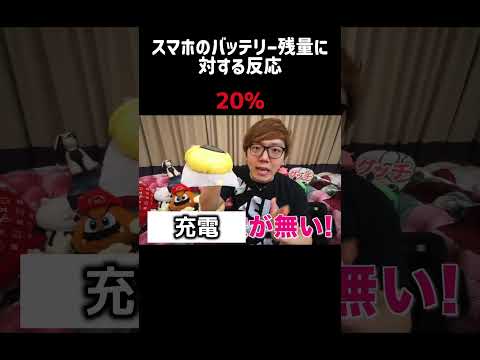
Hikaru released a reaction video titled “Hikaru’s Reaction to Smartphone Battery Levels” (Hikamani series) that documents his emotional responses as his phone’s battery percentage decreases. The video captures the progressive psychological shifts that occur as battery capacity drops from full charge to critical levels, presenting a relatable scenario that resonates with virtually every smartphone user.
Why It Matters
This video taps into a fundamental aspect of contemporary life: our psychological dependence on mobile devices. Unlike entertainment media of previous generations, smartphones have become essential infrastructure for communication, financial transactions, information access, and work. Battery anxiety therefore represents more than practical concern—it reflects deeper existential worry about social disconnection and loss of control. Understanding these psychological triggers reveals how modern technology shapes our emotional landscape and stress responses.
Background
The “Hikamani” series specializes in reaction content focused on everyday emotional moments rather than dramatic events. This approach differs from traditional reaction videos by finding entertainment value in universal, mundane experiences that audiences encounter daily. The battery level theme exemplifies this strategy: it’s a phenomenon experienced by virtually every smartphone user globally, making it inherently relatable across demographics and cultures.
The psychology of battery anxiety can be understood through parallels with established narrative devices. In anime and gaming, resource depletion mechanics—such as the gas gauge in “Attack on Titan’s” vertical maneuvering equipment or the battery display in “Darling in the Franxx”—create narrative tension through visible, quantifiable decline. Real-world battery indicators function identically, converting abstract concern into concrete visual feedback that triggers psychological responses.
Key Points
- Universal relatability: Battery anxiety is experienced by billions of smartphone users regardless of age, profession, or location, making it an ideal subject for viral content
- Psychological stages: Users experience distinct emotional phases as battery percentage decreases—from indifference at 100-81% through growing concern at 50-21% to crisis mode below 20%
- Control and uncertainty: Battery stress stems fundamentally from loss of control; users cannot predict charging availability or consumption rates, triggering primitive anxiety responses
- Digital infrastructure dependency: Unlike entertainment devices of previous eras, smartphones represent essential social and economic infrastructure, making battery depletion feel like social disconnection
- Entertainment through observation: Hikaru’s exaggerated reactions allow viewers to observe their own behavior objectively, transforming mundane stress into shareable entertainment
- Community validation: Comments and social media responses show viewers seeking confirmation that their battery anxiety is normal and shared, providing psychological reassurance
Psychological Stages of Battery Anxiety
100-81% (Safety Zone): Users remain largely unaware of battery status. Emotional response is minimal or nonexistent. The device feels infinite in capacity.
80-51% (Normal Zone): Gradual awareness begins. Users start noticing battery indicators but maintain confidence in available time. Behavior remains unchanged.
50-21% (Alert Zone): Psychological shift intensifies. The 50% threshold functions as a psychological turning point; users recognize that remaining time is finite. Charging location searches begin. Anxiety becomes noticeable.
20-1% (Crisis Zone): Most devices trigger warning notifications. Users interrupt current activities to prioritize charging. Behavior shifts from preference to necessity. This response reflects fear of loss rather than rational calculation.
The Control Paradox
Battery anxiety fundamentally stems from perceived loss of control. Unlike many stressors that can be managed through planning or effort, battery depletion rate depends on unpredictable variables: application usage, network conditions, screen brightness, and background processes. Users cannot reliably predict when their device will become unusable or whether charging infrastructure will be available. This uncertainty mirrors anxiety patterns documented in psychological research on uncontrollable situations.
The comparison to fictional narrative devices illuminates this mechanism. In “Death Note,” resource constraints force strategic thinking. In “Attack on Titan,” equipment limitations create tactical urgency. In both cases, constraints generate dramatic tension. Real battery limitations produce identical psychological effects, but with heightened intensity because they directly threaten actual social and economic participation rather than fictional character survival.
Why This Content Succeeds
Hikaru’s battery reaction video succeeds through a sophisticated artistic technique: converting mundane daily stress into entertainment. This mirrors the success of slice-of-life anime like “K-On!” and “Nichijou,” which found narrative value in ordinary moments by highlighting subtle character development and interpersonal dynamics within seemingly uneventful scenarios.
The video functions on multiple levels simultaneously. Viewers laugh at exaggerated reactions while simultaneously experiencing validation—”I react exactly this way.” This dual response creates both entertainment and psychological reassurance. The content essentially says: your anxiety is normal, shared, and worthy of attention. In contemporary digital culture, this validation function may be as valuable as the entertainment itself.
Network Response and Community Dynamics
YouTube comments on similar content overwhelmingly express recognition: “I do this exactly,” “This is so relatable,” “I thought I was the only one.” This pattern indicates viewers seeking confirmation that their stress response is justified and universal rather than personal neurosis.
Twitter discussions using hashtags like #BatteryAnxiety demonstrate how users transform individual worry into collective humor. This represents a modern communication pattern where shared anxieties become bonding mechanisms. The “trivial concern” becomes valuable precisely because it is universally experienced, making it an ideal vehicle for community connection.
Practical Implications
Understanding battery anxiety psychology enables practical mitigation strategies. Carrying portable chargers reduces uncertainty by increasing perceived control. Enabling battery saver mode at 80% maintains psychological comfort through extended available time. Pre-identifying charging locations before outings increases sense of preparedness and control.
Beyond practical solutions, adopting Hikaru’s observational approach—viewing one’s own reactions with detached curiosity rather than stress—can reduce anxiety through psychological distance. Self-observation transforms stress from an internal threat into an external phenomenon worthy of analysis, diminishing its emotional impact.
Insights
This video reveals that human psychology responds intensely to small triggers, particularly those involving loss of control and resource depletion. The most psychologically rich moments often hide within mundane daily experiences rather than dramatic events. Battery anxiety encapsulates deeper concerns about modern existence: dependence on technology, vulnerability to infrastructure failure, and the psychological weight of constant connectivity.
The success of daily-life reaction content suggests contemporary audiences seek deeper self-understanding through media consumption. Viewers don’t simply want entertainment; they want mirrors reflecting their own behavior, validating their experiences, and helping them comprehend their psychological responses to modern conditions.
As smartphones become increasingly central to economic, social, and informational participation, battery anxiety will likely intensify rather than diminish. Content that acknowledges and validates this anxiety serves an important psychological function: it normalizes stress responses and builds community around shared vulnerability. In this sense, Hikaru’s reaction video functions simultaneously as entertainment, psychological study, and collective coping mechanism for the anxieties embedded in contemporary digital life.