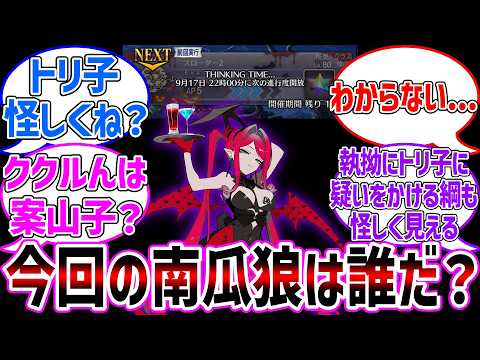
▶ Watch the original YouTube video
How Fate/Grand Order’s Halloween Event Sparked a Community-Wide Deduction Frenzy
When Fate/Grand Order announced a major reveal at 10 PM during its Halloween event, the game’s fan community erupted into an unprecedented wave of collaborative theorizing. This moment exemplifies how FGO has cultivated one of gaming’s most sophisticated fan deduction cultures, driven by complex storytelling and real-time community engagement.
What Happened
During Fate/Grand Order’s Halloween event, the development team announced that a major answer or reveal would be presented at 10 PM. This simple time-locked announcement triggered an explosion of fan theories across Twitter, Reddit, 4chan, and specialized analysis blogs. Rather than waiting passively, the FGO community engaged in intensive collaborative deduction, with multiple competing hypotheses circulating simultaneously as players attempted to predict what the announcement would contain.
Why It Matters
The response to this announcement reveals something significant about modern gaming communities: the capacity for large-scale collaborative problem-solving and narrative analysis. FGO’s community demonstrated a level of organized theorizing rarely seen in other gaming franchises. This phenomenon reflects how games with complex, interconnected storytelling can transform passive audiences into active participants in narrative construction. The event also highlights how time-locked reveals can amplify engagement by creating artificial scarcity and urgency around fan participation.
Background
Fate/Grand Order launched in 2015 and has since become known for its intricate narrative structure that draws from multiple Fate series entries including Fate/stay night, Fate/Zero, and Fate/Apocrypha. The game’s storytelling operates across multiple temporal layers, incorporates historical references, and builds upon the complex Type-Moon universe mythology. Unlike many mobile games that treat narrative as secondary, FGO positions story as central to the experience, with regular events that advance lore and character development. This design philosophy has cultivated a player base deeply invested in narrative analysis and prediction.
The Halloween event in question occurred during a period when the FGO community had already developed sophisticated analytical frameworks for deconstructing the game’s storytelling. Players had learned to recognize narrative patterns, identify foreshadowing across multiple events, and synthesize knowledge from related Fate properties to construct detailed theories about upcoming story developments.
Key Points
- FGO’s announcement of a 10 PM reveal triggered simultaneous theorizing across multiple online platforms, demonstrating unprecedented community coordination
- The fan deduction culture surrounding FGO significantly exceeds that of comparable franchises like Persona 4 or Final Fantasy VII in both depth and activity level
- Time-locked announcements function as psychological catalysts, transforming passive consumption into active collaborative problem-solving
- The Type-Moon universe’s complexity naturally incentivizes multi-layered analysis requiring synthesis of character psychology, historical context, and established lore
- Cross-platform information sharing among Twitter, Reddit, and forum communities creates a feedback loop where hypotheses are continuously refined and validated
- Character psychological analysis emerged as the primary analytical tool, with fans integrating past episodes, character relationships, and narrative context to predict behavior
Community Response Patterns
Twitter Activity: Players expressed anticipation through speculative posts, with multiple competing theories circulating simultaneously. The platform served as the primary venue for rapid hypothesis generation and initial reactions.
Forum Discussions: Deeper analytical threads emerged on platforms like 4chan and specialized forums, where users conducted detailed textual analysis and cross-referenced past events for foreshadowing elements.
Synthesis Across Platforms: Hypotheses generated on Twitter would be examined and refined on forums within hours, then receive detailed analytical treatment on specialized blogs. This multi-stage refinement process created increasingly sophisticated predictions.
Comparative Analysis
FGO’s deduction culture stands apart from other major gaming franchises. While Persona 4 generated significant mystery-focused theorizing, its analysis remained largely confined to traditional mystery-novel frameworks. FGO requires simultaneous consideration of multiple temporal layers, historical accuracy, character psychology, and universe-specific mythology. Final Fantasy VII, despite its massive community, generates more retrospective analysis than real-time prediction. Monster Hunter’s community focuses primarily on mechanical optimization rather than narrative analysis.
The key differentiator is FGO’s continuous narrative structure. Unlike games with defined endpoints, FGO maintains ongoing story development through regular events, creating perpetual opportunities for prediction and analysis. This structure naturally incentivizes sustained community engagement with narrative theory.
Underlying Mechanisms
Complexity as Engagement Driver: The Type-Moon universe’s layered mythology creates natural incentives for deep analysis. Players cannot fully understand FGO’s narrative without synthesizing knowledge from multiple related properties, effectively training the community in sophisticated analytical practices.
Temporal Constraint Psychology: The 10 PM announcement functioned as more than a scheduling detail. It created psychological pressure that transformed casual speculation into focused collaborative effort. This time-bound framework activated what researchers call “goal-directed group cognition,” where communities collectively mobilize intellectual resources toward defined objectives.
Character Psychology as Primary Tool: Rather than focusing solely on plot mechanics, the community’s most sophisticated analyses centered on character motivation. Fans integrated each character’s historical context, past development, current relationships, and psychological state to construct predictions about behavior. This approach requires the kind of literary analysis typically reserved for academic study.
Information Architecture: The distributed nature of modern fan communities—spanning Twitter, Reddit, forums, and blogs—creates a natural peer-review system. Hypotheses circulate across platforms, encountering different analytical frameworks and knowledge bases, resulting in continuous refinement.
Practical Implications for Fan Engagement
For players seeking to participate in FGO’s analytical culture, several approaches enhance engagement. First, familiarity with related Fate properties provides essential context; knowledge of Fate/Zero or Fate/stay night directly illuminates character motivations and narrative callbacks. Second, maintaining chronological records of character development across events creates frameworks for predicting behavior patterns. Third, monitoring multiple community platforms exposes participants to diverse analytical perspectives, revealing blind spots in individual analysis. Finally, treating time-locked announcements as opportunities for focused intellectual engagement rather than mere deadlines amplifies the satisfaction of collaborative theorizing.
Insights
The FGO Halloween event response demonstrates that modern gaming communities possess genuine analytical sophistication when provided with sufficiently complex narrative material and structures that reward collaborative problem-solving. The phenomenon represents an evolution in fan culture: participants are no longer passive consumers but active contributors to narrative interpretation and prediction.
However, this sophistication introduces potential challenges. As analytical frameworks become increasingly specialized, players who don’t engage with community theorizing may experience narrative comprehension gaps. The community’s deduction culture, while intellectually vibrant, risks creating information hierarchies where casual players feel excluded from full narrative understanding.
More broadly, FGO’s community demonstrates the viability of what might be termed “participatory narrative design”—where games deliberately incorporate mysteries and time-locked reveals that invite community collaboration. This model suggests that future narrative-driven games might intentionally structure storytelling to activate collective fan intelligence, transforming communities from audiences into co-creators of meaning.
The 10 PM announcement ultimately succeeded not because of what was revealed, but because it activated the community’s latent analytical capacity. In doing so, it demonstrated that contemporary gaming communities, when properly engaged, can achieve levels of collaborative intellectual work comparable to academic or professional analysis.