▶ Watch the original YouTube video
Kincaid Nau, the protagonist of Mobile Suit Crossbone Gundam, challenges everything fans expect from a Gundam hero by asking a deceptively simple question: “Why do we even live?” This existential inquiry has resonated with audiences for decades, marking one of the most unconventional and philosophically profound moments in the entire Gundam franchise.
What Happened
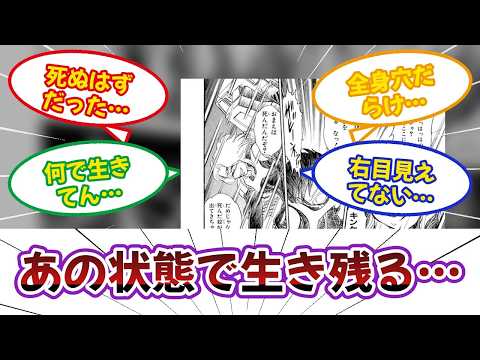
Mobile Suit Crossbone Gundam, serialized between 1994 and 1997, introduced Kincaid Nau as its protagonist—a character fundamentally different from every Gundam hero before him. Rather than fighting for a clear objective or belief system like Amuro Ray or Char Aznable, Kincaid embodies existential uncertainty. His signature line, “Why do we even live?” (何で生きてんだよ?), has become iconic precisely because it strips away the heroic veneer traditionally associated with Gundam protagonists and exposes raw human doubt.
Viewer reactions to this character and his philosophy have been overwhelmingly positive, with audiences praising the series for its willingness to question the very foundations of existence rather than simply presenting another tale of military conflict and ideological struggle.
Why It Matters
Kincaid represents a watershed moment in the Gundam franchise’s thematic evolution. While previous Gundam protagonists grappled with questions of identity, justice, or purpose, Kincaid goes deeper—he questions whether life itself has meaning. This shift reflects broader changes in anime and popular culture during the 1990s, a period when Japan was confronting economic collapse and existential uncertainty.
The character’s impact extends beyond nostalgia. Kincaid’s existential framework has influenced subsequent Gundam series and demonstrates how science fiction can address fundamental philosophical questions. His refusal to accept conventional heroic narratives makes him relevant to contemporary audiences facing their own crises of meaning in an increasingly complex world.
Background
Mobile Suit Crossbone Gundam is set in Universal Century 0133, approximately 100 years after the original Mobile Suit Gundam. By this era, the relationship between Earth and space colonies has become far more complicated than in Amuro’s time. The simple binary of “good versus evil” no longer applies; instead, both factions operate within complex webs of conflicting interests where moral clarity is impossible.
This narrative context is crucial to understanding Kincaid. Unlike Amuro, who was thrust into war but maintained a sense of purpose through his role as a Newtype, or Uso Ewin, who fought against a clear enemy, Kincaid operates in a world where traditional motivations have lost their force. The series was created during a period when the Gundam franchise was actively exploring new thematic directions, moving away from straightforward military narratives toward more introspective character studies.
Key Points
- Kincaid’s “Why do we even live?” represents the most fundamental existential question ever posed by a Gundam protagonist, departing radically from predecessors who fought for concrete objectives
- The character embodies a contradiction: he claims life has no meaning, yet he continues to fight and survive, reflecting the paradox of human existence itself
- Viewer reactions reveal widespread appreciation for Kincaid’s authenticity and vulnerability, with audiences finding his existential doubt more relatable than traditional heroic archetypes
- The series’ complex moral landscape—where Earth-space colony conflict cannot be reduced to simple right-and-wrong—creates narrative space for an existentially questioning protagonist
- Kincaid’s philosophical framework influenced later Gundam series including SEED, SEED DESTINY, and 00, establishing existential inquiry as a central theme in modern Gundam storytelling
- The character’s refusal to find definitive answers to his existential questions mirrors the human condition, making him arguably the most honest protagonist in Gundam history
Comparative Analysis: Kincaid Among Gundam Protagonists
| Protagonist | Series | Primary Objective | Fundamental Question | Character Type |
|---|---|---|---|---|
| Amuro Ray | Mobile Suit Gundam | Combat against Zeon | What is a Newtype? | Reluctant soldier seeking identity |
| Kamille Bidan | Zeta Gundam | Combat against the Titans | What constitutes justice? | Psychologically unstable idealist |
| Uso Ewin | Victory Gundam | Combat against Zanscare Empire | How can war be ended? | Child soldier forced into conflict |
| Kincaid Nau | Mobile Suit Crossbone Gundam | No clear objective | Why do we even live? | Existentially nihilistic yet persistent |
| Kio Asuno | Gundam AGE | Combat against Vegan | What is peace across generations? | Future-oriented idealist |
This comparison reveals Kincaid’s unique position. Every other Gundam protagonist operates from a foundation of purpose—whether imposed by circumstance or chosen through conviction. Kincaid alone questions the premise itself: the value of existence. This fundamental difference makes him both an outlier and, arguably, the most philosophically sophisticated protagonist in the franchise.
The Psychology of Contradiction
What makes Kincaid psychologically compelling is his internal contradiction. He expresses nihilistic doubt—”Why do we even live?”—yet continues to fight, survive, and engage with the world. His rational mind questions existence while his survival instinct drives him forward. This is not weakness or inconsistency; it is the most honest representation of human psychology.
Most people do not possess complete certainty about life’s meaning. Yet most people continue living, working, and struggling. Kincaid embodies this paradox without resolution. Unlike Shinji Ikari from Neon Genesis Evangelion, who spirals into despair when confronted with existential meaninglessness, Kincaid accepts the contradiction and moves forward anyway. This acceptance—rather than either blind faith or complete surrender—represents a mature philosophical stance.
Thematic Evolution in the Gundam Franchise
Mobile Suit Crossbone Gundam marked a turning point in how the Gundam franchise approached philosophical themes. Prior series focused on questions of identity, justice, and purpose. Crossbone Gundam shifted the inquiry to the foundational question of existence itself.
This thematic shift influenced subsequent works. Mobile Suit Gundam SEED (2002) explores why Kira Yamato fights. Mobile Suit Gundam 00 (2007) questions Setsuna F. Seiei’s very identity. Attack on Titan (2013), while not a Gundam series, similarly interrogates freedom and the meaning of existence through Eren Yeager. These works inherit Kincaid’s philosophical framework: the recognition that traditional heroic narratives are insufficient for addressing fundamental human questions.
The 1990s-2000s marked the period when anime began systematically engaging with existential philosophy. Kincaid and Mobile Suit Crossbone Gundam served as a crucial pivot point in this evolution, demonstrating that giant robot narratives could accommodate profound philosophical inquiry.
Contemporary Relevance
Kincaid’s existential question remains urgent in 2024. Contemporary audiences face unprecedented uncertainty: rapid technological change, social fragmentation, climate crisis, and institutional instability. In such an environment, the question “Why do we even live?” is not abstract philosophy—it is lived experience.
Kincaid does not offer false comfort or easy answers. He simply persists in asking the question while continuing to exist. This stance has become increasingly valuable as traditional sources of meaning—stable employment, clear social roles, institutional trust—have eroded. For viewers confronting their own existential doubts, Kincaid’s refusal to pretend certainty is profoundly validating.
Viewer Reception and Cultural Impact
Analysis of viewer reactions reveals three consistent patterns:
First, surprise at unconventional characterization: “A Gundam protagonist saying this?” reflects the shock of encountering a hero who violates genre expectations. This surprise is productive—it forces viewers to reconsider what heroism means.
Second, emotional recognition: Comments like “I’ve felt exactly this way” demonstrate that Kincaid’s existential doubt resonates with personal experience. The character validates viewers’ own unspoken uncertainties.
Third, canonical elevation: Statements such as “This is the greatest line in Gundam history” indicate that audiences recognize Kincaid’s philosophical depth as a genuine achievement, not a flaw or aberration.
These reactions collectively suggest that Kincaid succeeds precisely because he abandons the pretense of heroic certainty. By exposing doubt, vulnerability, and existential confusion, he becomes more human—and therefore more heroic—than characters who maintain unwavering conviction.
The Unresolved Question as Narrative Strength
Notably, Mobile Suit Crossbone Gundam never provides a definitive answer to Kincaid’s central question. He does not discover life’s meaning. He does not achieve enlightenment or resolve his existential crisis. Instead, he carries the question forward, unresolved, to the series’ conclusion.
This refusal to provide closure is not a narrative weakness—it is the series’ greatest strength. Real human existence does not culminate in answers. People live with uncertainty, doubt, and unanswered questions. By refusing to resolve Kincaid’s existential inquiry, the series maintains fidelity to actual human experience.
This approach contrasts sharply with conventional narrative closure. Most stories answer their central questions. Crossbone Gundam instead suggests that the most important questions may be permanently unanswerable—and that living well means accepting this reality rather than demanding false certainty.
Insights
Kincaid Nau represents a watershed in how science fiction addresses fundamental human concerns. By placing existential philosophy at the center of a giant robot narrative, Mobile Suit Crossbone Gundam demonstrated that genre entertainment could accommodate serious philosophical inquiry without sacrificing narrative engagement.
The character’s enduring resonance suggests that audiences hunger for authentic representations of doubt and uncertainty. In an era saturated with confident narratives and heroic certainty, Kincaid’s willingness to ask “Why do we even live?” without pretending to know the answer feels radical and necessary.
Moreover, Kincaid’s persistent action despite existential doubt offers a philosophical model for contemporary life. He does not wait for meaning to arrive before acting. He does not demand certainty before moving forward. He simply continues, carrying his questions with him. This stance—neither blind faith nor paralyzing despair—may be the most mature philosophical position available to modern consciousness.
The Gundam franchise’s subsequent engagement with existential themes confirms that Crossbone Gundam opened a productive new direction. By asking the deepest possible question, Kincaid enabled the entire franchise to think more deeply about what heroism, purpose, and human existence actually mean. In this sense, his existential inquiry became not a limitation but a liberation—freeing the series to explore territories that conventional narratives could never reach.