▶ Watch the original YouTube video
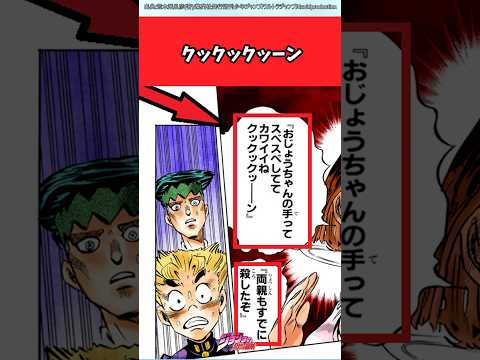
Yoshikage Kira, the primary antagonist of JoJo’s Bizarre Adventure Part 4: Diamond is Unbreakable, stands as one of manga’s most psychologically unsettling villains. Unlike traditional antagonists driven by grand ambitions or ideological goals, Kira’s desire for an ordinary, peaceful life masks a deeply disturbing contradiction—one that resonates with readers on an uncomfortable psychological level.
What Happened
Yoshikage Kira is a serial killer living in the fictional town of Morioh who desperately seeks to maintain a normal, unremarkable existence. Unlike other major JoJo villains, Kira does not pursue power, revenge, or world domination. Instead, he commits murders while simultaneously attempting to hide these acts and blend seamlessly into everyday society. This fundamental contradiction between his violent impulses and his desire for normalcy creates a psychological profile that readers find profoundly disturbing—not because he is obviously evil, but because he appears disturbingly ordinary.
Why It Matters
Kira represents a significant evolution in manga villain design. His character embodies the theme of “abnormality hidden within the everyday,” a concept that would influence countless works in the following decades, including Monogatari, Attack on Titan, and Jujutsu Kaisen. Understanding Kira’s psychological construction reveals how creator Hirohiko Araki crafted a villain whose horror stems not from supernatural powers or grandiose schemes, but from the unsettling recognition that such a person could exist among us. This makes Kira more frightening than traditional antagonists because his threat feels immediate and real.
Background
JoJo’s Bizarre Adventure Part 4: Diamond is Unbreakable ran from 1999 to 2005 and marked a departure from the series’ previous supernatural and globe-trotting narratives. Araki deliberately grounded Part 4 in the everyday life of Morioh, a town modeled after Sendai, Japan, where the creator lived. The series’ central theme became the exploration of normalcy and the hidden abnormalities lurking beneath ordinary suburban life. Yoshikage Kira was designed as the ultimate embodiment of this theme—a killer who seeks to be invisible, unremarkable, and perfectly ordinary.
In interviews from the early 2000s, Araki emphasized that he prioritizes real-world human observation when creating characters. Kira was reportedly inspired by observations of ordinary middle-aged men, making him deliberately mundane in appearance and behavior. This grounding in reality, combined with his psychological contradictions, distinguishes him from earlier JoJo villains like Dio Brando, who openly embraced their villainy.
Key Points
- Psychological Contradiction: Kira’s desire for peaceful normalcy directly conflicts with his compulsion to commit murder, creating an unresolvable internal contradiction that defines his character.
- Concealment as Core Motivation: Unlike typical villains who flaunt their evil, Kira actively hides his crimes and attempts to maintain a facade of ordinariness, making him fundamentally different from other antagonists.
- Incomprehensibility: Readers struggle to fully understand Kira’s psychology precisely because his motivations seem both universal (wanting peace) and utterly alien (justifying murder to achieve it).
- Proximity to Reality: Kira’s ordinariness—his appearance, his job, his hobbies—makes him feel disturbingly plausible, unlike fantastical villains who seem safely removed from reality.
- Thematic Significance: Kira perfectly embodies Part 4’s central theme of abnormality hidden within everyday life, making him the most effective vehicle for exploring this concept.
- Influence on Later Works: Kira’s character design established a template for psychologically complex villains whose horror derives from their apparent normalcy rather than their supernatural abilities.
Comparative Analysis: Kira vs. Other Major Villains
When compared to other prominent manga and anime antagonists, Kira’s disturbing quality becomes clearer:
Light Yagami (Death Note): Light pursues grandiose ambitions—creating a new world through supernatural means. His genius and ideology are comprehensible, even if readers reject his morality. Light’s appeal lies in his intellectual superiority and the philosophical questions his actions raise.
Lelouch vi Britannia (Code Geass): Lelouch seeks revenge and imperial power, motivations rooted in trauma and ambition that readers can understand and even sympathize with. His character arc involves growth and change.
Zeke Yeager (Attack on Titan): Zeke pursues philosophical liberation from suffering. His motivations, while extreme, are intellectually coherent and debatable.
Yoshikage Kira (JoJo Part 4): Kira wants only peace and normalcy—desires universally relatable—yet achieves them through serial murder. His psychology resists complete understanding. He does not grow or change; he remains static in his contradictions. This combination of relatability and incomprehensibility creates maximum psychological discomfort.
The Psychology of Disturbance
Kira’s disturbing quality operates on multiple psychological levels. First, his ordinariness violates reader expectations. Villains are typically “special”—powerful, intelligent, or charismatic. Kira is none of these. He is aggressively average, which creates cognitive dissonance.
Second, his concealment strategy mirrors unconscious social behavior. All humans hide aspects of themselves to function in society. Kira’s explicit, conscious hiding of his true nature forces readers to confront their own social masks and hidden desires, creating uncomfortable self-recognition.
Third, his immutability is unsettling. Most characters change and develop. Kira remains fixed in his contradictions throughout the narrative. This refusal to evolve makes him feel inhuman despite his superficial ordinariness.
Finally, his incomprehensibility is the core source of horror. Readers can rationalize most villains’ behavior by understanding their motivations. With Kira, understanding remains incomplete. This gap between his apparent normalcy and his hidden monstrosity creates persistent unease.
Cultural Context and Influence
Over the past 15 years, anime and manga have increasingly explored the theme of “abnormality within the everyday.” Works like Monogatari, Attack on Titan, and Jujutsu Kaisen all feature characters and concepts that blur the line between the ordinary and the extraordinary. Yoshikage Kira was a precursor to this trend. Part 4 aired from 1999-2005, yet it anticipated aesthetic and thematic directions the industry would pursue for decades.
Kira’s influence extends beyond direct imitation. His character established that a villain’s horror need not derive from power or ideology, but from psychological authenticity and the recognition that such a person could exist in reality. This shifted how creators approached antagonist design, prioritizing psychological realism over spectacular villainy.
Reader Reception and Online Discourse
Online communities consistently describe Kira as the most “creepy” villain they have encountered. Twitter discussions frequently note that Kira’s ordinariness makes him more frightening than supernatural antagonists. Reddit threads in JoJo communities debate whether Kira’s psychology can ever be fully understood, with consensus suggesting that his incomprehensibility is precisely what makes him effective.
YouTube comments on JoJo analysis videos often express that viewers attempted to understand Kira’s psychology but ultimately failed—and that this failure is what makes him the greatest villain in the series. Some viewers report feeling genuine unease when recognizing that such a person could exist undetected in their own communities.
Critical reception has been overwhelmingly positive regarding Kira’s character design. Fans praise his psychological complexity and the precision of Araki’s characterization. Some criticism exists regarding the lack of detailed psychological backstory, with some viewers wishing for deeper exploration of Kira’s origins and trauma. However, this absence may be intentional—maintaining mystery around his psychology reinforces his incomprehensibility.
Insights and Broader Implications
Yoshikage Kira represents the evolution of the manga villain from a figure of spectacle to a figure of psychological authenticity. His horror does not come from supernatural powers or ideological extremism, but from the recognition that abnormality can hide perfectly within normalcy. This insight has profound implications for how we understand both fiction and reality.
Kira’s character suggests that the most dangerous individuals may not be those who openly embrace evil, but those who hide it beneath layers of social conformity. His desire for peace while committing murder reveals a fundamental human contradiction: the gap between our public personas and our private desires. For readers, encountering Kira forces uncomfortable self-examination about the masks we all wear.
The enduring fascination with Kira also reflects contemporary anxieties about hidden threats and the unreliability of appearances. In an era of increasing social surveillance and psychological profiling, Kira’s ability to remain undetected despite his crimes speaks to fears about what might be concealed behind ordinary facades.
Finally, Kira’s influence on subsequent works demonstrates that character design driven by psychological authenticity rather than spectacle can have lasting cultural impact. His legacy suggests that the most memorable villains are not those with the greatest powers, but those whose psychology most effectively challenges reader understanding and comfort.