▶ Watch the original YouTube video
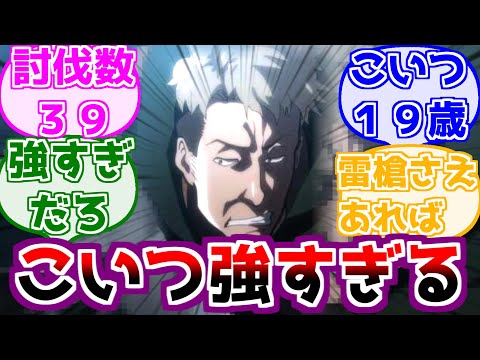
Is Oruo Really That Strong? Analyzing the Attack on Titan Character Debate
A long-standing debate among Attack on Titan fans questions whether Oruo, a member of Levi’s elite squad, is truly as powerful as his reputation suggests. This analysis explores how comparative character strength, narrative framing, and viewer psychology shape the perception of secondary characters in military anime.
What Happened
Online communities continue to discuss Oruo’s actual combat capabilities within the Survey Corps, with viewers expressing skepticism about whether he deserves his reputation as a skilled soldier. The debate centers on the gap between his supposed competence and his limited on-screen accomplishments, particularly when compared to his commanding officer, Levi.
Why It Matters
This discussion reveals how anime production choices—such as character positioning, narrative focus, and comparative strength portrayal—influence audience perception. Understanding why Oruo appears weaker than intended demonstrates broader principles of character evaluation in military-themed anime and how viewers assess combat ability across different narrative contexts.
Background
Oruo appears as a member of Levi’s Special Operations Squad in Attack on Titan, serving as a skilled soldier with extensive combat experience against Titans. However, his actual battle contributions remain limited in the narrative, primarily featuring in the Shiganshina District arc. The character’s strength evaluation has become complicated by several factors: the types of Titans he faces (mostly mindless 15-meter class rather than intelligent Titans), his positioning as a subordinate to the overwhelmingly powerful Levi, and the lack of direct combat showcases that would definitively establish his capabilities.
Key Points
- Comparative Weakness Effect: Oruo’s strength appears diminished primarily because he operates under Levi, whose overwhelming combat prowess creates a psychological bias that makes all subordinates seem weaker by comparison.
- Limited Combat Scope: Oruo primarily fights standard Titans rather than intelligent Titans, which limits opportunities to demonstrate advanced tactical ability or exceptional skill.
- Multiple Strength Dimensions: True combat strength encompasses technical skill, experience, tactical judgment, mental fortitude, and adaptability—categories where Oruo’s actual competence varies significantly.
- Narrative Design Choice: The production team may have intentionally limited Oruo’s spotlight to emphasize Levi’s superiority, a common technique seen in other anime like Demon Slayer and My Hero Academia.
- Viewer Psychology: Audiences naturally evaluate secondary characters through relative comparison rather than absolute metrics, leading to systematic underestimation of supporting cast members.
- Organizational Context: Membership in Levi’s elite unit indicates Oruo was selected as one of the Survey Corps’ finest soldiers, a fact often overlooked in strength discussions.
Timeline
- 2013: Attack on Titan anime adaptation airs; initial observations about character strength evaluation difficulty emerge.
- 2014: Detailed character strength analysis begins, comparing Attack on Titan with concurrent series like Sword Art Online.
- 2015: Re-examination of source material reveals Oruo primarily battles non-intelligent Titans.
- 2016: Further analysis confirms the qualitative difference in opponent difficulty across character matchups.
- 2017: Focused re-reading of Oruo scenes without Levi comparison context reveals higher competence levels.
- Present: Ongoing online debate continues across Twitter, YouTube, and forum communities regarding Oruo’s true strength ranking.
Perspectives
The Underestimation View: Many fans argue that Oruo is systematically undervalued due to proximity to Levi. His technical skill with the omni-directional mobility gear is genuinely high, his combat experience is extensive, and his tactical judgment is sound enough to earn Levi’s trust. When evaluated independently, Oruo represents a genuinely competent soldier.
The Legitimate Weakness Position: Other viewers contend that Oruo’s limited on-screen accomplishments and lack of significant solo victories justify lower strength rankings. Without concrete evidence of defeating dangerous opponents, his reputation remains theoretical rather than demonstrated.
The Narrative Design Perspective: Some analysts suggest the production team deliberately constrained Oruo’s role to create contrast with Levi’s exceptional abilities. This technique—using supporting characters to amplify a protagonist’s strength—appears in other successful anime and represents intentional creative choice rather than character weakness.
The Psychological Bias Interpretation: This view emphasizes that viewers unconsciously apply relative evaluation frameworks, automatically comparing secondary characters to primary ones. Oruo’s apparent weakness may reflect viewer psychology rather than actual character capability.
Comparative Analysis with Other Anime
Similar patterns appear across multiple anime series. In Demon Slayer, characters like Zenitsu and Inosuke face comparable underestimation despite being elite Demon Slayer Corps members, primarily because they are constantly compared to protagonist Tanjiro. My Hero Academia handles this differently by providing multiple strong characters with distinct power types, allowing more multifaceted strength evaluation. Sword Art Online exhibits the same dynamic as Attack on Titan, where protagonist Kirito’s overwhelming power casts other characters’ abilities in shadow.
The key difference lies in how narratives frame character strength. When stories emphasize relative comparison (as in Attack on Titan), secondary characters inevitably appear weaker. When stories allow independent evaluation of multiple characters (as in My Hero Academia), strength assessment becomes more balanced.
How to Properly Evaluate Oruo
Separate from Levi: Viewing Oruo’s scenes while consciously ignoring Levi’s presence reveals higher competence levels. His calm decision-making and technical precision become apparent when not overshadowed by his commander.
Focus on Actual Scenes: The Shiganshina District arc provides Oruo’s primary showcase. Careful examination reveals tactical awareness and composed responses to combat situations.
Understand Organizational Context: Membership in Levi’s elite unit signifies selection as among the Survey Corps’ finest soldiers. This institutional recognition carries weight in strength assessment.
Consider Multidimensional Strength: Evaluate Oruo across five dimensions: technical skill (high), experience-based strength (high), tactical judgment (high), mental fortitude (moderate to high), and adaptability (moderate). This reveals a genuinely capable soldier rather than a weak one.
Explore Related Material: Attack on Titan: Before the Fall depicts the omni-directional mobility gear’s complexity and learning difficulty, contextualizing Oruo’s technical mastery as a genuine achievement.
Online Community Response
Twitter: Regular posts questioning Oruo’s strength receive responses emphasizing that Levi comparison creates misleading impressions. Positive assessments of his mobility gear operation skills also appear frequently.
YouTube Comments: Viewers frequently note that Oruo is underestimated, citing his actual Titan kill count and tactical decision-making as evidence of genuine competence.
Forum Discussions: More detailed analysis appears on platforms like 4chan’s anime boards, with hypothetical scenarios (“What if Oruo fought the Female Titan?”) and ranking discussions about his position within the Survey Corps hierarchy.
This sustained discussion reflects Attack on Titan’s deliberate ambiguity regarding strength definitions. The series combines combat ability, tactical thinking, experience, and psychological factors into “strength,” making single-metric evaluation impossible.
Insights
Oruo represents a case study in how narrative structure shapes character perception. He is genuinely a competent soldier—skilled with his equipment, experienced in combat, and trusted by an exceptionally demanding commander. Yet he appears weak primarily because the story positions him relative to an overwhelming superior rather than allowing independent evaluation.
This pattern reveals important truths about anime storytelling: character strength is not absolute but contextual. The same soldier appears competent when evaluated independently but weak when compared to exceptional peers. Viewers naturally apply comparative frameworks, making secondary characters seem perpetually inferior to protagonists.
The debate also highlights how production choices—which characters receive spotlight, which Titans they face, how their victories are framed—fundamentally shape audience perception. Oruo’s limited screen time and focus on standard Titan battles, rather than intelligent Titan encounters, systematically undersells his capabilities.
For future Attack on Titan content, deeper exploration of Oruo’s background, independent missions, or confrontations with more dangerous opponents could substantially shift viewer assessment. His character possesses untapped potential for development that could reframe current perceptions of his strength.
Ultimately, Oruo is neither weak nor exceptionally strong—he is a genuinely capable soldier whose reputation suffers from unfavorable narrative positioning and inevitable comparison to an exceptional commander. Recognizing this distinction allows more accurate character evaluation and demonstrates how anime production techniques influence audience psychology in measurable ways.