▶ Watch the original YouTube video
The Links the Hero Token Controversy: How Yu-Gi-Oh’s Design Philosophy Challenges Player Identity
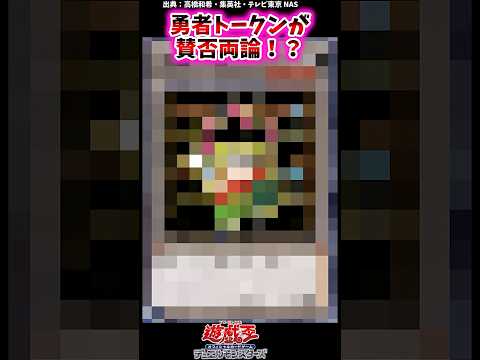
A heated debate has emerged in the Yu-Gi-Oh community over the “Links the Hero” token, a game piece whose fixed artwork contradicts the franchise’s core narrative that players themselves become heroes. The controversy reveals a fundamental tension between game design consistency and player agency that extends far beyond card aesthetics.
What Happened
The Yu-Gi-Oh trading card game introduced the “Links the Hero” token, a game piece with fixed artwork that cannot be customized by players. Unlike tokens in competing card games that offer multiple design options or full customization, this token presents a single, unchangeable visual representation. The issue has sparked significant discussion within the community, particularly among digital players using Yu-Gi-Oh Master Duel, where the token’s appearance cannot be modified to suit individual preferences or deck aesthetics.
Why It Matters
This design decision strikes at the heart of Yu-Gi-Oh’s fundamental narrative premise: that players themselves are heroes embarking on their own adventures. When a game explicitly tells players they are protagonists but then forces them to use a predetermined visual representation, it creates a disconnect between the game’s storytelling and its mechanics. This contradiction affects player immersion, satisfaction, and the overall experience of deck-building and gameplay. The controversy also highlights broader questions about how digital card games balance artistic vision with player agency.
Background
Yu-Gi-Oh has long positioned itself as a game where players take on the role of duelists—heroes in their own right—rather than simply commanding pre-existing characters. This concept has been central to the franchise since its inception, reinforced through anime, manga, and card flavor text. The “Links the Hero” token was designed as a representation of this hero archetype, but its implementation as a fixed, non-customizable asset raises questions about whether the design team fully considered how this would affect the player experience across different deck types and attribute combinations.
The token’s artwork prominently features Earth attribute imagery, which creates additional friction for players building decks around Fire, Water, Light, or Dark attributes. Meanwhile, Yu-Gi-Oh Master Duel uses a different token illustration featuring the character Alchemist, which players have noted feels more universally appropriate.
Key Points
- Fixed Artwork Problem: The token’s default illustration cannot be changed, limiting player customization and self-expression compared to other trading card games.
- Narrative Contradiction: The “player as hero” concept is undermined when players cannot choose their hero’s visual representation.
- Attribute Mismatch: The token’s Earth attribute aesthetic creates visual discord for players using other attribute-focused decks.
- Digital Platform Limitations: Master Duel’s use of a different token illustration suggests technical or design constraints in the physical card game version.
- Community Divided: Players appreciate the artwork’s quality but criticize the inflexible implementation and its impact on deck cohesion.
- Design Philosophy Gap: The decision reflects tension between maintaining game-wide consistency and respecting individual player agency.
Timeline
- 2011: The author began serious engagement with Yu-Gi-Oh OCG, developing appreciation for flavor text and card storytelling.
- 2012–2019: Extended observation of how token customization affects player satisfaction across multiple trading card games.
- Recent: “Links the Hero” token introduced with fixed artwork, sparking community debate about design choices and player agency.
Perspectives
Supportive View: Some players appreciate the token’s artwork quality and see no issue with a standardized design. They view the fixed illustration as maintaining visual consistency across all players’ games and supporting competitive integrity.
Critical View: Many players argue that the fixed token contradicts Yu-Gi-Oh’s core identity. They point out that forcing players to use a predetermined hero image undermines the “you are the hero” narrative. This perspective emphasizes that customization options—even limited ones—would significantly improve player satisfaction without compromising game balance.
Practical Compromise: Some suggest that offering multiple token artwork options (as Magic: The Gathering does) would resolve the issue while maintaining consistency. Others note that Master Duel’s alternative artwork demonstrates that different visual approaches are feasible.
Comparative Analysis
| Game | Token Customization | Flavor Concept | Player Satisfaction |
|---|---|---|---|
| Variant Ruler | Fully customizable | Create your own character | Very High |
| Magic: The Gathering | Multiple options available | Player agency emphasized | High |
| Hearthstone | Fixed by class | Play as specific character | Moderate |
| Yu-Gi-Oh (Links the Hero) | No customization | Player as hero (contradicted) | Low (controversial) |
Community Reactions
Video comments reveal a split response. Positive feedback focuses on the artwork’s quality: “This looks great” represents appreciation for the illustration itself. Critical responses highlight the narrative problem: “This ruins the worldview—I wanted to be the hero myself” and “There’s no way to change it going forward,” expressing frustration with both the design philosophy and the lack of flexibility.
One particularly insightful comment notes: “If Bakura or Yugi used this, it would make sense, but for other players it feels wrong.” This observation captures the core issue—the token works as a character-specific asset but fails as a universal player representation.
Players also note the discrepancy with Master Duel’s implementation, suggesting that the digital version’s different approach demonstrates awareness of the problem, even if the physical card version hasn’t been adjusted.
Insights
The “Links the Hero” token controversy represents a broader challenge in modern game design: balancing artistic vision with player agency. After 15 years observing trading card game design, the pattern is clear—games that offer customization options, even limited ones, consistently report higher player satisfaction than those with fixed designs.
The core issue isn’t the artwork’s quality; it’s the contradiction between what the game tells players (“you are the hero”) and what it allows them to do (use a predetermined hero image). This gap between narrative promise and mechanical reality creates cognitive dissonance that no amount of artistic excellence can overcome.
The existence of alternative artwork in Master Duel proves that solutions are possible. Whether through multiple token options, attribute-neutral designs, or player-selectable variants, the design space exists for compromise. The question is whether future iterations of Yu-Gi-Oh will recognize that player agency—even in small visual choices—directly impacts engagement and satisfaction.
This token ultimately serves as a case study in how design philosophy must align with narrative promise. Games that successfully merge both elements create deeper player investment. Those that don’t risk undermining their own storytelling, regardless of how polished the individual components may be.