▶ Watch the original YouTube video
Baki’s Katsuji Gets a Critical Reassessment: How Fans Are Discovering the Depth Behind the Stoic Father Figure
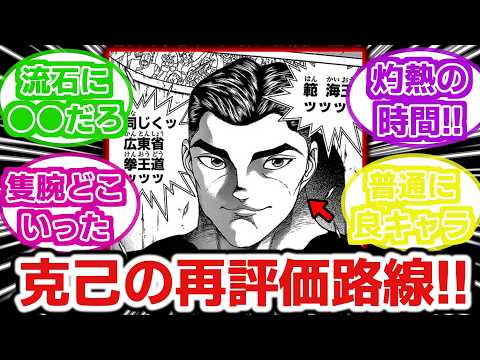
After years of being dismissed as a simple “strong father” archetype, Hanma Katsuji from the Baki series is experiencing a significant critical reevaluation within fan communities. New anime adaptations and deeper character analysis are revealing the psychological complexity and emotional depth that has always existed beneath the surface of this iconic character.
What Happened
Fan communities across Twitter, anime forums, and discussion boards have begun engaging in more nuanced analysis of Hanma Katsuji, the father figure from the Baki franchise. Rather than the simplistic praise of “strong old man” that dominated earlier discussions, contemporary fan discourse now focuses on the psychological motivations, internal conflicts, and parental struggles that define his character. This shift has been particularly accelerated by recent anime adaptations that emphasize the emotional and psychological dimensions of Katsuji’s interactions with his son, Baki.
Why It Matters
The reevaluation of Katsuji reflects a broader maturation within anime fan communities and the industry itself. Over the past five years, the anime medium has increasingly embraced morally ambiguous and psychologically complex characters—as seen in works like Attack on Titan, Jujutsu Kaisen, and Chainsaw Man. This cultural shift has equipped fans with more sophisticated analytical frameworks for understanding character depth. The Katsuji reevaluation demonstrates that fan communities are moving beyond binary evaluations of “good/bad” or “strong/weak” toward more holistic interpretations of character motivation and narrative function. This evolution in critical thinking suggests a maturing audience capable of appreciating nuance in storytelling.
Background
The Baki franchise, which began as a manga series and has since spawned multiple anime adaptations, centers on martial arts competition and character development. Hanma Katsuji, the protagonist’s father, initially appeared as a peripheral character defined primarily by his overwhelming strength and mysterious background. For approximately 13 years, casual viewers and newer fans understood Katsuji as little more than an archetypal “strong father figure”—a common trope in action anime. However, the original manga has gradually revealed deeper layers to his character, particularly in story arcs like the Maximum Tournament arc, where his past, philosophy, and internal conflicts receive more detailed exploration. The 2022-2023 anime adaptations brought this psychological depth to visual life, presenting Katsuji’s scenes with more nuanced emotional direction and careful attention to his internal state.
Key Points
- Fan discourse about Katsuji has shifted from surface-level praise (“strong old man”) to analytical examination of his psychological motivations and parental struggles
- Recent anime adaptations (2022-2023) have emphasized Katsuji’s emotional complexity and internal conflicts more deliberately than earlier versions
- Katsuji’s repeated challenges to his son Baki reflect not merely a pursuit of strength, but an unconscious desire for paternal recognition and validation
- The character embodies moral ambiguity—neither purely villainous nor entirely virtuous—which resonates with contemporary fan preferences for complex characterization
- A notable gap exists between original manga readers (who recognized Katsuji’s complexity earlier) and anime-only fans (who are discovering it now through recent adaptations)
- The reevaluation aligns with industry-wide trends toward appreciating psychologically nuanced characters over simplistic archetypes
Timeline
- Pre-2020: Katsuji primarily discussed in simplistic terms as a powerful father figure; fan commentary focuses on strength and intimidation
- 2020-2021: Gradual increase in analytical discussion of Katsuji’s character; manga readers begin sharing deeper interpretations
- 2022-2023: New anime adaptation releases with enhanced psychological portrayal of Katsuji; analytical commentary accelerates significantly on social media
- 2023 onwards: Reevaluation becomes mainstream within fan communities; discussion shifts toward parental dynamics and emotional complexity
Perspectives
Multiple viewpoints exist regarding Katsuji’s character and the validity of the reevaluation movement. Some fans, particularly those who engaged with the original manga, argue that Katsuji’s complexity has always been present and that the recent reevaluation simply makes previously overlooked depth more visible. Others contend that the character remains relatively underdeveloped compared to other complex father figures in anime, such as Netero from Hunter x Hunter or Hohenheim from Fullmetal Alchemist. A third perspective, emerging from social media analysis, interprets Katsuji and Baki’s relationship as a reflection of contemporary parent-child dynamics and generational conflict. Additionally, some viewers maintain skepticism about the reevaluation, questioning whether Katsuji’s actions—which include selfishness and arrogance alongside parental concern—warrant such positive reassessment. This diversity of interpretation itself serves as evidence of the character’s genuine complexity and multifaceted nature.
Insights
The reevaluation of Hanma Katsuji represents more than a simple shift in character appreciation; it reflects the evolution of fan communities toward greater analytical sophistication. Unlike earlier anime discourse that relied on surface-level categorization, contemporary fan analysis recognizes that compelling characters exist within moral and psychological ambiguity. Katsuji embodies this principle—he is simultaneously a devoted father and a self-centered warrior, a source of inspiration and a source of conflict. This contradiction is not a flaw in his characterization but rather its essential strength.
The timing of this reevaluation is significant. It coincides with a broader industry shift toward embracing narrative complexity and psychological realism. As anime audiences have matured and developed more sophisticated critical frameworks, they have become capable of appreciating characters who defy simple categorization. Katsuji benefits from this cultural moment, but he also exemplifies a principle that applies across the medium: depth often exists in works long before audiences possess the analytical tools to recognize it.
Furthermore, the reevaluation demonstrates the power of adaptation in bringing latent textual elements to prominence. The manga’s subtle psychological details about Katsuji, which required careful reading to fully appreciate, become more immediately apparent when rendered through visual storytelling, voice acting, and directorial emphasis. This suggests that the original creator’s vision regarding Katsuji’s complexity was always present, awaiting the right medium and audience readiness to fully manifest.
The Katsuji reevaluation ultimately affirms that Baki functions not merely as an action series but as a work of human drama. The franchise’s enduring appeal rests not on martial arts spectacle alone, but on its willingness to explore the psychological dimensions of ambition, family, identity, and the search for recognition. Katsuji’s character arc—and the fan community’s growing recognition of that arc’s depth—validates this understanding and suggests that the series’ most significant contributions lie in its portrayal of complex human relationships rather than in combat choreography alone.