▶ Watch the original YouTube video
Hunter x Hunter’s Massive Plot Twist: Everything Was Foreshadowing All Along
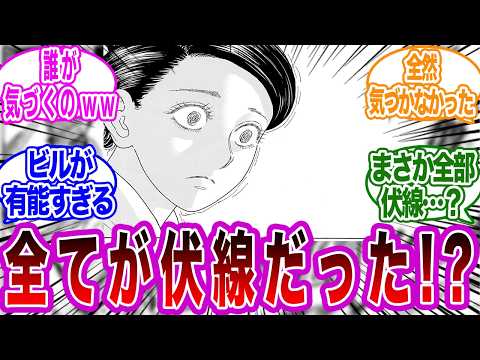
The latest chapter of Hunter x Hunter has revealed a shocking truth: virtually every seemingly insignificant detail from the past two decades was intentional foreshadowing. This discovery has sparked widespread discussion across fan communities, with readers reassessing years of storytelling and praising creator Yoshihiro Togashi’s meticulous narrative architecture.
What Happened
In the most recent chapter of Hunter x Hunter, a major revelation confirmed that numerous plot points and seemingly random scenes scattered throughout the manga’s 20-year serialization were actually carefully planted clues leading to a larger narrative convergence. What fans previously dismissed as confusing or meaningless details have now been recontextualized as essential components of an interconnected story structure. This discovery has reinvigorated fan communities and prompted widespread re-examination of earlier chapters.
Why It Matters
This revelation demonstrates an exceptionally rare level of narrative planning in long-running serialized manga. For a series spanning two decades with multiple extended hiatuses, maintaining such meticulous continuity and foreshadowing is a remarkable achievement. The confirmation validates years of fan theories and analysis while establishing Hunter x Hunter as a masterclass in complex storytelling architecture. This approach also has significant implications for how readers engage with ongoing serialized works, encouraging deeper analysis and repeated readings of previous chapters.
Background
Hunter x Hunter began serialization in 2000 and has become one of the most influential manga series of the 21st century. Creator Yoshihiro Togashi is known for his intricate narrative design, previously demonstrated in works like Level E and Yu Yu Hakusho. The series has experienced multiple extended hiatuses, most notably from 2011 to 2014, which raised questions about narrative continuity. Despite these breaks, Togashi maintained remarkable consistency in plot coherence and character development. The manga’s structure employs multiple narrative layers, with some plot threads spanning years before resolution. Togashi has previously stated in interviews that the series could potentially continue indefinitely, suggesting an intentionally open-ended narrative framework.
Key Points
- The latest chapter revealed that previously ambiguous scenes and descriptions were all intentional foreshadowing elements
- Togashi’s creative philosophy emphasizes that no narrative element is wasted or superfluous
- Multiple seemingly unrelated plot threads have converged into a cohesive larger narrative
- The foreshadowing density and structural complexity are considered exceptional even within the manga industry
- New layers of foreshadowing have been identified, suggesting the narrative complexity continues to deepen
- Fan communities have responded with overwhelming positivity, with many expressing renewed appreciation for the series’ construction
Narrative Structure Analysis
Togashi employs a three-tiered foreshadowing system throughout Hunter x Hunter. The first tier consists of surface-level clues that attentive readers can identify relatively easily, such as character dialogue inconsistencies or behavioral patterns. The second tier comprises deeper foreshadowing elements that typically resolve over dozens of chapters, relating to character backstories and motivations. The third tier operates at a structural level, embedding thematic elements and philosophical questions about humanity and existence into the narrative framework itself.
The recent revelation appears to involve simultaneous resolution of multiple third-tier foreshadowing elements. This multi-layered convergence resembles narrative techniques seen in works like Code Geass and Steins;Gate, though Hunter x Hunter distinguishes itself through the extended timeframe between foreshadowing and resolution—often spanning years rather than episodes. Critically, where other series use foreshadowing resolution to achieve narrative closure, Hunter x Hunter appears to generate new layers of mystery through each revelation, suggesting an intentionally cyclical narrative structure.
Comparative Analysis with Similar Works
| Series | Foreshadowing Density | Resolution Timeframe | Meta-Narrative Elements | Overall Complexity |
|---|---|---|---|---|
| Hunter x Hunter | Exceptional | Years | Highly Developed | Exceptional |
| Attack on Titan | Very High | Years | Moderate | Very High |
| Steins;Gate | Very High | Episodes | Minimal | Very High |
| Code Geass | High | Episodes | Moderate | High |
Hunter x Hunter’s distinguishing characteristic is the combination of exceptionally high foreshadowing density with year-long resolution periods. This approach creates psychological effects unique to long-running serialized works: sustained reader engagement, motivation for re-reading previous chapters, and community-driven analysis and discussion. From a marketing perspective, this structure maintains audience investment across extended publication periods and encourages repeated consumption of back catalog material.
Meta-Narrative Considerations
A particularly intriguing aspect of this revelation is the possibility that Togashi has embedded meta-narrative foreshadowing—where the reader’s experience of confusion and uncertainty mirrors the characters’ experiences within the story. For two decades, fans have questioned the purpose of certain scenes and narrative choices. If these were indeed intentional, then the reader’s act of questioning becomes part of the intended narrative experience itself.
This approach parallels techniques seen in Puella Magi Madoka Magica, where apparent narrative inconsistencies were deliberately designed to create viewer confusion as part of the thematic experience. Togashi may have extended this concept further by incorporating real-world factors—such as the extended hiatuses—into the narrative structure itself. Under this interpretation, readers’ experience of waiting for new chapters would synchronize with characters’ experiences of temporal passage within the story.
This meta-narrative approach aligns with broader industry trends. Recent major series including Attack on Titan’s final arc, Jujutsu Kaisen’s latest developments, and Chainsaw Man’s structural choices all employ techniques that blur boundaries between narrative and reality. If Hunter x Hunter follows this trajectory, it would represent significant evolution in serialized storytelling methodology.
Fan Community Response
Across social media platforms, fan reactions have been overwhelmingly positive. On Twitter, users expressed sentiments like “Togashi really is a genius” and “I can’t believe that scene from years ago connects here.” YouTube comments reflected amazement at the narrative’s complexity, with viewers expressing both satisfaction at their theories being validated and renewed curiosity about what additional foreshadowing remains undiscovered.
On discussion forums, fans engaged in detailed analytical work, identifying specific connections between past and present narrative elements. This community-driven analysis demonstrates the high engagement level the series generates. Even critical voices—expressing concerns about serialization delays and completion uncertainty—maintain respect for the work’s narrative quality.
The psychological impact of this revelation on the fanbase is significant. Readers experience validation of their analytical efforts, increased trust in the creator’s vision, motivation to re-read previous chapters, and heightened anticipation for future developments. This creates a positive feedback loop that strengthens community engagement and long-term audience retention.
Implications for Serialized Storytelling
Hunter x Hunter’s approach to foreshadowing and narrative structure offers important lessons for long-running serialized works. The series demonstrates that maintaining narrative coherence across decades of publication, including extended hiatuses, is achievable through meticulous planning and structural design. The success of this approach—measured by sustained reader interest and critical acclaim—suggests that audiences value narrative complexity and interconnectedness even when immediate gratification is delayed.
However, this approach presents challenges for new readers. The high density of foreshadowing elements and the extended timeframes required for resolution create significant barriers to entry for those beginning the series. Balancing narrative complexity with accessibility remains an ongoing challenge for long-running works employing similar strategies.
The confirmation that “everything was foreshadowing” validates a particular philosophy of storytelling: that every narrative element serves purpose, that reader confusion can be intentional and meaningful, and that long-term planning can create artistic experiences impossible in shorter works. This philosophy has influenced contemporary manga and anime creators, contributing to industry-wide evolution in narrative techniques.
Insights
The revelation that Hunter x Hunter’s seemingly random elements were intentional foreshadowing represents more than a plot twist—it reflects a fundamental philosophy about the nature of storytelling itself. Yoshihiro Togashi appears to view the reader’s experience of confusion, questioning, and eventual understanding as integral to the artistic work. By confirming that years of seemingly meaningless details were actually essential components of a larger design, Togashi validates the analytical efforts of his audience while simultaneously demonstrating that long-form serialized works can achieve levels of narrative sophistication comparable to other artistic mediums.
This approach also suggests that the distinction between “story” and “reader experience” may be artificial. If the act of waiting, questioning, and theorizing is part of the intended narrative, then the work extends beyond the printed page into the lived experience of the audience. This represents a sophisticated evolution in how serialized storytelling can function as an art form.
Looking forward, the revelation that new layers of foreshadowing continue to emerge suggests that Hunter x Hunter’s narrative complexity may be intentionally infinite—or at least far more extensive than currently apparent. This positions the series not as a work moving toward conclusion, but as an ongoing exploration of narrative possibility itself. Whether this represents Togashi’s ultimate vision or simply reflects the organic evolution of a long-running work remains to be seen, but the implications for the future of serialized storytelling are substantial.