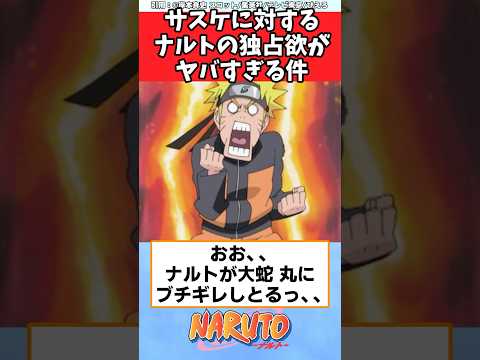
▶ Watch the original YouTube video
Naruto’s Obsessive Possessiveness Over Sasuke Analyzed: A 15-Year Fan Deep Dive Into Manga’s Greatest Rivalry
A viral video has reignited debate about the true nature of Naruto’s attachment to Sasuke, suggesting it transcends typical friendship to reveal a possessive obsession rooted in deeper psychological need. Drawing on 15 years of fan analysis and comparison with similar character dynamics across anime and manga, this examination explores whether the series intentionally portrays a relationship that challenges conventional definitions of rivalry and companionship.
What Happened
A recent video analysis has sparked widespread discussion by arguing that Naruto Uzumaki’s emotional attachment to Sasuke Uchiha extends far beyond friendship or rivalry—it represents a form of possessive obsession. The video identifies specific moments throughout the series where Naruto displays jealousy when Sasuke interacts with other characters, exhibits disproportionate anger at Sasuke’s departures, and demonstrates a need to keep Sasuke exclusively within his emotional orbit. This interpretation challenges the traditional reading of their relationship as a simple “bond between rivals” and suggests the series deliberately portrays a more complex psychological dynamic.
Why It Matters
This analysis matters because it reframes one of manga’s most iconic relationships through a psychological lens that has significant implications for how we understand character development and emotional storytelling in shonen manga. If accurate, it demonstrates that Naruto creator Kishimoto Masashi intentionally crafted a relationship that transcends conventional narrative categories—neither purely antagonistic, nor straightforwardly platonic. This approach has influenced how contemporary manga and anime depict complex human connections, moving away from simplistic binary emotional frameworks toward more nuanced, psychologically grounded character interactions. Understanding this dynamic also provides insight into why the Naruto-Sasuke relationship resonates so deeply with audiences across different demographics and interpretations.
Background
Naruto began serialization in Weekly Shonen Jump in 1999 and quickly established the relationship between protagonist Naruto and rival-turned-ally Sasuke as central to its narrative. From their Academy days through the series’ conclusion, their dynamic evolves through multiple phases: initial rivalry, forced partnership, Sasuke’s defection, Naruto’s obsessive pursuit, and eventual reconciliation. The series spans over 700 chapters and multiple story arcs, providing extensive material to analyze the consistency and intentionality of their emotional connection. The relationship has been subject to fan interpretation and debate since the series’ early years, with various communities proposing different frameworks for understanding what binds these two characters together.
Key Points
- Possessive Obsession Over Friendship: Naruto’s attachment to Sasuke appears rooted in a desire to keep Sasuke exclusively his own, rather than a conventional desire for friendship or rivalry victory
- Consistent Jealousy Patterns: Throughout the series, Naruto displays visible displeasure when Sasuke spends significant time with other characters, particularly Kakashi, suggesting territorial emotional investment
- Disproportionate Emotional Responses: Naruto’s reactions to Sasuke’s departures and potential relationships exceed what would be expected from standard friendship dynamics
- Narrative Consistency: This emotional pattern remains consistent from the Academy arc through the series’ conclusion, suggesting deliberate character design rather than coincidental storytelling
- Psychological Roots in Isolation: Naruto’s initial loneliness and lack of social connections create a psychological foundation for his later possessive attachment to the first person who genuinely acknowledges him
- Industry Influence: This approach to depicting complex emotional relationships influenced subsequent shonen manga, establishing a template for psychologically sophisticated character dynamics
Timeline
- Academy Arc: Naruto and Sasuke’s relationship begins with rivalry and gradually shifts toward acknowledgment and connection
- Early Series (Episodes 1-50): Foundation of their dynamic is established; Naruto begins showing special interest in Sasuke distinct from other teammates
- Sound Four Arc (Episodes 108-109): Sasuke’s abduction triggers Naruto’s most intense emotional response, revealing the depth of his attachment
- Shippuden Era: Naruto’s pursuit of Sasuke becomes the primary narrative driver, with multiple arcs centered on retrieving or confronting him
- Final Arc: The relationship culminates in a final confrontation that forces both characters to confront the true nature of their bond
- Post-Series (Boruto): Their mature relationship is depicted in spin-off materials, showing how their connection evolved into adulthood
Perspectives
The Possessive Obsession Interpretation: This view, supported by the viral video and extensive fan analysis, argues that Naruto’s behavior consistently demonstrates a need to possess Sasuke emotionally. Evidence includes Naruto’s visible displeasure at Sasuke’s closeness with Kakashi, his extreme reactions to Sasuke’s departures, and his inability to accept Sasuke’s independent choices. Proponents note that this interpretation explains otherwise inconsistent character behavior and suggests intentional psychological depth.
The Protective Instinct Perspective: Some analysts argue that what appears possessive is actually protective in nature. From this viewpoint, Naruto’s attachment stems from wanting to save Sasuke from self-destruction and the path of revenge, rather than wanting to control him. This interpretation emphasizes Naruto’s empathy and his understanding of Sasuke’s pain, positioning his actions as heroic rather than obsessive.
The Traditional Friendship Framework: Conventional interpretation maintains that Naruto and Sasuke represent an idealized shonen friendship—two rivals who push each other to grow stronger. This view acknowledges intensity in their relationship but contextualizes it within established narrative conventions of deep bonds between male characters in action manga.
The Romantic Subtext Argument: Some fan communities, particularly on social media, interpret the relationship through a romantic lens, suggesting that Naruto’s possessive behavior mirrors romantic jealousy and attachment. While not explicitly supported by canonical text, this interpretation has gained traction among certain audience segments.
Comparative Analysis With Similar Relationships
Attack on Titan (Eren and Armin): Eren’s attachment to Armin displays similar possessive qualities, though more explicitly framed as controlling behavior. The key difference is that Attack on Titan makes Eren’s possessiveness a character flaw, while Naruto presents Naruto’s attachment more ambiguously.
Demon Slayer (Tanjiro and Nezuko): Tanjiro’s protective obsession with his sister is clearly defined as familial love, providing a contrasting framework. However, the intensity of his need to protect her exclusively mirrors aspects of Naruto’s behavior toward Sasuke, though with explicit emotional context.
JoJo’s Bizarre Adventure (Jonathan and Dio): This relationship encompasses rivalry, enmity, and connection simultaneously, creating a complex emotional system similar to Naruto and Sasuke. Both relationships defy simple categorization and contain elements of obsession, competition, and genuine connection.
Psychological Framework
Attachment theory provides a useful lens for understanding Naruto’s behavior. According to this psychological framework, individuals form intense attachments to people who fulfill fundamental emotional needs. Naruto’s initial isolation—caused by his status as the Nine-Tailed Fox’s vessel—created a profound need for meaningful connection. Sasuke, as the first person to genuinely acknowledge Naruto as an equal, becomes the object onto which Naruto projects his need for exclusive belonging. This psychological mechanism explains the consistency of Naruto’s possessive behavior and his inability to accept Sasuke’s independent choices, as losing Sasuke would recreate the original trauma of isolation.
Creator Intent and Narrative Design
Several elements suggest that Kishimoto Masashi deliberately constructed this psychological complexity. First, the consistency of Naruto’s emotional patterns across 700+ chapters indicates intentional character design rather than accidental characterization. Second, the relationship’s central position in the narrative—with Sasuke’s departures and returns driving major plot arcs—suggests the emotional dynamic was foundational to the story’s structure. Third, the contrast between how Naruto treats Sasuke versus other characters (Shikamaru, Choji, Kiba) is stark enough to indicate deliberate distinction. These factors collectively suggest that the possessive obsession was not incidental but rather a core element of the series’ psychological depth.
Industry Impact and Trends
The Naruto-Sasuke dynamic emerged during a broader shift in shonen manga toward more psychologically complex character relationships. Works like Bleach (2001) and Hunter x Hunter (1998) had already begun moving away from binary moral frameworks, but Naruto deepened this trend by exploring possessive attachment and emotional obsession within a rivalry context. This approach established a template that influenced subsequent major series: Attack on Titan’s exploration of controlling relationships, My Hero Academia’s complex character dynamics, and Jujutsu Kaisen’s morally ambiguous connections all build on foundations that Naruto helped establish. The series essentially redefined what “friendship” could mean in shonen manga, opening space for more psychologically sophisticated emotional storytelling.
Fan Community Response
The viral video has generated diverse reactions across online communities. On Twitter, many fans expressed agreement with the possessive obsession interpretation, with some noting that the relationship transcends typical friendship boundaries. Female fans particularly highlighted romantic undertones in the dynamic. YouTube comments show more resistance, with some arguing the relationship represents only intensified friendship, though counterarguments note that this resistance may reflect psychological discomfort with acknowledging “ugly emotions” in beloved characters.
On forums like 4chan’s anime boards and Reddit’s r/Naruto, more nuanced discussions emerged. Some users distinguished between possessive control and protective obsession, arguing that Naruto’s behavior, while intense, stems from genuine care rather than selfish possession. Others noted that both interpretations could coexist—that Naruto’s desire to protect Sasuke and his possessive need for exclusive connection are not mutually exclusive psychological motivations.
Insights
This analysis reveals that Naruto represents a significant evolution in how shonen manga depicts human connection. Rather than presenting relationships as either purely antagonistic or straightforwardly supportive, the series explores the messy psychological reality that intense emotional bonds often contain elements of possession, jealousy, and need alongside genuine care and support. Naruto’s attachment to Sasuke is neither purely healthy nor purely pathological—it is human in its complexity.
The consistency of this dynamic across the entire narrative suggests that Kishimoto was deliberately exploring how isolation creates attachment, how the first meaningful connection becomes irreplaceable, and how love and possession can become intertwined. This psychological sophistication elevated Naruto beyond typical shonen fare and established a new standard for character development in the genre.
Furthermore, the fact that this interpretation has sparked 15+ years of debate demonstrates the series’ narrative ambiguity—a deliberate choice that allows multiple valid interpretations while maintaining internal consistency. The relationship works as a conventional friendship narrative for readers seeking that framework, while simultaneously supporting deeper psychological readings for those willing to examine subtext and behavioral patterns.
The ultimate significance lies not in determining whether Naruto’s feelings are “really” possessive or protective, but in recognizing that the series presents a relationship complex enough to contain both elements simultaneously. This nuance reflects a maturation in how manga addresses human emotion, moving beyond simplistic categorization toward authentic psychological portrayal. In doing so, Naruto helped establish the template for the psychologically sophisticated character dynamics that now define contemporary shonen manga.