▶ Watch the original YouTube video
When the Producer Collapses: How School Idol Master Characters React to Crisis
A fan-created scenario in School Idol Master depicts the game’s Producer suffering a health emergency, prompting an exploration of how each idol character responds to this critical moment. The scenario raises fundamental questions about the relationship between Producer and idols that have defined the Idol Master franchise for over 15 years.
What Happened
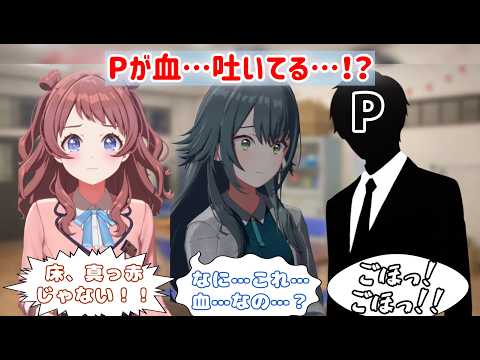
A creative fan video has emerged depicting a crisis scenario in School Idol Master (often called “Gakumas”) where the Producer—the player character responsible for managing and supporting idol careers—suffers a severe health emergency, specifically coughing up blood. Rather than focusing on the Producer’s condition itself, the video centers on how each idol character reacts to this shocking development, revealing their individual personalities, emotional bonds, and psychological responses to seeing their supporter in danger.
Why It Matters
This scenario touches on a core tension that has defined the Idol Master franchise since its 2009 debut: the nature of the relationship between Producer and idols. For 15 years, the series has explored whether the Producer’s dedication to supporting idols is truly sustainable, and whether the relationship is fundamentally unequal. The health crisis scenario forces both characters and players to confront uncomfortable questions about sacrifice, dependency, and mutual support. In an era where video game narratives increasingly humanize previously one-dimensional characters, this scenario represents a significant evolution in how the franchise portrays the Producer as a vulnerable human being rather than an omnipotent guide.
Background
The Idol Master franchise began in 2009 with the Xbox 360 release and has since spawned multiple successful spin-offs including Cinderella Girls, Million Live!, and Shiny Colors. Each iteration has gradually shifted toward portraying the Producer as a more complex character with personal struggles and limitations. Idol Master 2 (2011) first introduced scenarios where the Producer experiences stress-related health problems. Shiny Colors (2018) further developed this theme by depicting the Producer managing multiple idol groups under extreme pressure. School Idol Master continues this evolution by presenting an extreme scenario that forces idols to confront the physical consequences of the Producer’s dedication.
The scenario also reflects broader industry trends in idol-themed games, where Producers are increasingly depicted as independent characters with their own agency and vulnerabilities, rather than silent player avatars.
Key Points
- Crisis as narrative device: The Producer’s health emergency serves as a mechanism to examine the true nature of Producer-idol relationships and test the depth of their bonds.
- Character differentiation: Each idol responds differently based on their personality, values, and relationship history with the Producer, revealing distinct psychological profiles.
- Three core emotional responses: Idols typically experience guilt (recognizing the Producer sacrificed for them), love confirmation (proof of the Producer’s genuine care), and helplessness (inability to protect their supporter).
- Relationship asymmetry: The scenario highlights the historically one-sided nature of Producer-idol dynamics, where support flows primarily in one direction.
- Fan creative expression: The scenario represents how fan communities use extreme hypotheticals to explore themes the official narrative may not directly address.
- Humanization of the Producer: By depicting physical vulnerability, the scenario emphasizes that the Producer is human and has limits, contrasting with earlier franchise portrayals.
Comparative Analysis
Love Live! Series: While Love Live! depicts supporting characters who sacrifice for idols, it rarely shows physical health crises. Instead, it focuses on emotional and spiritual challenges. The Producer figure is less prominent in Love Live! narratives compared to Idol Master, making the crisis scenario less central to the overall story.
IDOLiSH7 (Idolish Seven): This franchise frequently depicts the Producer managing multiple groups under severe stress, with clear portrayals of overwork and exhaustion. However, Idol Master’s “coughing blood” scenario represents a more extreme visualization of the same theme of Producer burnout.
Idol Master Shiny Colors: Shiny Colors most closely parallels the School Idol Master scenario, as it extensively depicts the Producer under extreme pressure while establishing a new production company. Both works explore whether the Producer’s dedication can be sustained indefinitely.
Psychological Mechanisms at Play
The scenario reflects three primary psychological mechanisms in how idols respond to Producer crisis:
Guilt and Responsibility: Idols recognize that the Producer has exhausted themselves for the idols’ benefit, triggering feelings of guilt and moral responsibility. This dynamic exposes the fundamentally asymmetrical nature of the Producer-idol relationship.
Love Confirmation: The Producer’s willingness to sacrifice to the point of physical collapse serves as undeniable proof of genuine care and commitment. For idols, this confirmation of love creates a desire to reciprocate with equal devotion.
Powerlessness: Faced with the Producer’s crisis, idols confront their inability to protect or save the person who has always protected them. This reversal of roles creates psychological stress and a desire to find ways to support the Producer in return.
Possible Narrative Directions
The scenario opens several potential story paths. First, idols could collectively decide to support and protect the Producer in return, reversing the traditional dynamic. Second, the Producer might acknowledge personal limits and accept that infinite self-sacrifice is impossible. Third, and most significantly, the relationship could evolve from one-directional support to mutual, reciprocal care—a fundamental shift in the franchise’s core dynamic.
Based on 15 years of Idol Master storytelling patterns, the third direction appears most likely, as the franchise’s central theme has always been mutual growth between Producer and idols.
Community Response
Fan reactions have been mixed but largely thoughtful. Many fans expressed appreciation for the scenario’s exploration of Producer-idol relationships, with comments like “The Producer truly is loved” and curiosity about how idols would respond. Others raised concerns about whether the scenario normalizes unhealthy work dynamics, drawing parallels to real-world labor issues like overwork and burnout.
On YouTube and Twitter, fans engaged seriously with the scenario’s implications, discussing whether the Producer-idol relationship should evolve toward greater equality and mutual support. This response reflects how fan communities use creative scenarios not merely for entertainment, but as a means to examine and critique the narratives they engage with.
Insights
The School Idol Master health crisis scenario represents a maturation of the Idol Master franchise’s central question: what does a healthy, sustainable relationship between Producer and idols actually look like? Over 15 years, the series has gradually acknowledged that the Producer is human and fallible. This scenario pushes that acknowledgment to its logical extreme.
The scenario’s power lies not in the crisis itself, but in what it forces characters and players to confront: that genuine relationships require mutual care, not one-directional sacrifice. If School Idol Master follows through by depicting idols genuinely supporting and protecting the Producer in return, it would mark a significant evolution in how the franchise conceptualizes its core relationship.
Ultimately, the scenario demonstrates how fan communities use creative “what-if” scenarios to explore themes of love, sacrifice, responsibility, and reciprocity. By imagining extreme situations, fans test the depth of their emotional investment in characters and examine whether the narratives they love truly reflect healthy, sustainable human relationships.