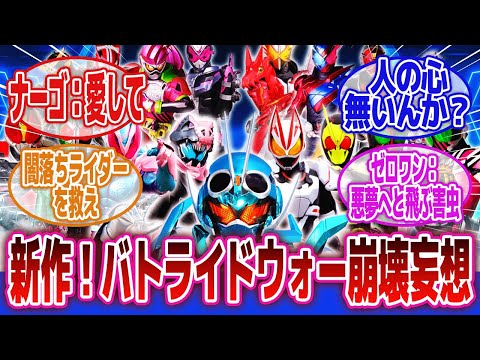
▶ Watch the original YouTube video
The announcement of “Kamen Rider Battride War Collapse” has sparked significant online discussion about the state of the Kamen Rider gaming market. The title itself reflects a broader crisis in console gaming adaptations, as the franchise has shifted toward mobile games while struggling to maintain relevance in the home console space.
What Happened
Bandai Namco announced the upcoming release of “Kamen Rider Battride War Collapse,” the latest entry in the long-running Battride War series. The announcement has generated considerable debate within the Kamen Rider fan community, with the provocative title itself becoming a focal point of discussion. The news comes at a time when the franchise’s gaming strategy has undergone significant shifts, particularly regarding the balance between mobile and console gaming platforms.
Why It Matters
The Battride War series has been a cornerstone of Kamen Rider gaming for over 15 years, serving as the primary console gaming experience for fans. The current state of the franchise reflects broader industry trends affecting how major entertainment properties adapt to changing gaming markets. The announcement reveals critical questions about the franchise’s future direction and its ability to compete in an increasingly mobile-dominated gaming landscape. For longtime fans and industry observers, this represents a pivotal moment that could determine whether the series can recover or if it represents the beginning of a permanent decline.
Background
The Battride War franchise began in 2009 with the PlayStation 3 release of the original title, which allowed players to control every Kamen Rider from the Showa and Heisei eras. The series achieved significant commercial success with its sequel in 2011, establishing itself as the definitive console gaming experience for Kamen Rider fans. However, the landscape shifted dramatically with the rise of mobile gaming. Starting with the Reiwa era (2019 onwards), featuring riders like Zero-One, Saber, Revice, and Geats, the franchise’s gaming strategy pivoted heavily toward smartphone titles, with games like “Kamen Rider Battle Rush” and era-specific mobile games becoming the primary focus. Meanwhile, new Battride War console releases became increasingly infrequent, with longer gaps between announcements and declining fan anticipation.
Key Points
- “Battride War Collapse” has generated significant online discussion, with the title itself becoming a subject of analysis and interpretation
- The Kamen Rider gaming market has experienced a fundamental shift from console-focused to mobile-focused strategy over the past 15 years
- Fan reactions reveal three distinct groups: pessimists expecting series termination, cynics interpreting the title as a reflection of reality, and nostalgic fans longing for the Heisei-era gaming experience
- The Reiwa-era Kamen Riders (Gachard, Geats, etc.) have been primarily adapted for mobile platforms rather than console games, frustrating fans who prefer traditional gaming experiences
- Unlike comparable franchises such as Gundam and Ultraman, Kamen Rider has failed to maintain parallel development of both mobile and console titles
- Fan communities are actively discussing the franchise’s future direction, with many expressing preference for new games featuring classic Showa and Heisei riders over adaptations of recent series
Timeline
- 2009: Original “Kamen Rider Battride War” launches on PlayStation 3, featuring all Showa and Heisei era riders
- 2011: “Battride War 2” releases, achieving higher sales than the original
- 2012-2015: Mobile gaming platforms emerge as dominant force; official Kamen Rider smartphone games begin proliferating
- 2015: “Battride War Genesis” releases; console gaming market begins showing signs of decline
- 2019-2024: Reiwa era begins; gaming strategy shifts almost entirely to mobile platforms for new riders (Zero-One, Saber, Revice, Geats, Gachard)
- 2024: “Battride War Collapse” announced, sparking widespread fan discussion and concern
Perspectives
Pessimistic View: Many fans interpret the title and announcement as a sign that the series is ending. Comments on Twitter and YouTube reflect concerns that “Battride War” may not receive future installments, with the franchise effectively concluding.
Cynical Interpretation: Some fans view the title as deliberately ironic, suggesting that developers have acknowledged the series’ decline and are making a self-aware statement about market realities. These fans see the title as an admission of defeat rather than a creative choice.
Nostalgic Perspective: A significant portion of the fanbase expresses longing for the original Battride War era, when console games were the primary gaming platform. These fans argue that the excitement and quality of the original experience has never been replicated in subsequent releases or mobile adaptations.
Strategic Analysis: Industry observers note that Kamen Rider’s gaming strategy differs markedly from comparable franchises. While Gundam and Ultraman maintain parallel development of both mobile and console titles, Kamen Rider has concentrated resources almost exclusively on mobile platforms for new content, leaving console gamers dependent on the aging Battride War series.
Comparative Analysis: Kamen Rider vs. Gundam and Ultraman
A comparison with other major tokusatsu and anime franchises reveals significant strategic differences. Gundam continues to release regular console titles such as “Mobile Suit Gundam Divers” (2023, Nintendo Switch) while maintaining multiple active mobile games. Ultraman similarly released “Ultraman New Generation Stars” (2022, Nintendo Switch) alongside mobile offerings. In contrast, Kamen Rider’s console gaming presence has contracted to essentially one series—Battride War—while mobile games dominate new rider adaptations. This divergence suggests that Kamen Rider may have underestimated continued demand for console gaming experiences or failed to allocate sufficient resources to meet that demand.
| Franchise | Mobile Games | Console Games | Latest Release (2023-2024) |
|---|---|---|---|
| Gundam | Multiple active titles | Regular new releases | Divers (Switch) |
| Ultraman | Multiple active titles | Regular new releases | New Generation Stars (Switch) |
| Kamen Rider | Multiple active titles | Battride War series only | Battride War Collapse (announced) |
Mobile Gaming Dominance and Its Consequences
The shift toward mobile gaming represents a fundamental change in how Kamen Rider games are designed and monetized. The original Battride War offered a complete gaming experience through a single purchase, with all content available from launch. Modern mobile adaptations, by contrast, rely heavily on gacha mechanics and continuous monetization models. While this approach has become industry standard across anime and tokusatsu franchises—evident in games based on “Demon Slayer,” “Jujutsu Kaisen,” and “Attack on Titan”—the concentration of Kamen Rider resources in this space has left console gamers underserved. The prioritization of monetization efficiency over core gameplay quality represents a departure from the design philosophy that made the original Battride War successful.
Fan Community Fragmentation
Online reactions to the announcement reveal a fractured fanbase with divergent expectations. The absence of a unified response suggests that the franchise has lost the cohesive appeal it once possessed. Younger fans who grew up with mobile gaming may view console titles as outdated, while longtime fans who experienced the original Battride War era view mobile games as inferior substitutes. This generational and platform-based divide complicates any unified marketing or development strategy, making it difficult for the franchise to satisfy all segments simultaneously.
Insights
The announcement of “Battride War Collapse” represents more than a simple game release; it symbolizes a critical juncture for the Kamen Rider gaming franchise. The provocative title suggests that developers are aware of the series’ declining relevance and market position, yet remain committed to attempting a revival. However, the current trajectory suggests that structural changes may be necessary for genuine recovery.
The core issue is not mobile gaming itself, but rather the abandonment of console gaming as a parallel platform. Gundam and Ultraman demonstrate that franchises can successfully maintain both markets simultaneously. Kamen Rider’s failure to do so has created a vacuum where console gamers feel neglected, driving nostalgia for the Heisei era and generating skepticism about new releases.
For the franchise to move beyond “collapse” toward genuine renewal, three strategic shifts appear necessary: first, establishing parallel development of both mobile and console titles; second, prioritizing core gameplay innovation over monetization mechanics; and third, engaging directly with fan communities to understand what they actually want—which, based on online discussions, appears to be new games featuring classic Showa and Heisei riders rather than adaptations of recent series.
The title “Collapse” may ultimately prove prophetic or ironic, depending on whether the franchise can execute meaningful strategic changes. For now, it stands as a stark acknowledgment of market realities that the Kamen Rider gaming division can no longer ignore.