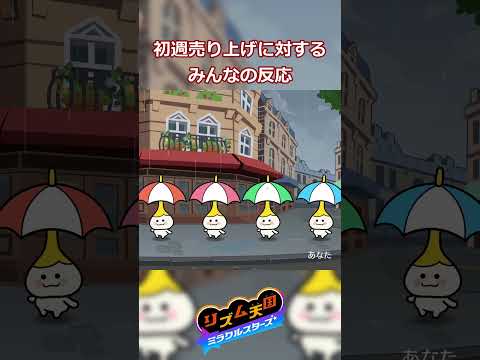
▶ Watch the original YouTube video
Rhythm Heaven Miracle Stars First-Week Sales: Analyzing the Gap Between Revival Expectations and Market Reality
Nintendo’s Rhythm Heaven Miracle Stars launched with first-week sales that industry analysts describe as “passing grade” performance—a mixed result that reveals both the enduring appeal of the classic series and the challenges it faces in today’s competitive Switch market. The release sparked debate online about whether nostalgia alone can sustain long-term success for a revived franchise.
What Happened
Rhythm Heaven Miracle Stars, the long-awaited revival of Nintendo’s beloved rhythm game series, launched on Nintendo Switch in 2024 with first-week sales figures that have generated mixed reactions across the gaming community. While the numbers represent a respectable debut for a niche genre title, they fall short of the blockbuster expectations some had for a series comeback after years of dormancy. Social media and gaming forums have filled with both celebratory posts from longtime fans and disappointed comments from those who anticipated stronger commercial performance.
Why It Matters
The commercial performance of Rhythm Heaven Miracle Stars carries significance beyond simple sales figures. It reflects broader trends in the gaming industry: the viability of reviving dormant franchises, the changing landscape of casual gaming on modern platforms, and how nostalgia-driven releases perform against today’s competitive software lineup. The game’s reception also signals whether rhythm games—a genre that has seen renewed interest through titles like Beat Saber and Project DIVA—can reclaim mainstream relevance. For Nintendo, the results will likely influence future decisions about which classic series warrant revival investments.
Background
Rhythm Heaven first launched on Nintendo DS in 2008 and became a cultural phenomenon, praised for introducing innovative rhythm-based gameplay to mainstream audiences. The series achieved remarkable success across multiple platforms: the original DS version and Rhythm Heaven Gold each sold over one million copies, establishing the franchise as a casual gaming staple. However, subsequent releases showed declining sales—Wii U’s Rhythm Heaven: The Best+ reached approximately 500,000 units, while the 3DS entry, Rhythm Heaven Megamix, sold around 300,000 copies. This downward trajectory reflected the series’ gradual shift from mainstream casual title to niche offering.
The gaming landscape has transformed significantly since the DS era. Modern Switch titles compete in a crowded marketplace dominated by major franchises like The Legend of Zelda, Splatoon, and Pokémon. Additionally, player expectations have evolved—contemporary games increasingly emphasize long-term engagement through seasonal content, online multiplayer, and progression systems rather than single-playthrough experiences.
Key Points
- Rhythm Heaven Miracle Stars achieved first-week sales classified as “passing grade” performance within industry standards, though below some pre-launch expectations for a series revival
- The game’s debut reflects the reality of the modern Switch market, where even established franchises face intense competition from major titles
- Online reactions reveal a split between longtime fans celebrating the series’ return and skeptics questioning whether initial sales momentum will sustain
- The rhythm game genre has experienced renewed interest through VR titles and other music-based games, creating a more favorable environment than previous years
- Nintendo’s decision to emphasize multiplayer features in Miracle Stars reflects current market trends favoring social gaming experiences
- Long-term success will depend heavily on player retention rates and word-of-mouth momentum beyond the launch window
Timeline
- 2008: Original Rhythm Heaven launches on Nintendo DS, becomes critical and commercial success
- 2009-2012: Series peaks with Rhythm Heaven Gold and subsequent releases
- 2015-2016: Sales decline with Wii U and 3DS entries
- 2024: Rhythm Heaven Miracle Stars launches on Nintendo Switch with mixed commercial reception
Perspectives
Industry Analysts and Gaming Media: Professional gaming commentators have largely characterized the first-week performance as a qualified success, noting that the game exceeded expectations given the series’ long absence and the niche nature of rhythm games. They emphasize that the title’s performance must be evaluated within the context of Switch market saturation and the franchise’s historical sales decline.
Longtime Fans: Series veterans express genuine enthusiasm about the franchise’s return, with many sharing nostalgic memories of the DS era. YouTube comments and fan communities reflect emotional investment in the revival, with players celebrating the return of familiar characters and gameplay mechanics.
Skeptical Observers: Some gaming forum participants and social media users express disappointment, citing the absence of the cultural phenomenon status the series once enjoyed. Critics argue that the game represents a “greatest hits” compilation rather than a bold new direction, and question whether nostalgia alone can sustain interest beyond launch week.
Market Comparisons: When evaluated against comparable titles, Rhythm Heaven Miracle Stars’ performance becomes more contextualized. Mario Party Superstars, another nostalgia-driven party game released in 2021, achieved similar first-week sales of approximately one million units. However, that title also experienced sales decline in subsequent weeks, suggesting that nostalgia-driven games face inherent challenges in maintaining momentum.
Insights
The first-week performance of Rhythm Heaven Miracle Stars illuminates several important truths about modern game publishing. First, nostalgia remains a powerful commercial force—the game’s ability to generate sales despite years away from the market demonstrates that beloved franchises retain audience loyalty. However, nostalgia alone proves insufficient for blockbuster success in today’s market.
Second, the game’s results underscore how dramatically the gaming landscape has shifted since the DS era. What was once a mainstream casual phenomenon has become a specialized offering competing against entertainment juggernauts. The Switch market’s maturity and saturation mean that even established franchises must work harder to capture consumer attention and spending.
Third, the emphasis Nintendo placed on multiplayer features in Miracle Stars reflects genuine market intelligence. Modern gaming success increasingly depends on social connectivity and shared experiences. The decision to enhance multiplayer functionality suggests Nintendo understands that single-player, completion-focused games face headwinds in retaining players long-term.
Looking forward, the critical metric will not be first-week sales but rather the game’s ability to maintain player engagement and generate positive word-of-mouth momentum. Casual games historically experience sharp sales drops after launch, making post-launch retention crucial. If Rhythm Heaven Miracle Stars can sustain a dedicated player base and attract new audiences through social sharing and positive reviews, it could exceed initial expectations. Conversely, if sales decline sharply in weeks two through four, the revival may be remembered as a nostalgic curiosity rather than a franchise renaissance.
The broader implication extends beyond a single game: Rhythm Heaven Miracle Stars serves as a case study in how legacy franchises navigate modern markets. Success requires more than dusting off beloved intellectual property—it demands thoughtful adaptation to contemporary player expectations, platform capabilities, and competitive realities. For Nintendo and other publishers considering franchise revivals, the Rhythm Heaven data provides valuable lessons about the limits of nostalgia and the necessity of meaningful innovation.