▶ Watch the original YouTube video
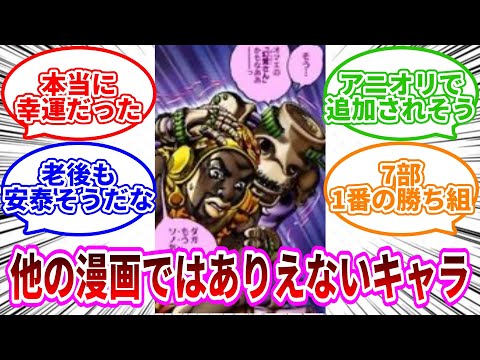
A compelling analysis of why Pocoloco, a seemingly minor character in JoJo’s Bizarre Adventure Part 7: Steel Ball Run, has become recognized by fans as the true victor of the race. Unlike the protagonist Johnny Joestar, Pocoloco achieves victory without harming others, redefining what “winning” means in manga storytelling.
What Happened
In Steel Ball Run, Pocoloco emerges as an unexpected victor in a cross-continental horse race. While the narrative focuses on protagonist Johnny Joestar’s struggle and his companion Gyro Zeppeli’s role in the competition, Pocoloco quietly completes the race and wins without directly engaging in the conflicts and conspiracies that consume the other major characters. His Stand ability, “Love Train,” allows him to deflect misfortune away from himself, but more importantly, he never actively harms anyone in pursuit of victory.
Why It Matters
Pocoloco’s victory challenges fundamental assumptions about what constitutes “winning” in manga and anime narratives. Traditionally, protagonists achieve victory through combat, overcoming adversaries, or making significant sacrifices. Pocoloco’s path—remaining uninvolved in the larger conspiracies, maintaining a positive attitude, and simply continuing forward—presents an alternative definition of success. This reframing has resonated deeply with fans and critics, sparking discussions about the nature of victory, morality in competition, and character development beyond conventional heroic archetypes.
Background
Steel Ball Run is the seventh installment of JoJo’s Bizarre Adventure, following Johnny Joestar, a former jockey paralyzed from the waist down, as he enters a 6,000-kilometer horse race across North America. The race serves as the backdrop for a complex narrative involving presidential conspiracies, rival Stand users, and Johnny’s personal journey from despair toward spiritual recovery. Pocoloco, introduced as a minor character, participates in the same race but remains largely detached from the central conflicts. His characterization emphasizes optimism, luck, and an unwavering commitment to moving forward without engaging in unnecessary conflict.
Key Points
- Harmlessness as a Victory Condition: Pocoloco never directly harms anyone during the race, distinguishing him from other characters whose victories come at the cost of lives or suffering.
- Strategic Avoidance of Conflict: Unlike Johnny and Gyro, who become entangled in the President’s conspiracy and confrontations with Diego Brando, Pocoloco remains independent and uninvolved in these larger conflicts.
- Dual Nature of Victory: The first 60 days of the race benefit from his Stand ability’s luck-based protection, while the final 30 days rely on pure physical endurance and mental fortitude.
- Positive Mindset as Strength: Pocoloco’s optimistic personality and unwavering determination to continue forward, rather than combat prowess, define his character and enable his success.
- Contrast with Johnny’s Journey: While Johnny’s narrative represents a progression from despair (minus) to neutrality (zero), Pocoloco’s story demonstrates a parallel path of maintaining and extending positivity without internal struggle.
- Narrative Subversion: Pocoloco’s victory occurs almost incidentally to the main plot, challenging the expectation that significant character arcs must be explicitly resolved or celebrated.
Perspectives
Fan Interpretation: Online reactions highlight Pocoloco’s victory as morally superior to traditional manga victories. Comments emphasize that “he didn’t make anyone unhappy” and that his luck, combined with his positive attitude, allowed him to succeed without the moral compromises other characters made. Fans note that his ability to avoid the conspiracies surrounding the race was itself a form of luck—the greatest luck being uninvolvement in unnecessary conflict.
Narrative Analysis: From a structural perspective, Pocoloco’s minimal presence in the latter half of the story is not a narrative weakness but a statement. His fade into the background after achieving his goal—simply reaching the finish line—contrasts sharply with the elaborate resolutions given to other characters. This simplicity underscores the purity of his victory.
Thematic Interpretation: Steel Ball Run presents multiple definitions of victory simultaneously. Johnny’s journey represents transformation through suffering—moving from a state of despair toward spiritual recovery. Pocoloco’s journey, by contrast, demonstrates that victory is possible without internal struggle or external conflict. Both paths are valid, and their coexistence enriches the work’s philosophical depth.
Insights
Pocoloco’s recognition as the “true winner” reflects a broader shift in how audiences evaluate success in storytelling. Rather than measuring victory solely through combat, sacrifice, or dramatic transformation, fans increasingly appreciate characters who achieve their goals through consistency, positivity, and ethical restraint. This perspective aligns with contemporary discussions about competitive success in real life—the recognition that winning without harming others, and maintaining one’s integrity throughout the process, represents a form of victory that transcends conventional metrics.
The character also embodies a philosophical stance toward fate and fortune. While his Stand ability provides luck-based protection, Pocoloco’s true strength lies in his refusal to be defeated by circumstance. His optimism is not naïveté but a deliberate choice to move forward regardless of obstacles. This distinction—between passive luck and active positivity—elevates Pocoloco from a mere beneficiary of fortune to an agent of his own success.
Furthermore, Pocoloco’s story validates an alternative to the protagonist’s arc. In most narratives, the main character’s struggle and growth form the emotional core. Steel Ball Run demonstrates that a secondary character’s quiet persistence and ethical consistency can be equally meaningful. This narrative choice suggests that not all victories require dramatic confrontation, and that sometimes the most profound success is the one that goes largely unnoticed—a victory achieved simply by continuing to move forward.