▶ Watch the original YouTube video
One Piece Chapter 1188: Why Luffy’s Defeat Shocked International Fans
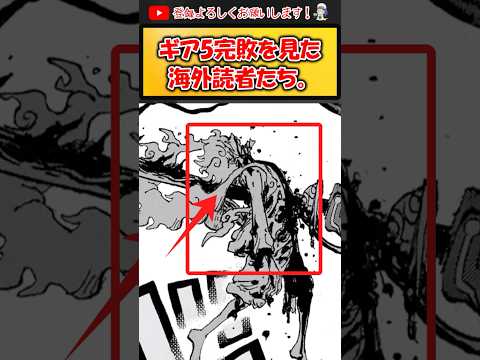
One Piece Chapter 1188 delivered a shocking moment: Luffy suffered a decisive defeat at the hands of Im, pierced through the chest in a single chapter. This unexpected turn has sparked intense debate among international fans, raising fundamental questions about the nature of Luffy’s power, his identity as a character, and what comes next for the series.
What Happened
In Chapter 1188, Luffy faces Im and is pierced through the chest—a decisive defeat that occurs in a single chapter. This marks the first clear loss for Luffy since becoming one of the Four Emperors. Im’s statement, “Joy Boy would never be this weak,” adds another layer of complexity, suggesting that Luffy’s power may be constrained by his identity as a vessel for the Nika myth rather than as an individual.
The chapter has triggered widespread discussion across international fan communities, from Reddit’s r/OnePiece to YouTube comment sections and Twitter, where the phrase “a god who couldn’t last one chapter” became a trending observation.
Why It Matters
This defeat represents a fundamental shift in One Piece’s narrative structure. For 15 years, Luffy has been portrayed as a protagonist who overcomes adversity through determination and growth. His defeat is not merely a dramatic moment—it signals a potential turning point in the story’s thematic direction.
The significance lies in what Im’s words imply: Luffy may not be fighting as himself, but as a manifestation of the Nika myth. This raises essential questions about individual agency versus predetermined destiny, a theme that has underpinned One Piece’s exploration of freedom and personal will.
International fans have recognized this as more than a temporary setback. Many view it as a signal that the series is entering its final arc, where the protagonist must confront not just external enemies, but the very nature of his own existence.
Background
Luffy’s journey has been marked by numerous defeats throughout the series, but these losses typically served as stepping stones toward growth. His early loss to Crocodile in the Alabasta arc, for example, forced him to develop new strategies and understand the true cost of his ambitions.
However, the current defeat differs in quality. Luffy is no longer a rookie pirate—he is an Emperor-level fighter who has conquered numerous formidable opponents. A single-chapter loss at this stage of the narrative suggests something more profound than a conventional battle setback.
The introduction of Im as an antagonist has gradually revealed the existence of forces beyond even the Four Emperors. Im’s statement about Joy Boy introduces the concept that Luffy’s current power may be limited or constrained by his role as a reincarnation or vessel, rather than representing his true potential as an individual.
Key Points
- Luffy’s chest is pierced by Im: A direct, decisive defeat that mirrors the structural pattern of his loss to Crocodile, suggesting narrative circularity and thematic resonance.
- Im’s critique of Luffy’s power: The statement “Joy Boy would never be this weak” implies that Luffy’s identity as Nika may be limiting rather than empowering him.
- The collapse of the “undefeated myth”: International fans identified this as the most shocking element—the shattering of Luffy’s previously unassailable status as an Emperor.
- Structural parallels with past defeats: The method of defeat echoes Luffy’s earlier loss to Crocodile, suggesting the narrative is employing cyclical storytelling patterns.
- The emergence of “survival theories”: Fan communities have developed theories about Luffy’s potential survival based on his rubber physiology, particularly the idea that he could control his own heartbeat.
- Implications for the series’ endgame: The defeat signals that One Piece is transitioning toward its final narrative phase, where fundamental questions about identity and freedom will be resolved.
Structural Analysis: The Quality of Defeat
The nature of Luffy’s defeat distinguishes it from previous losses in the series. Earlier defeats functioned as catalysts for growth—they were obstacles to overcome through increased strength or tactical innovation. This defeat, by contrast, appears to question the very foundation of Luffy’s identity.
Im’s words suggest a fundamental disconnect between Luffy as an individual and Luffy as a vessel for the Nika myth. This echoes narrative patterns seen in other long-running series, where protagonists must ultimately reclaim their individual agency from larger mythological or predetermined frameworks.
The parallel structure with the Crocodile fight is particularly significant. Both defeats involve Luffy being pierced through the chest, yet they occur at vastly different points in his journey—one at the threshold of the Grand Line, the other after achieving Emperor status. This cyclical structure suggests that Luffy’s journey involves repeated confrontations with the nature of his own power and identity.
Fan Theories and Interpretations
The Survival Hypothesis: International fans have proposed that Luffy may not be truly dead, citing his rubber physiology. The theory suggests that as a rubber human, Luffy could theoretically control his own heartbeat or use his unique biology to survive what would be fatal to others. While creative, this interpretation risks overlooking the narrative significance of the defeat itself.
The Identity Reclamation Arc: A more thematically coherent interpretation suggests that Luffy must be freed from the Nika myth to become truly himself. This reading aligns with One Piece’s central theme of freedom—Luffy must liberate himself from the constraints of being a mythological figure and reclaim his individual agency.
The Final Arc Signal: Many fans interpret this defeat as a clear signal that One Piece is entering its endgame. In long-running series, the protagonist’s absolute defeat often marks the transition to the final narrative phase where fundamental conflicts are resolved.
Industry Context: The Evolution of Protagonist Defeat
The treatment of protagonist defeat in manga and anime has evolved significantly over the past two decades. In the early 2010s, defeats primarily served as stepping stones toward growth. By the late 2010s, defeats began to question the protagonist’s fundamental nature. In the 2020s, defeats increasingly function as turning points toward narrative conclusion.
One Piece Chapter 1188 reflects this latest trend. Rather than a temporary setback, Luffy’s defeat appears designed to force a fundamental reckoning with his identity and purpose. This positions the series alongside contemporary works that use protagonist defeat not as a plot device, but as a thematic exploration of agency and destiny.
International Fan Response
The international fan community’s reaction has been notably analytical rather than purely emotional. On Twitter, the phrase “a god who couldn’t last one chapter” became a trending observation, blending humor with genuine shock at the narrative development.
Reddit’s r/OnePiece community engaged in detailed textual analysis, with discussions focusing on Im’s specific wording and what it reveals about the nature of Luffy’s power. YouTube comment sections featured extensive comparisons between this defeat and the Crocodile fight, with fans identifying the structural parallels as intentional narrative design.
This quality of analysis suggests that international audiences recognize One Piece as a work with literary depth, not merely entertainment. Fans are engaging seriously with questions of narrative structure, thematic coherence, and character development.
Insights and Implications
One Piece Chapter 1188 represents a critical juncture in the series’ narrative arc. The defeat is not incidental—it is thematically purposeful, raising fundamental questions about the relationship between individual identity and mythological destiny.
Im’s statement that “Joy Boy would never be this weak” is particularly revealing. It suggests that Luffy’s current limitations stem not from insufficient strength, but from the constraints of his role as a vessel for the Nika myth. This implies that Luffy’s path forward requires not merely greater power, but a fundamental reclamation of his individual identity.
The structural echo of the Crocodile defeat suggests that creator Eiichiro Oda is employing cyclical narrative patterns. Just as the Crocodile defeat marked Luffy’s threshold into the Grand Line, this defeat may mark his threshold into a new phase of existence—one where he must reconcile his individual will with the mythological forces that have shaped his journey.
The emergence of survival theories among fans, while creative, risks obscuring the narrative’s deeper significance. The true meaning of this defeat lies not in whether Luffy survives, but in what his survival—or transformation—will mean for his identity as an individual.
Looking forward, the series appears poised to explore whether Luffy can transcend the Nika myth and become fully himself. This represents a thematic evolution from the series’ earlier focus on external obstacles toward a more introspective examination of freedom, identity, and individual agency.