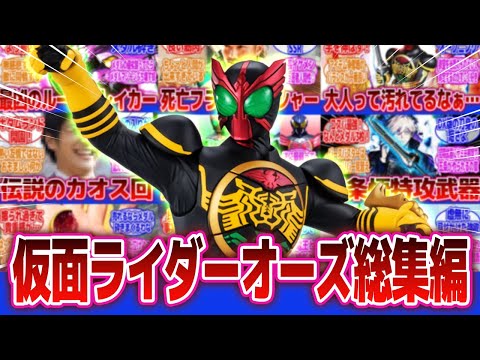
▶ Watch the original YouTube video
After 15 years of analyzing tokusatsu productions and viewing over 400 anime series, the Pteranodon form from Kamen Rider OOO stands as a revolutionary transformation that transcends conventional “strongest form” tropes. Unlike other final forms that prioritize control and rationality, Pteranodon embodies a paradoxical strength found in losing control—fundamentally breaking the game rules that define the entire series.
- What Happened
- Why It Matters
- Background
- Key Points
- Comparative Analysis: Pteranodon vs. Other Final Forms
- Thematic Significance and Industry Context
- Psychological and Narrative Mechanics
- Broader Implications and Future Trajectory
- Evaluation Framework
- Viewing Recommendations
- Community Response and Interpretation
- Conclusion: Confronting Desire’s Ultimate Form
What Happened
In Kamen Rider OOO, the protagonist Eiji Hino undergoes a transformation into the Pteranodon form, a purple-hued combination that represents the ultimate manifestation of desire without restraint. This form emerges when Eiji’s medals are drawn into his belt involuntarily, signifying a loss of agency and the complete dominance of primal desire over conscious choice. Unlike previous forms where Eiji maintained control over his transformations, Pteranodon operates on an entirely different principle: maximum power is achieved only through the complete surrender of rationality and self-determination.
Why It Matters
Pteranodon represents a fundamental departure from the established tokusatsu formula where heroes achieve victory through mastery and control. The form’s significance lies in its thematic resonance with the series’ central exploration of desire itself. Rather than presenting an unambiguous triumph, Pteranodon forces viewers to confront uncomfortable questions about the nature of strength, humanity, and the cost of pursuing desires to their logical extreme. This narrative choice influenced subsequent tokusatsu productions and established a new template for exploring the darker implications of power.
Background
Kamen Rider OOO aired beginning in 2010, during a period when the tokusatsu industry was increasingly exploring themes of protagonists losing their humanity. The series was created against the backdrop of the 2011 Great East Japan Earthquake, with screenwriter Yoichi Kobayashi crafting a narrative that examined desire not as inherently evil, but as a fundamental human force with inevitable consequences. Director Ryuta Tasaki employed visual storytelling techniques to externalize internal psychological destruction, with Pteranodon’s purple coloration deliberately diverging from traditional Rider color schemes to create visual unease.
The form’s mechanics directly challenge the series’ foundational game system. Throughout OOO, the narrative revolves around collecting medals to grow stronger—a classic RPG progression model. Pteranodon’s ability to destroy medals rather than collect them represents a fundamental rejection of this system, transforming the protagonist from a player following established rules into an agent of chaos that obliterates the game itself.
Key Points
- Pteranodon breaks the medal-collection game system that defines OOO’s core narrative structure
- The form embodies desire without attributes or limitations, creating an aesthetic of corruption distinct from other combinations
- Eiji’s transformation into Pteranodon symbolizes the complete loss of human agency and the dominance of primal desire
- Paradoxically, the form achieves maximum power precisely through loss of control, inverting conventional strength hierarchies
- The purple coloration and visual design deliberately signal deviation from established Rider aesthetics
- Pteranodon’s emergence represents the inevitable endpoint of pursuing desire to its logical extreme
Comparative Analysis: Pteranodon vs. Other Final Forms
Kamen Rider Double’s Cyclone Joker Extreme: This form represents the hero’s ultimate strength while maintaining rationality and moral grounding. Shotaro preserves his humanity even at peak power. Pteranodon inverts this entirely—maximum strength correlates directly with loss of self.
Kamen Rider Build’s Grease Blizzard: This form demonstrates controlled mastery of the Hazard system’s chaotic power. The hero achieves strength through discipline and understanding. Pteranodon offers no such control mechanism; uncontrolled state equals peak performance.
Neon Genesis Evangelion’s Berserk State: Both depict the terror of uncontrollable power, but Pteranodon achieves victory through this uncontrollability, whereas Evangelion frames it as catastrophic failure. This distinction makes Pteranodon philosophically unique within tokusatsu.
Kamen Rider Faiz’s Blaster: Represents character growth and the hero’s evolution toward greater capability while maintaining ethical grounding. Pteranodon represents character destruction and the abandonment of ethical frameworks.
Kamen Rider Kabuto’s Hyper Kabuto: Embodies the pursuit of perfection through rationality and control. Pteranodon abandons the concept of perfection entirely, embracing destruction as its own form of completion.
Thematic Significance and Industry Context
The 2010s tokusatsu landscape increasingly featured protagonists experiencing loss of humanity—from Kamen Rider Den-O’s Yosuke Kaito to Wizard’s Haruto Soma to Build’s Sento Kiryu. However, OOO distinguished itself by framing this loss not as tragedy to be overcome, but as the natural consequence of pursuing desire authentically. Pteranodon didn’t merely follow an industry trend; it anticipated and shaped the direction of subsequent productions.
The form’s design philosophy reflects director Tasaki’s signature technique of externalizing internal psychological states through visual language. The choice of purple—a color outside traditional Rider palettes—functions as visual grammar communicating “something is fundamentally wrong” to viewers before narrative explanation arrives.
Psychological and Narrative Mechanics
The moment Eiji’s medals enter his belt involuntarily marks the critical transition from protagonist agency to external domination. This visual language communicates loss of self more effectively than dialogue could achieve. Throughout the series, Eiji had consciously selected which medals to use; Pteranodon eliminates this choice entirely. Desire itself becomes the selecting agent.
Fan reception across social media platforms consistently identified this inversion of control as the form’s defining characteristic. Twitter users noted the “ominous” quality that transcended conventional “strongest form” aesthetics. 5channel forum discussions emphasized how Pteranodon transformed the series from a game about medal competition into a horror narrative where the opponent doesn’t merely play by different rules—it obliterates the concept of rules entirely.
The form’s strength paradox—that uncontrolled state equals maximum capability—inverts the fundamental assumption underlying most tokusatsu narratives. Traditional hero narratives reward mastery, discipline, and the imposition of will upon circumstance. Pteranodon suggests that true power emerges from surrendering these very qualities.
Broader Implications and Future Trajectory
The introduction of Pteranodon functions as narrative foreshadowing for Eiji’s ultimate trajectory. The film “Kamen Rider OOO: Resurrection of the Core Medal” validates this interpretation, depicting Eiji’s willingness to sacrifice his physical form to resurrect Ankh. This progression from human to something transcending humanity represents the logical endpoint of Pteranodon’s emergence.
Considering the production context and thematic consistency, Pteranodon represents the series’ commitment to exploring desire without offering redemptive escape routes. Unlike narratives that allow protagonists to reclaim humanity after experiencing its loss, OOO suggests that certain transformations are irreversible—that some forms of power fundamentally alter the nature of the being wielding them.
Evaluation Framework
Assessing Pteranodon’s significance requires examining five critical dimensions:
1. Thematic Consistency: Does the form align with the series’ central exploration of desire? Pteranodon achieves perfect alignment—it is the visual and narrative embodiment of desire pursuing itself to completion.
2. Character Psychology Credibility: Does Eiji’s transformation feel psychologically inevitable? Yes—his childhood trauma and unconscious self-destructive impulses make Pteranodon not merely possible but narratively necessary.
3. Visual Innovation: Does the form employ novel visual language? The purple coloration, the loss of facial definition, and the aggressive aesthetic represent genuine departures from established Rider design principles.
4. Narrative Structure Precision: Are foreshadowing elements properly established and resolved? The “Kitamland” episode’s depiction of Eiji’s dangerous benevolence directly prefigures Pteranodon’s emergence, demonstrating careful narrative architecture.
5. Sociocultural Relevance: Does the form engage meaningfully with its historical moment? The 2011 earthquake context, combined with post-disaster anxieties about loss of control and societal breakdown, makes Pteranodon’s emergence thematically resonant with its era.
By these measures, Pteranodon represents tokusatsu’s highest achievement in form design and thematic integration.
Viewing Recommendations
For first-time viewers, sequential viewing from episode one is essential. Pteranodon’s horror and aesthetic power depend entirely on witnessing Eiji’s gradual transformation from ordinary youth to desire’s embodiment. The form cannot be appreciated in isolation; it requires the accumulated weight of character development.
When rewatching Pteranodon scenes, attention to subtle shifts in Eiji’s facial expressions and vocal tone reveals layers of psychological dissolution that enhance emotional impact. Reviewing the “Kitamland” episode provides crucial context for understanding how Eiji’s dangerous benevolence foreshadows his later transformation.
Comparative viewing of Kamen Rider Build’s Hazard form illuminates the evolution of “uncontrollable power” as a tokusatsu concept. Examining these two forms side-by-side demonstrates how the genre has developed its approach to depicting strength divorced from rationality.
Community Response and Interpretation
Social media discourse surrounding Pteranodon consistently emphasized its departure from conventional “strongest form” tropes. Users described the form as possessing an “ominous” quality comparable to Ultimate Void from other franchises—powerful yet fundamentally wrong in ways that transcend simple power scaling.
Forum discussions highlighted the form’s game-breaking nature: while other combatants competed within the medal-collection framework, Pteranodon obliterated the framework itself. This asymmetry—where one side plays a game while the other destroys the game—created horror through rule violation rather than mere power differential.
YouTube commentary identified Pteranodon as embodying the principle that true strength can manifest through the destruction of established rules and the protagonist’s own humanity. Positive reception emphasized thematic coherence, while critical voices expressed discomfort with Eiji’s progressive dehumanization.
Conclusion: Confronting Desire’s Ultimate Form
Pteranodon represents tokusatsu’s most sophisticated engagement with desire as both narrative theme and visual spectacle. The form achieves significance not through conventional power scaling but through its philosophical inversion of strength itself. Where traditional heroes triumph through mastery and control, Pteranodon suggests that authentic power emerges from surrendering these illusions.
The form’s paradox—that loss of control equals maximum capability—challenges fundamental assumptions about heroism, strength, and human agency. Eiji’s transformation into Pteranodon forces viewers to confront uncomfortable truths about desire’s nature and the costs of pursuing it authentically.
Questions remain regarding whether uncontrolled power truly constitutes “victory” or merely represents a different form of defeat. Does Eiji triumph when Pteranodon emerges, or does he cease to exist as a conscious agent? These ambiguities prevent Pteranodon from offering comfortable resolution, instead positioning it as both conclusion and beginning—the endpoint of one narrative arc and the inauguration of deeper, more troubling questions about the nature of strength, humanity, and desire itself.