▶ Watch the original YouTube video
Why Tears of the Kingdom Is So Difficult: Early Game Strategy and Survival Tips
Tears of the Kingdom presents a deliberately challenging early game that forces players to learn through trial and error. Unlike many modern games with adjustable difficulty settings, Nintendo’s design philosophy intentionally omits this option, creating a unified learning experience where player growth—not enemy weakness—determines success.
What Happened
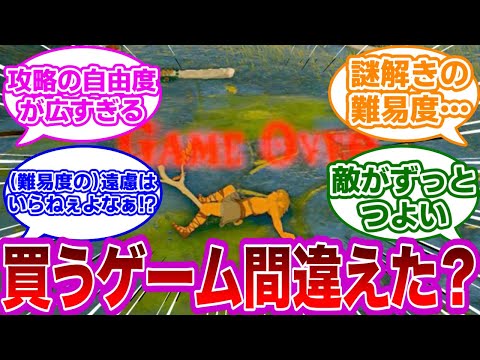
Tears of the Kingdom launched in May 2023 to widespread acclaim, but players immediately reported difficulty spikes in the early game. The Sky Island tutorial section—designed to introduce core mechanics—proved significantly more challenging than expected, with some players requiring three hours to complete just three shrines. This difficulty prompted extensive discussion across social media platforms, with players comparing the game’s design philosophy to previous titles and debating whether the challenge was intentional or problematic.
Why It Matters
Tears of the Kingdom’s difficulty design represents a deliberate departure from industry trends. While most 2023 releases like Starfield and Baldur’s Gate 3 offer multiple difficulty options, Nintendo chose to implement a single, fixed difficulty curve. This decision reveals important insights about game design philosophy: whether difficulty should be a customizable preference or an integral part of the intended experience. The game’s approach—forcing players to grow stronger through progression rather than enemy weakness—challenges conventional wisdom about accessibility and player agency.
Background
Tears of the Kingdom builds upon Breath of the Wild’s foundation while introducing the Ultrahand system (Fuse mechanic), which allows players to combine objects and weapons in unlimited ways. The early game deliberately limits player resources and defensive capabilities, creating a steep initial learning curve. However, once players reach the surface and acquire the paraglider, difficulty drops significantly as access to crafting materials and equipment upgrades increases. This design mirrors the philosophy established in Breath of the Wild but pushes the challenge further, requiring players to adapt their approach rather than rely on raw stat progression.
Key Points
- The Sky Island tutorial section is intentionally harsh, with early enemies dealing significantly more damage than in Breath of the Wild while Link starts with minimal defensive stats
- Difficulty drops dramatically once players reach the surface and gain access to the paraglider, indicating the early challenge is designed to teach core mechanics rather than represent the game’s overall difficulty
- The Fuse system provides unlimited tactical flexibility, allowing creative solutions that substantially reduce combat difficulty when properly utilized
- Cooking is essential for survival; players who actively prepare meals and use them liberally progress significantly faster than those who hoard resources
- The game lacks meaningful death penalties, encouraging experimentation and risk-taking as primary learning tools
- Unlike Dark Souls or similar titles, enemy attack patterns are predictable and learnable, making the difficulty stem from player weakness rather than unfair enemy design
Timeline
- May 2023: Tears of the Kingdom launches; players immediately report difficulty concerns on Twitter and Reddit
- May 2023 (ongoing): Community discussion reveals difficulty varies significantly based on player experience with Breath of the Wild
- Post-launch: Players discover that reaching the surface and upgrading equipment reduces difficulty substantially, confirming early challenge is intentional design
Perspectives
The Challenge-as-Design Perspective: Nintendo deliberately created a harsh early game to force players to learn core mechanics—Fuse combinations, cooking, evasion tactics, and environmental problem-solving. This approach mirrors Dark Souls’ philosophy: difficulty serves as a teaching tool. The lack of difficulty settings reflects Nintendo’s intention to provide all players with an identical learning experience.
The Accessibility Concern: Some players argue that without difficulty options, the game becomes unnecessarily gatekeeping for casual players or those with limited gaming experience. This perspective questions whether challenge should be mandatory rather than optional.
The Comparative View: Players experienced with Breath of the Wild report the game feels manageable, while newcomers find it punishing. This suggests difficulty is relative and contextual rather than objectively unfair. The game’s design assumes players will learn through repeated attempts rather than external difficulty adjustments.
Detailed Analysis: Why Tears of the Kingdom Feels Difficult
Player Weakness, Not Enemy Strength: The critical distinction in Tears of the Kingdom’s design is that difficulty stems from Link’s low initial stats and limited resources, not from overpowered enemies. Early enemies have predictable attack patterns with clear defensive counters: shield blocking, distance management, or surprise attacks. This differs fundamentally from games like Dark Souls, where enemy attack patterns are complex and unpredictable. As players acquire more hearts, upgrade armor, and craft better weapons, the same enemies become trivial.
The Fuse System as Difficulty Modifier: The Ultrahand Fuse mechanic is the game’s primary difficulty balancer. Combining a wooden branch with an enemy’s dropped weapon creates a functional spear. Adding a bomb flower creates an explosive weapon. These combinations cost nothing and can be created repeatedly. Players who actively experiment with Fuse combinations report dramatically reduced difficulty compared to those who rely on found weapons alone.
Cooking as a Hidden Difficulty Setting: The cooking system functions as an implicit difficulty adjustment. A player who cooks five apples into a healing meal gains five healing charges; one who eats apples raw gains only one charge per apple. Players who cook aggressively and use meals liberally progress faster. This creates a self-adjusting difficulty curve: players struggling with combat can invest more time in cooking, effectively reducing difficulty without a menu option.
Death as a Learning Tool: Tears of the Kingdom has virtually no death penalties. When Link dies, he respawns at the last shrine or campfire with all items intact. This design explicitly encourages experimentation and risk-taking. Players can attempt dangerous strategies knowing failure costs only time, not progress. This contrasts sharply with games like Dark Souls, where death results in resource loss, making players conservative.
Comparison with Other Challenging Games
| Game | Difficulty Source | Death Penalty | Learning Curve |
|---|---|---|---|
| Tears of the Kingdom | Low player stats, high enemy damage | None | Steep but surmountable through growth |
| Breath of the Wild | Moderate enemy damage, low player defense | None | Moderate |
| Dark Souls | Complex enemy patterns, high damage | Resource loss (souls) | Steep and unforgiving |
| Monster Hunter: World | Complex enemy behavior patterns | Quest failure | Moderate to steep |
Early Game Progression Strategy
Phase 1: Sky Island (Hours 0-3)
Complete three shrines to unlock the paraglider. Focus on cooking every food item found rather than hoarding. Use Fuse combinations aggressively. Avoid unnecessary combat; prioritize shrine completion. Expect to die multiple times—this is intentional.
Phase 2: Surface Arrival (Hours 3-6)
Glide to the nearest village (Rito Village recommended). Complete village quests to acquire armor and crafting materials. Upgrade armor at least once. This single upgrade dramatically improves survivability. Begin exploring cautiously while prioritizing material collection over combat.
Phase 3: Stabilization (Hours 6+)
With upgraded armor and improved Fuse options, difficulty drops significantly. Players report the game becomes substantially easier once this phase is reached, confirming the early challenge serves a specific pedagogical purpose.
Community Response and Reception
Social media reactions to Tears of the Kingdom’s difficulty have been polarized. Twitter users reported frustration with the early game, with numerous posts describing three-hour shrine completion times. Reddit discussions revealed that difficulty perception correlates strongly with Breath of the Wild experience—veterans found it manageable while newcomers found it punishing.
YouTube comments frequently noted that “Breath of the Wild experience makes this manageable,” suggesting difficulty is contextual rather than absolute. Gaming forums on 5channel (Japanese equivalent of 4chan) emphasized the importance of cooking and Fuse mechanics, with active discussion about optimal early-game strategies.
Notably, no consensus emerged that the difficulty was unfair or poorly designed. Instead, discussion centered on whether the challenge was intentional (which analysis confirms) and how to overcome it (cooking and Fuse combinations being the primary answers).
Insights
Tears of the Kingdom represents a deliberate design philosophy that prioritizes unified player experience over accessibility options. By eliminating difficulty settings, Nintendo ensures all players encounter identical challenges and must develop identical skills. This approach assumes that struggle itself—not customizable difficulty—teaches valuable problem-solving and creative thinking.
The game’s difficulty design is not punitive but pedagogical. Early harshness serves to establish that players must grow stronger through progression, not expect enemies to weaken. The Fuse system, cooking mechanics, and armor upgrades provide multiple growth vectors, allowing players to choose their path to power.
This design philosophy may influence industry trends. As of 2023, difficulty selection is standard practice, yet Tears of the Kingdom’s success without this feature suggests players value unified, intentional experiences. The game proves that challenge can enhance rather than diminish enjoyment when properly contextualized as a learning tool rather than a gatekeeping mechanism.
For players beginning Tears of the Kingdom, the message is clear: difficulty is not a bug but a feature. Death is not failure but feedback. The three-hour Sky Island section is not a poorly balanced tutorial but an intentional crucible designed to teach that creative problem-solving and resource management matter more than raw combat skill. Players who embrace this philosophy and actively cook, experiment with Fuse combinations, and view death as a learning opportunity will find the game transitions from punishing to rewarding within the first six hours of play.